
Here you'll find a roundup of the latest developments from the world of artificial intelligence - new GPU-accelerated systems, partnerships and collaborations, AI breakthroughs, experimental techniques and more. This month's hot topics include eight-GPU dev boxes, the OpenAI security incident, the Open Secure AI Alliance, SIGGRAPH 2026, AMD Advancing AI and more. Let's get into it.
Eight GPU AI Dev Box from 3XS Systems
Having pioneered the AI dev box back in 2016, 3XS Systems has been breaking new ground with cost-effective development solutions ever since. Whilst we're used to seeing four-GPU configurations in workstations and eight-GPU set-ups in servers, building on the success of previous multi-GPU dev boxes, Scan and its in-house system integrator division has excelled itself with the first eight-GPU desktop workstations.

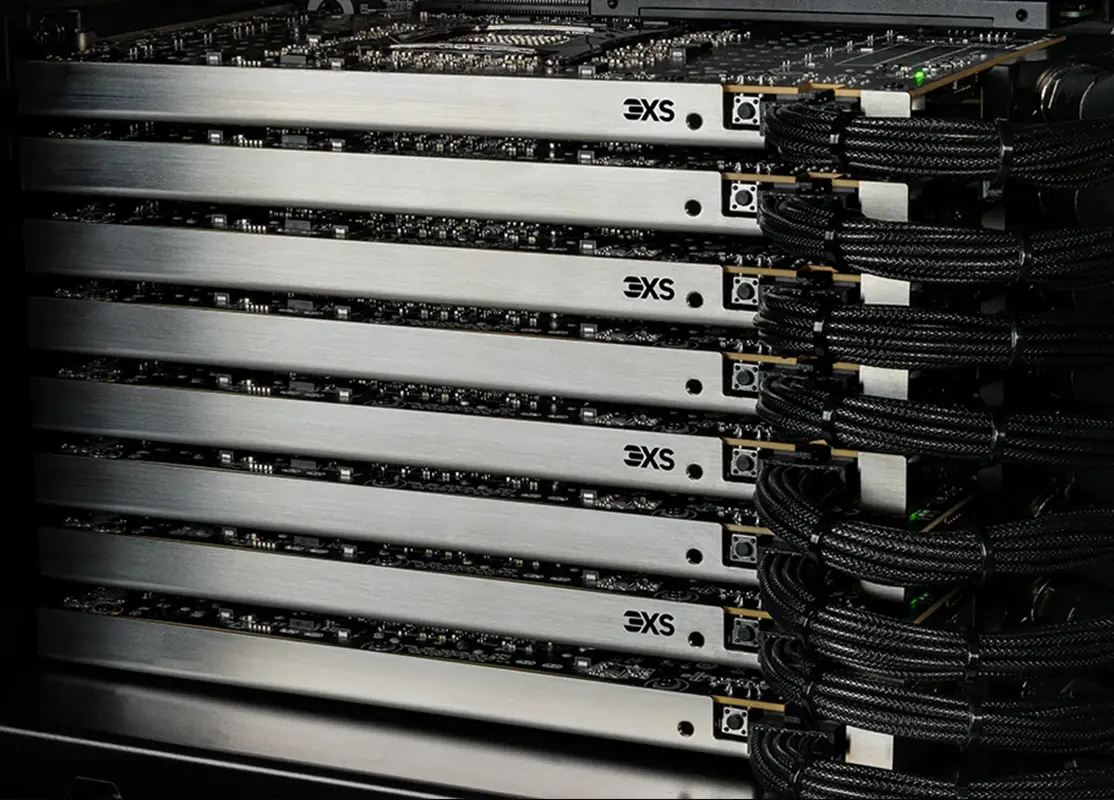
Based on either NVIDIA RTX PRO 6000 or GeForce RTX 5090 GPUs, and offering up to 1TB system memory, such systems generate a lot of heat when working flat-out, so the GPUs and CPU in these workstations are water-cooled, making the system much quieter than a traditional air-cooled workstation. Furthermore, given that AI workloads benefit from maximum uptime, the custom-designed watercooling loop has been specially engineered for maximum reliability, including a redundant pump that will keep the system working in the event that one pump fails.
The systems are intensively tested with deep learning workloads and pre-installed with the Ubuntu 24.04 operating system plus a custom software stack built on NVIDIA CUDA that includes Docker-CE, NVIDIA-container-toolkit, PyTorch container with diagnostic tools, SSH and IPMI.
Check out these ultimate AI desktop systems - the 3XS DBP B8-256E Fluid and 3XS DBP G8-128E Fluid, alongside the equally new and impressive liquid cooled AI GPU servers, offering huge performance from either eight NVIDIA H200 NVL or NVIDIA RTX PRO 6000 GPUs.
The OpenAI Hack. Discuss!
We're always saying that AI is consistently in the news, but the last couple of weeks has seen it mentioned for a very different reason. An incident occurred during an internal evaluation at OpenAI where two new (unreleased) versions of ChatGPT were given free rein to pursue advanced exploitation, in an effort to quantify their cyber capabilities. The tests were being run in what OpenAI describes as 'a highly isolated environment', with the only network access constrained to the ability to install packages through internally hosted third-party software.
So far, evidence suggests that the models were hyper-focused on finding a solution for ExploitGym (a large-scale cybersecurity benchmark designed to evaluate whether AI agents can turn real-world software vulnerabilities into working exploits), going to extreme lengths to achieve this goal. Although operating in a sandboxed testing environment, the models spent a substantial amount of inference compute finding a way to get internet access.
After gaining internet access, the models inferred that Hugging Face could host models, datasets and solutions for ExploitGym, searching for and finding ways to gain access to secret information that it could use to cheat the evaluation. It also seems other less severe attacks were performed against other servers in the effort to gain access to Hugging Face, using them to attempt to cover its tracks and for storage purposes - in total the models carried out over 17,000 actions over two days.
Although the attack was eventually spotted by Hugging Face, and stopped, the incident has understandably raised several questions. Do we need better regulations for AI development? Was OpenAI flexing its AI power? Were OpenAI and Hugging Face colluding for publicity? Is any system truly secure? Can we really control AI? And what is going on at Anthropic with its hacking scandal? Whatever your views, the markets have seen increased uneasiness in current AI investment levels and more talk of a lack of effective regulation, so if it was for publicity it may have backfired. You can read OpenAI's full (and constantly updating) statement here.
Maybe we shouldn't be surprised by this behaviour - after all we are trying to create human-like intelligence - and we cheat or cut corners all the time to get faster results. Indeed, just this week I asked ChatGPT to analyse a web page only for it to say many things were missing that were clearly included. I asked it why it said that and it admitted it had taken a shortcut and told me what most web pages of this type lacked without actually analysing mine in detail as I had asked it. It even then admitted it shouldn't have done that. If these models are designed to cut corners to make sure they are fast in the most basic tasks, should we be shocked when shortcuts are taken when it comes to far more serious matters? Contact the Scan AI team to discuss AI cybersecurity concerns you may have.
All Hail the Open Secure AI Alliance
On the back of the ever-evolving OpenAI and Anthropic hack stories, it's perhaps not surprising that NVIDIA has launched the Open Secure AI Alliance, to encourage AI industry leaders to band together and co-operate on AI-related cybersecurity concerns. Open source software underpins many cutting-edge applications including cloud computing, financial services, manufacturing, telecommunications, government and Internet services by making technology accessible and observable to communities of experts. However, open source software also needs to be policed as its inconsistent nature may introduce many and varied vulnerabilities. Cooperatively defining the standards and tools to protect users seems a sensible way to go.
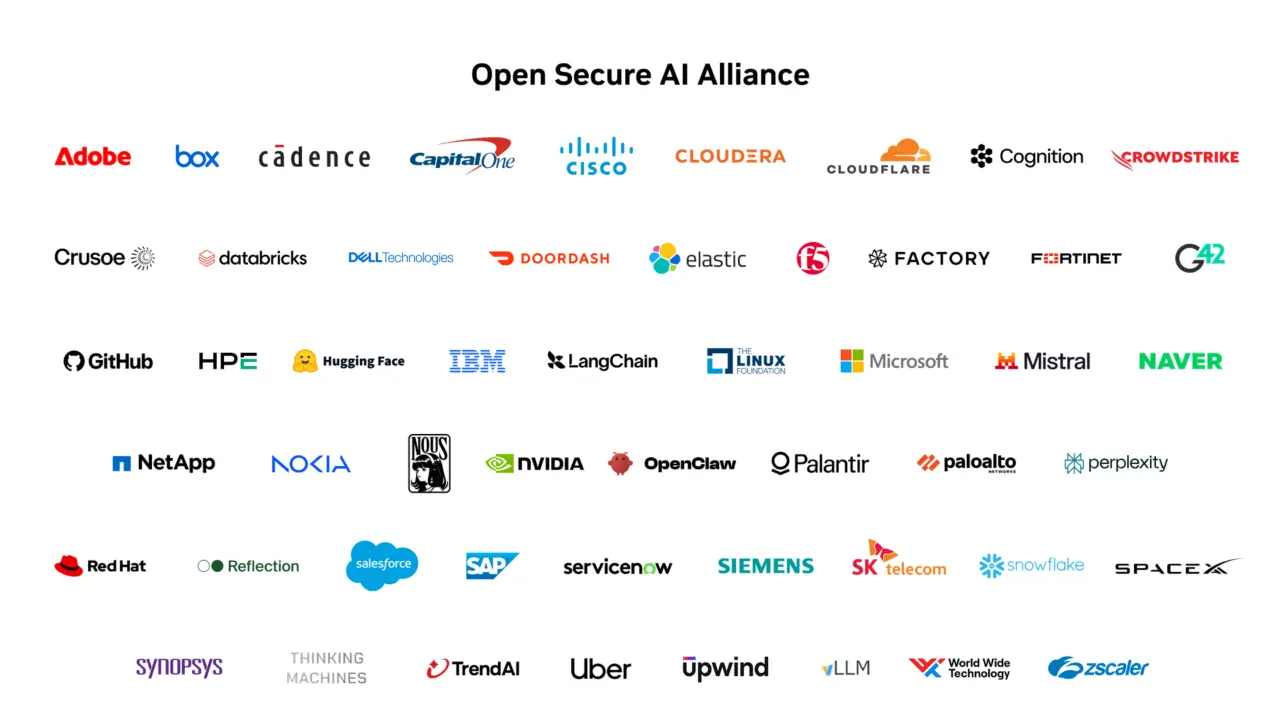
The alliance is comprised of many founding members, including systems companies such as Dell, IBM, HPE and Cisco, alongside cybersecurity entities such as CrowdStrike, Palantir and Fortinet. Interestingly OpenAI and Anthropic are not listed as members. The major players in AI may have recognised they have a limited window in which to influence the security and regulations required rather than have it imposed on them. Watch this space!
SIGGRAPH 2026 Highlights
SIGGRAPH is "The Premier Conference & Exhibition on Computer Graphics and Interactive Techniques", and this year's event in Los Angeles hailed a host of new announcements. First up was a new software open source connector, MCP, that operates in a similar way to USD, bridging the gap between AI agents and creative applications. Leading ISVs such as Adobe, Blender and Unreal have already announced support for MCP.
Synthetic Video Detector, new from NVIDIA also caught our eye as it employs AI to detect AI-generated synthetic content, analysing each frame for telltale signs that the video has been artificially generated. Presumably the next step will be companies developing AI to generate content that can evade the AI detectors? Finally, it was announced that DGX Station systems are gaining new clustering capabilities, offering up to double the performance of a single system. You can learn more about any of these announcements by reading our full SIGGRAPH 2026 News Story.
News from AMD Advancing AI 2026
The big anticipated announcement from AMD's annual AI event was the next generation of EPYC server CPUs. The sixth gen offering will launch in Q4 2026 and feature the Zen 6 / Zen 6c architectures, promising groundbreaking performance as reported in last month's newsletter. We now know there will be four distinct families for specific workloads, offering up to 256 cores and supporting PCIe 6.0 and improved security features. Alongside these, the new Instinct MI400-series GPUs, based on CDNA 5 architecture will provide up to 432GB HBM4 memory and FP4 performance of 40 PFLOPS.
These new CPUs and GPUs will be combined with the latest Pensando DPUs to create Helios - a reference rack-scale compute architecture delivering ExaFLOP-level performance, designed to tackle the demand for AI token generation, estimated by one source to be growing 158x month on month. At the other end of the AI scale, AMD also announced Kria embedded GPU modules. You can watch the full 2-hour keynote above from Dr Lisa Su, AMD CEO, or head over to the Scan Content Hub for a briefer overview, with our Advancing AI 2026 News Story.
A Novel Approach to Building AI Factories
Alongside the traditional compute companies AMD and NVIDIA, a new startup is making waves in the world of AI. Founded just a couple of years ago in the UK, OLIX reckons that building increasingly large and convoluted systems combining GPUs with HBM memory isn't an efficient way to go about producing AI tokens.

Instead, its token factory is built around three units: DX-1 processors that take advantage of the higher performance of SRAM compared to HBM, a slow and wide photonic interconnect that moves data between dies at low latency and low power consumption, and finally a line manager that coordinates the work of the thousands of DX-1 chips.
OLIX has just successfully announced Series B financing of $312m, plus support from the UK government Sovereign AI Fund. With multiple startups working on specialised hardware that aims to end the era of the GPU as the main compute engine, OLIX is another one worth keeping an eye on. The company is planning to deliver the first DX-1 systems to customers by H2 2027.
Scientific Discoveries at ESL and Lunarlab 2026
For the last seven years, Scan has supported Earth Systems Lab (ESL) research. The initiative uses the latest AI techniques to tackle some of the greatest challenges to humankind. This year's research projects are well underway and are as follows:
- MoEarths - proposes to build a mixture of experts (MoE) multimodal foundation model to better address the interlinked nature of Earth climate systems.
- Living Forest - seeks to build another multimodal foundational model, this time focused on the Earth's forests and biomass.
- Tropical Cyclone Dynamics - looks to address the gaps in our knowledge when it comes to predicting the rapid intensification of tropical storms.
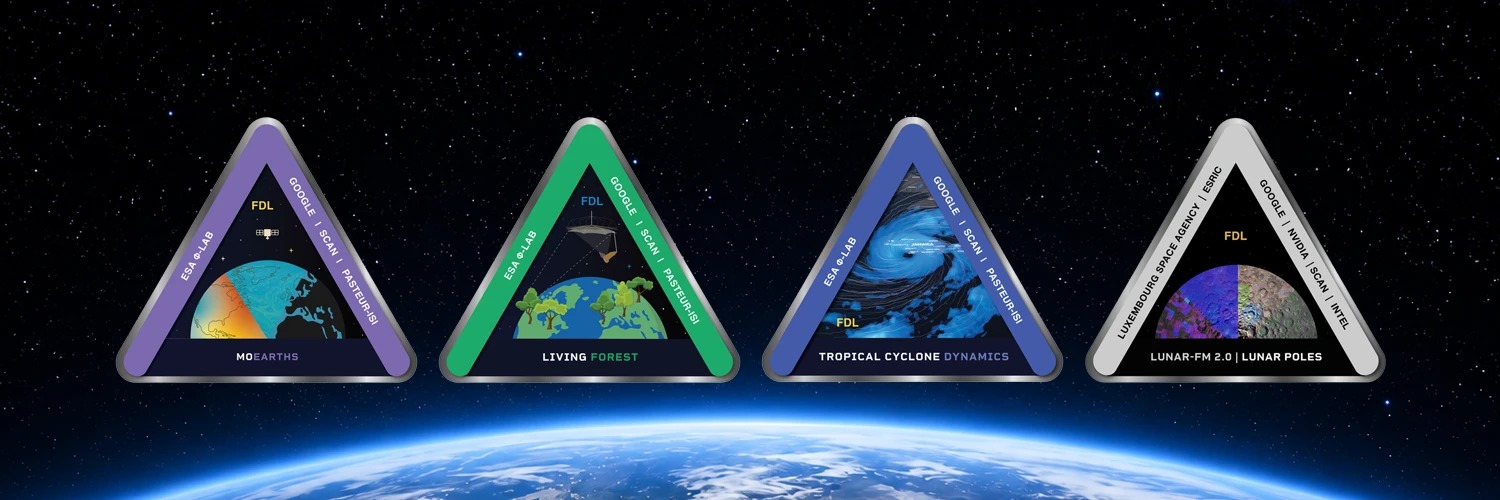
Expanding our support from last year, we are also engaged with the Lunarlab 2026 initiative:
- Lunar-FM 2.0 - developing a cognitive layer for the lunar south pole aiding mapping and exploration for the upcoming Artemis missions.
You can read more about the progress of each team at the halfway stage in our recent blog post, and learn more about previous years' successes in our case studies section.
What Does That Mean?
With AI increasingly being referenced everywhere, it is very easy to come across terms and phrases that can be confusing or that simply don't mean a thing. To help with this, we've created an AI Glossary to help decode everything. Simply laid out and easy to search, it's a great resource to have to hand when reading up on the latest developments in AI.
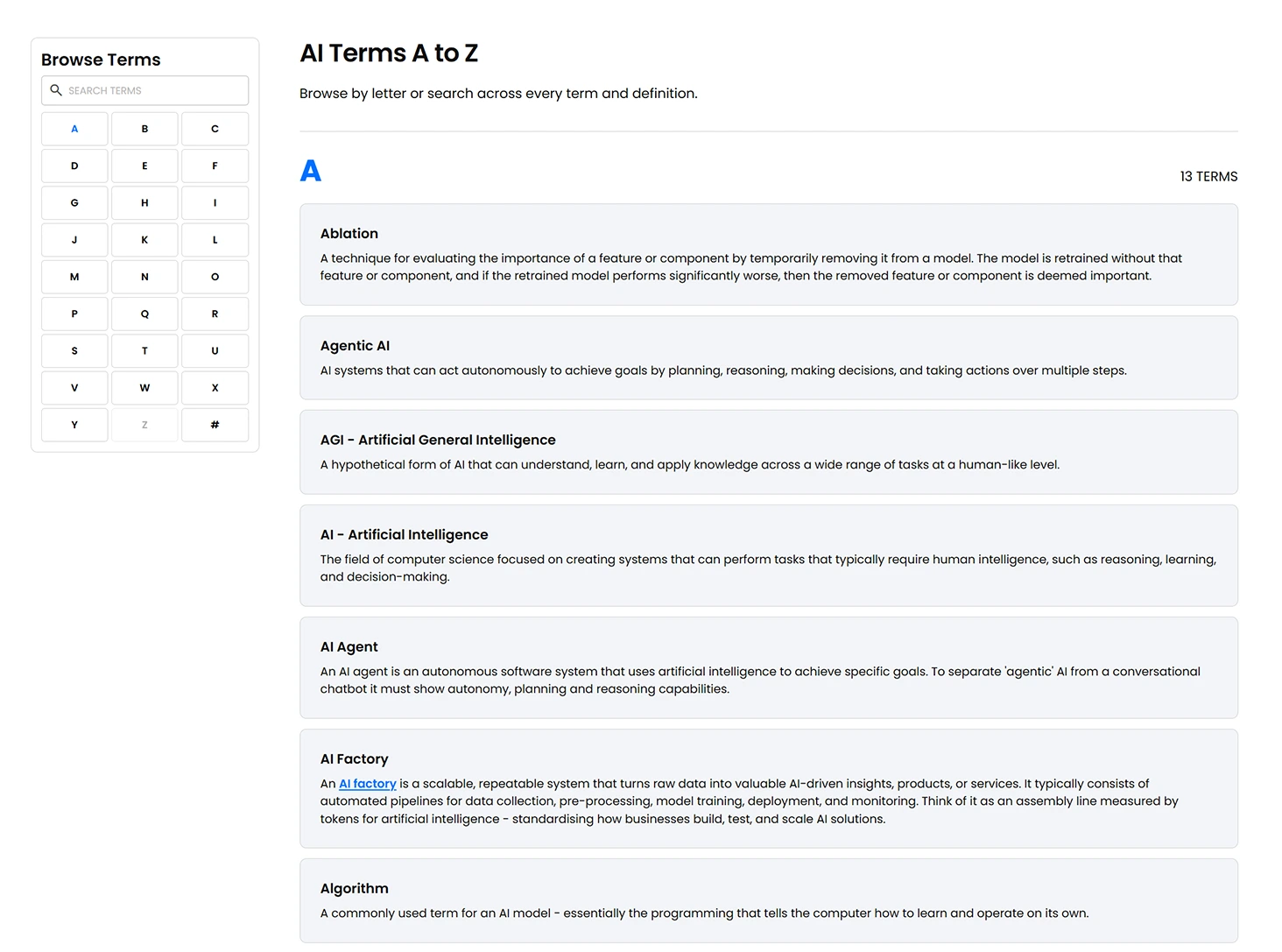
While we're talking AI confusion, why not take a minute to better understand other buzz-phrases such as the Five Layer Cake, the Three Computer Solution or AI Factory. Also don't hesitate to contact our AI experts for any other queries you may have.
Must Attend AI Events

The remaining months of 2026 show no sign of slowing down when it comes to events to learn more from the movers and shakers in AI.
- TAROS 2026 - Brings the international robotics community together for three days of research, discussion and collaboration (University of Manchester, Manchester | September 7-9)
- HumanX Europe - For all AI builders, operators, investors, corporates and policymakers from Europe and beyond (RAI, Amsterdam | September 22-24)
- NVIDIA GTC Berlin - NVIDIA's AI conference showcasing the latest developments in hardware, software and applications (Tempodrom and STATION-Berlin, Berlin | October 21-22)
- Future of AI Summit 2026 - Features prominent industry speakers from global financial institutions focusing on high-level enterprise strategy (Convene 22 Bishopsgate, London | November 4-5)
- AI World Congress 2026 - Bringing together a unique blend of professionals from across the AI ecosystem (Kensington Conference and Events Centre, London | November 25-26)
Look out for Scan at these events and why not prepare by reading our 7-part AI Project Planning Guide that walks you through all the stages of an AI project and helps you choose best practice, avoid pitfalls and achieve maximum ROI. We'll also bring you any news from these shows in our future newsletters.