CONTENT HUB
AI NEWSLETTER JULY 2026
Welcome to our monthly newsletter dedicated to everything AI.
Here you'll find a roundup of the latest developments from the world of artificial intelligence - new GPU-accelerated systems, partnerships and collaborations, AI breakthroughs, experimental techniques and more. This month's hot topics include:
- Earth Systems Lab 2026 challenges unveiled
- First AMD EPYC 6th gen benchmarks published
- All the latest from the ICRA Show 2026
- Scan Springboard in Manchester
- Connecting at London Tech Week
- Five-layer cake anyone?
- AI in action in the world of sport
- Have you seen Majorana 2?
- Must attend AI events in July
Let's get into it.
EARTH SYSTEMS LAB 2026 CHALLENGES UNVEILED
For the last seven years, Scan has supported Earth Systems Lab research, and been part of this great scientific initiative using AI to tackle some of the biggest challenges facing humanity today. After months of preparation behind the scenes by Trillium, the organisers of ESL have unveiled the three scientific challenges for 2026.
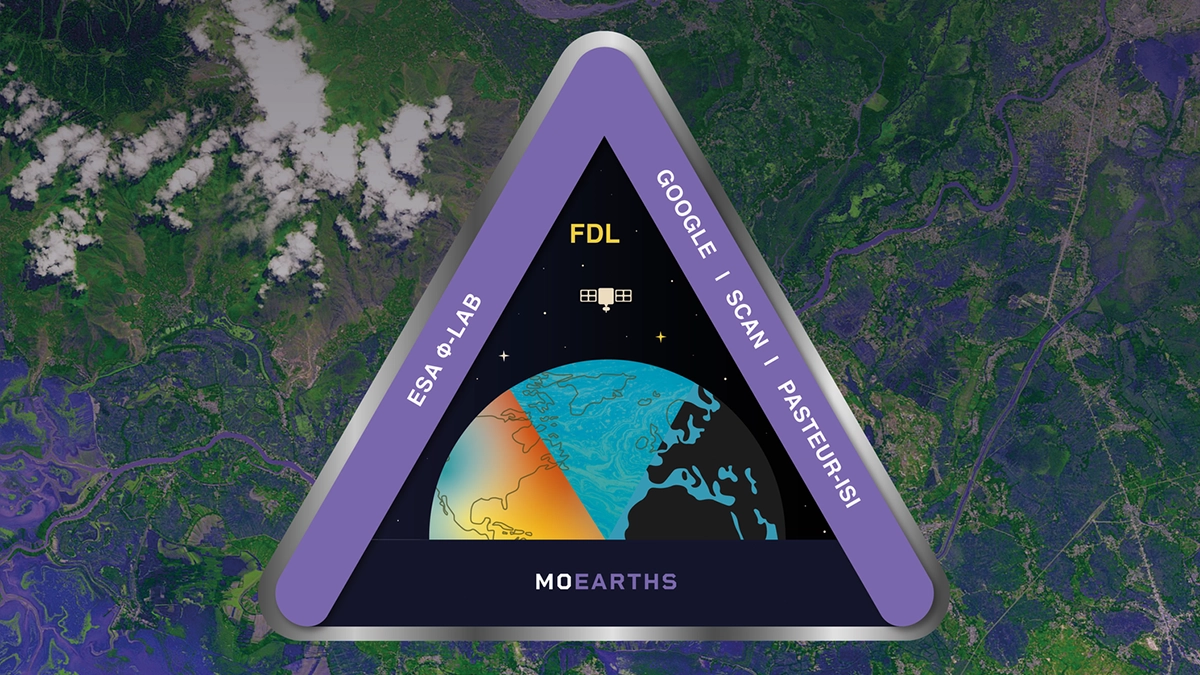
The first challenge, MoEarths, is built on learnings from the earlier MAESTRO and SHRUG-FM projects, and seeks to build a foundational model that can act as a unified estimator of truth. MoEarths will consider data from Clay, Prithvi and SAR-FM, dynamically weighing these experts based on real-time geographic and semantic context, sensor modality, and uncertainty.
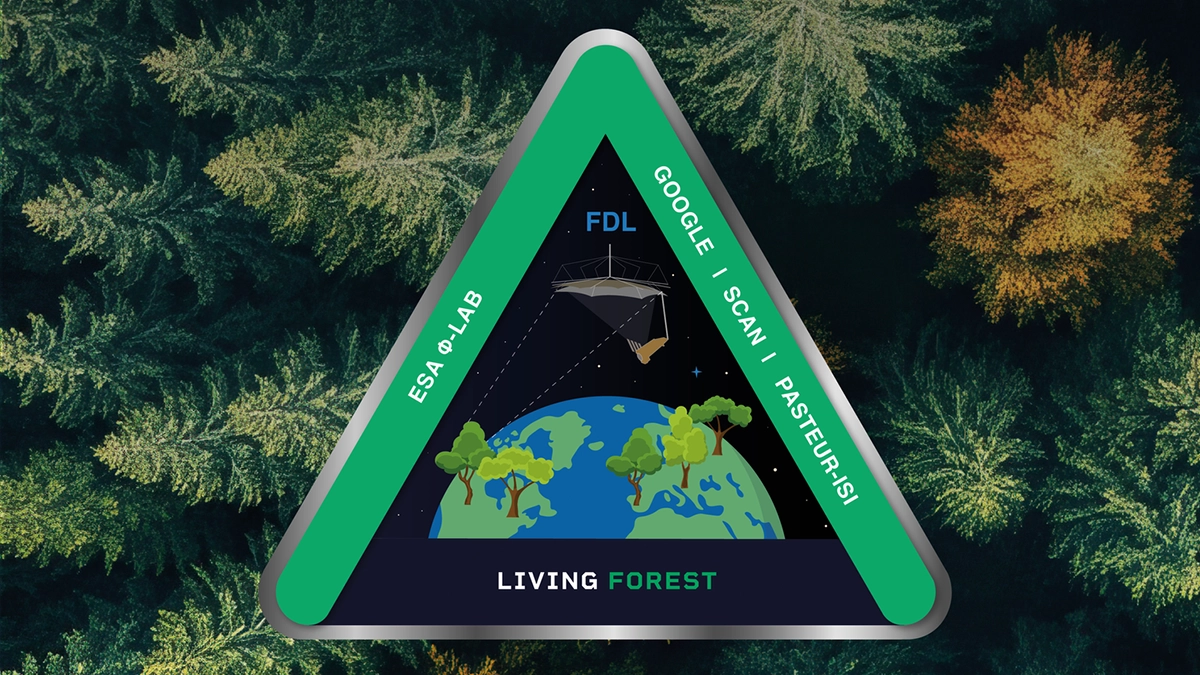
The second challenge, Living Forest, seeks to build another multimodal foundational model, this time focussed on the Earth's forests and biomass. Using data from the ESA's Biomass and Sentinel missions, this challenge will provide a better understanding of the physics of forests, aiding land and resource management.
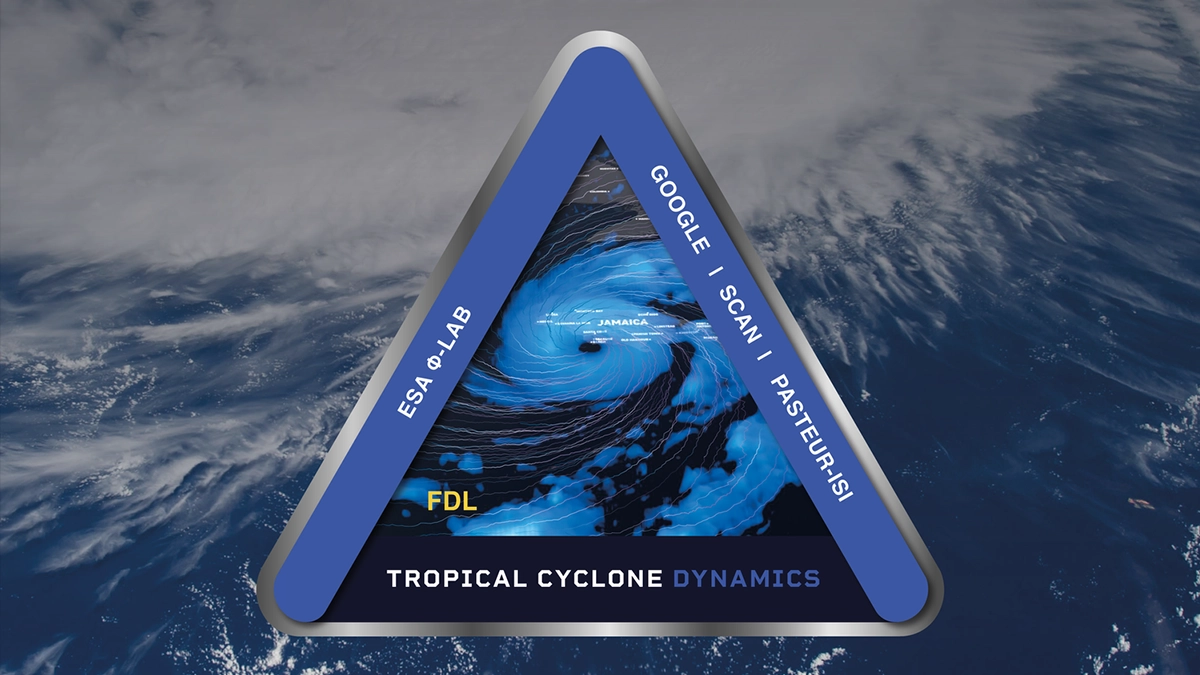
The third challenge, Tropical Cyclone Dynamics, seeks to address the gaps in our knowledge when it comes to predicting the intensity of tropical storms. The plan is to build a novel multimodel AI model that fuses 3D cloud morphology with temperature, precipitation and synthetic aperture radar wind speeds for the first time.
We'll continue to report on the findings and hopeful success of these scientific research projects over the coming months. In the meantime, you can see what AI has helped to discover over the past six years of projects in our previously published space and earth science case studies.
FIRST AMD EPYC 6TH GEN BENCHMARKS PUBLISHED
Hot on the heels of NVIDIA Vera CPU benchmarks we brought to you in June's AI Newsletter, AMD has responded with EPYC 6th gen performance data of its own. Rather than focus on specific NVIDIA-defined tests, AMD compared NVIDIA's Vera 88-core CPU, Intel's Xeon 6980P 128-core CPU, their own 5th gen EPYC 9965 192-core CPU and their new 6th gen Venice 256-core CPU. Their tests and published data usage were based on the assumptions that all nodes were 2-socket systems, and that all 2P systems in a rack were within a 100kW power constraint.
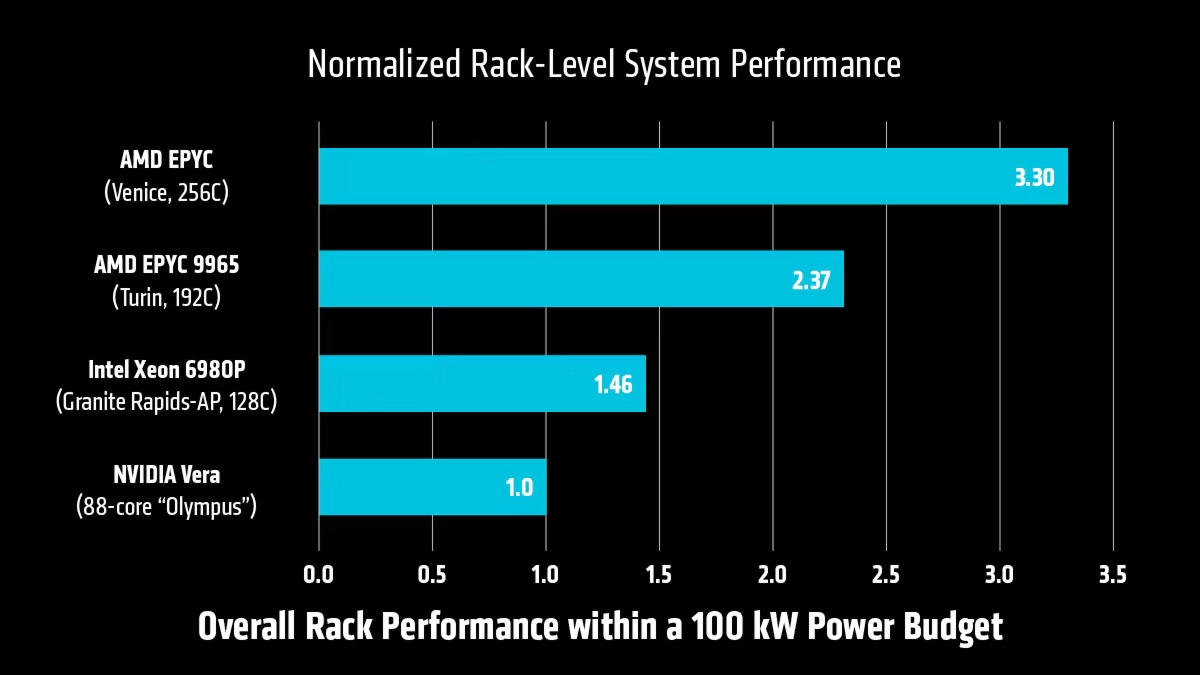
Applying this logic across six modelled workloads and taking an average delivers a 1.46x, 2.37x and 3.30x uplift in performance for Intel Xeon, AMD EPYC 5th gen and AMD EPYC 6th gen CPUs respectively. AMD states this indicates that "a higher rack compute density and stronger rack-level performance can increase throughput for a general purpose agentic AI infrastructure". However, it is worth noting that AMD hasn't benchmarked NVIDIA Vera, but is extrapolating its performance from the results published last month by Phoronix. You can learn more by reading the full AMD blog and technical PDF.
Although these comparative benchmarks need to be taken with pinch of salt, it does bode well for significant uplifts in AI CPU performance in the near future. Watch this space and register your interest with Scan today to be first in the queue when the next generations of server CPUs is available to purchase later this year.
ALL THE LATEST FROM THE ICRA SHOW
June was a busy month for the Scan AI team, starting with our attendance at the 2026 IEEE International Conference on Robotics & Automation show in Vienna to get the latest ideas, exchange knowledge, and explore the field of robotics. We saw the latest developments from Dobot and its robotic arms, how Noitom Robotics is using human motion and spatial data to train the Unitree G1 humanoid robot, and witnessed numerous autonomous robot competitions.
You can watch our full three-day coverage of the event, or get in touch with our AI & Robotics team to discuss any projects or requirements.
SCAN SPRINGBOARD IN MANCHESTER
Back in the UK, we hosted our latest Scan Springboard event at the Manchester Metropolitan University Business School. It featured keynote presentations, expert-led sessions, panel discussions, and live demonstrations, covering AI infrastructure, data sovereignty, AI commercialisation, physical AI and intelligent systems. Attendees heard from leading organisations, including NVIDIA about its Inception programme for AI start-ups, Deep Learning Institute educational courses, and how to get started in AI development. In addition, PEAK:AIO spoke about AI-optimised storage and archive solutions; Dobot Robotics showcased its humanoid and quadruped robots, and Extend Robotics discussed advances in remote robotics and immersive technologies. Finally, Marks and Clerk delivered insights into IP law and the commercialisation of AI.
Scan Springboard is a curated community designed to help you connect, scale, and succeed. Whether you're training your first model or scaling to meet demand, this is where connections, conversations, and commercial wins happen. To make sure you don't miss out on the next Scan Springboard event, register today.
CONNECTING AT LONDON TECH WEEK
Next, we were proud to present Scan AI Connect, an official London Tech Week fringe event bringing together technology leaders, innovators, and practitioners for an evening of networking and discovery. Earlier this year, NVIDIA GTC laid out the roadmap for the next era of enterprise technology, and this event allowed attendees to get up close with the latest advances in robotics and AI, see intelligent systems operating in real-world scenarios, and discover how organisations are turning AI innovation into business outcomes.
On show were live robotics demonstrations showcasing physical AI in action and hands-on experiences with cutting-edge automation and AI platforms, demonstrating the three computer solution. Contact our AI team for further information on future networking opportunities with Scan.
FIVE-LAYER CAKE ANYONE?
Finally, we rounded out our busy month by exhibiting at the AI Summit, showing all the latest AI tech from agentic AI running locally on NVIDIA DGX Spark, to physical AI demonstrations featuring robotics, teleoperation, imitation learning and AI inferencing. We also demonstrated the NVIDIA five-layer cake concept which defines the AI ecosystem as full-stack industrial infrastructure, rather than just software, highlighting that successful AI requires a coordinated approach across all its layers: energy, chips, infrastructure, models and applications.
That's a wrap for our June event coverage, but make sure to get in touch with the Scan AI team for further information on anything you've seen in this video, or explore our portfolio of case studies to learn more about how AI is being implemented in every industry today.
AI IN ACTION IN THE WORLD OF SPORT
This year's Football World Cup and Wimbledon Tennis Championship are introducing AI technology to enhance both behind the scenes and on the pitch/court. FIFA, in partnership with Lenovo, is introducing Football AI Pro, a generative AI assistant that will be made available to all 48 competing nations, ensuring fairness. It analyses hundreds of millions of data points to deliver pre- and post-match insights in multiple languages through text, video and 3D visualisations, delivering important tactical intelligence. Secondly, players will undergo a digital body scan to create highly accurate 3D avatars, which will be integrated into semi-automated offside technology, providing faster VAR decisions. Perhaps more importantly, these lifelike 3D graphics will also be broadcast onto stadium screens and in global TV broadcasts, to make offside calls easier to understand and less contentious.
Finally, TV will be transformed with an updated Referee View. Utilising AI-powered stabilisation software, first-person footage from the referee's body camera will be smoothed in real time. By eliminating rapid motion blur, audiences will gain a clear and immersive on-field perspective. The statistical modelling, avatar generation and image stabilisation are all performed using AI frameworks and applications designed to accelerate deployment of models across a growing number of industries.
The All England Lawn Tennis Club, in partnership with IBM, is introducing Match Chat, enabling fans to ask questions about a match, such as an ongoing summary and comparing each competitors previous performances. Match Chat is built on the AI agent watsonX Orchestrate, and enhances the existing Likelihood to Win feature using current and historical statistics, expert input, and match momentum.
Learn more about AI at Wimbledon on the IBM Wimbledon experience.
HAVE YOU SEEN MAJORANA 2?
It may sound like a Disney film sequel, but Majorana 2 is Microsoft's latest offering in the quantum computing space. Announced at Microsoft Build 2026, it is a topological quantum chip that delivers qubits that can maintain their quantum state 1,000 times longer than the first generation, Majorana 1, which launched in 2025, enabling more reliable computation. Most other qubit's lifecycles are in the microsecond range, but Majorana 2 has demonstrated longevity of around 20 seconds and in some instances up to a minute. Microsoft claims this advancement makes a scalable quantum computer achievable by 2029.
The quantum team behind the Majorana 2 chip employed the agentic AI capabilities of the Microsoft Discovery platform to manage workflows, automate measurements, optimise fabrication, pinpoint previously unnoticed flaws and propose new solutions. Discovery is an enterprise R&D solution that combines specialised AI agents for scientific research and development, a Discovery Engine that drives research and reasoning workflows, plus enterprise-level security and governance. Developments like this new chip and NVIDIA Ising, a new software suite mentioned in our May AI Newsletter, seem to be accelerating the path towards quantum computing. Watch this space!
MUST ATTEND AI EVENTS IN JULY

July is shaping up to be a busy month on the AI event front with plenty of dates for your calendar.
- RAISE SUMMIT - One of Europe's largest AI events, targeting enterprise infrastructure, AGI, and compliance with a major startup pitch competition (Carrousel du Louvre, Paris | July 7-9)
- AI FOR GOOD GLOBAL SUMMIT - An action-oriented global summit unlocking AI's potential to serve humanity (Palexpo Convention Centre, Geneva & online | July 7-10)
- THE CHARITY AI CONFERENCE - An event tailored for the charity and non-profit sector on the ethical use and application of AI (Online | July 9)
- AMD ADVANCING AI 2026 - Experience the latest in AI infrastructure, architecture, and development (Moscone Center, San Francisco | July 22-23)
Look out for Scan at these events and why not prepare by reading our 7-part A-Z of AI Blog that walks you through all the stages of an AI project and helps you choose best practice, avoid pitfalls and achieve maximum ROI. We'll bring you any news from these shows in our August newsletter.