
What is the Three Computer Solution? Physical AI Explained
The Three Computer Solution
Explaining the symbiotic development of physical AI systems such as robots and autonomous vehicles
Unlike generative AI and agentic AI which operate in digital environments, physical AI is concerned with models that interact in the real world. This includes autonomous vehicles that navigate roads packed with street furniture and other users - be they pedestrians, cyclists or other drivers. It also applies to robots that are deployed in warehousing, logistics or caring roles where everyday human interaction is present.
To explain why AI robotic systems are much more complicated than other types of AI model, imagine an algorithm designed to operate multiple types of cooking utensil. This requires training a model to recognise cooking utensils and cameras to see the various types.
Now add in the ability to pick up these utensils and use them - the camera element now needs the addition of robotic arms and further training of how each utensil is used.
Now add mobility so the robot can recognise, pick up and use the utensil, but only in the correct kitchen location - this adds more training on processes plus a spatial understanding of its environment.
Finally, make the robot work in a crowded kitchen where it may be obstructed or knocked off balance mid-task - the training now needs to include how to negotiate obstacles and how to recover an interrupted task, without causing injury as some collisions may be with softer humans rather than harder surfaces.

To develop a robot that can cope with all these required attributes, it is necessary to start with capable AI development hardware, where individual frameworks for language understanding, movement and object recognition can be initiated. These are then all brought together for training and fine-tuning, before being tested and refined in simulated digital twin environments. Finally, the fully trained model is deployed on edge systems within the robot body that enable real-time interaction with the physical world.
This three-stage approach forms a closed loop that enables systems to continuously learn from real-world data and improve over time.
Let's explore further.
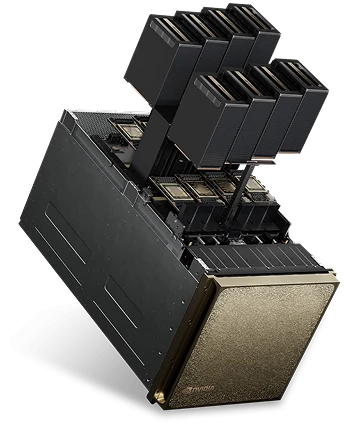
Computers for training robotic models
Teaching a robot to understand natural language, recognise objects and plan complex movements — all simultaneously, requires massive computational power. This can only be delivered by powerful systems such as NVIDIA DGX or HGX servers with software from the NVIDIA Isaac suite of robotic applications.
These multi-GPU systems deliver unprecedented training potential with huge memory capacity and rapid networking for the largest datasets to be fed to the GPUs accelerating the most complex physical AI models.
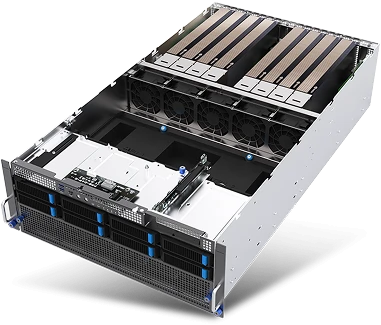
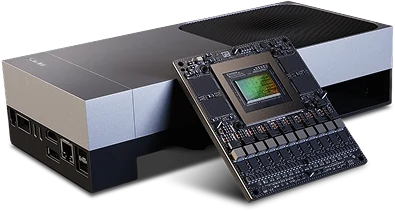
NVIDIA’s concept of these three computer platforms working in a closed loop to deliver physical AI solutions to industrial facilities and smart cities across the globe, signals our human-AI system interaction is only set to increase. Far from a fleeting tech bubble, there are almost daily developments across the robotic and autonomous vehicle spectrum and you can keep abreast of them by exploring our monthly AI Newsletter, blogs, stories and press release within the Scan Presszone.
Scan is the UK’s leading NVIDIA Elite partner and the only certified NVIDIA DGX Managed Services Provider (MSP). To discuss your AI projects or challenges, don’t hesitate to contact our experts on 01204 474210 or at [email protected].
GET IN TOUCHFrequently Asked Questions
NVIDIA's 'three-computer solution' is a model designed to develop and deploy physical AI-based systems, such as autonomous robots and autonomous vehicles. It surmises that three different NVIDIA platforms are required to successfully develop systems like robots.
DGX or HGX systems are required to train datasets to scale and then fine-tune the model. Next, RTX PRO servers — designed for advanced visualisation tasks — support the Omniverse real-time collaboration cloud platform, enabling simulation of the environments and human-robot interactions, so all scenarios can be tried and tested. Finally, onboard Jetson GPU modules allow the finalised model to be deployed directly on the robot so it can perform as intended.
The 'three computer problem' is a scenario posed by NVIDIA to illustrate that physical AI systems such as robots and autonomous vehicles require three distinct development phases to successfully deploy them.
DGX or HGX systems are required to train datasets to scale and then fine-tune the model. Next, RTX PRO servers — designed for advanced visualisation tasks — support the Omniverse real-time collaboration cloud platform, enabling simulation of the environments and human-robot interactions, so all scenarios can be tried and tested. Finally, onboard Jetson GPU modules allow the finalised model to be deployed directly on the robot so it can perform as intended.
- DGX or HGX systems are required to train datasets to scale and then fine-tune the model.
- RTX PRO servers — designed for advanced visualisation tasks — support the Omniverse real-time collaboration cloud platform, enabling simulation of the environments and human-robot interactions, so all scenarios can be tried and tested.
- Jetson GPU modules onboard robots allow the finalised model to be deployed directly on the robot so it can perform as intended.
NVIDIA's 'three-computer solution' is a concept designed to develop and deploy physical AI-based systems, such as autonomous robots and autonomous vehicles. All the elements of the solution can be bought from Scan — DGX or HGX systems to train datasets to scale and then fine-tune the model; RTX PRO servers to support the Omniverse real-time collaboration cloud platform, enabling simulation; and Jetson GPU modules to deploy the final model directly on the robot, so it can perform as intended.
NVIDIA Omniverse is a cloud computing platform for building and operating simulation applications such as digital twins. It enables teams to connect major 3D design tools (like Blender, Autodesk, and Unreal Engine) into a single, shared, physically accurate virtual world, enabling real-time collaboration.
Physical AI is artificial intelligence that operates within the physical world, enabling machines to interact with humans by perceiving, reasoning, and acting autonomously — combining AI models with sensors and actuators. Unlike digital AI, these systems adapt to real-time, dynamic environments, allowing robots, drones, and autonomous vehicles to handle complex physical tasks rather than just processing data.
Scan sells a comprehensive range of robots — including humanoid, quadruped and robotic arms — that can be subjected to AI development. Read our Robot Buyers Guide for more information about each type of solution.