CONTENT HUB
AI NEWSLETTER JUNE 2026
Welcome to our monthly newsletter dedicated to everything AI.
Here you'll find a roundup of the latest developments from the world of artificial intelligence - new GPU-accelerated systems, partnerships and collaborations, AI breakthroughs, experimental techniques and more. This month's hot topics include:
- NVIDIA announces RTX Spark for laptops and desktops
- First NVIDIA Vera benchmarks published
- Intel announces Xeon 6+ CPUs for agentic AI
- AMD teases EPYC 6th gen CPUs
- Isidore - developing AI to understand our solar system
- Dobot robotic arms with cybersecurity built-in
- AI-powered cameras detect traffic offences
- All the latest from Scan at the MPTS Show
- Must attend AI events in June
- Scan DLI course dates
Let's get into it.
NVIDIA ANNOUNCES RTX SPARK FOR LAPTOPS AND DESKTOPS
Building on the success of the DGX Spark, NVIDIA is bringing a modified version of this SoC architecture featuring a Grace Arm CPU and Blackwell GPU to market in laptops and desktop PCs later this year.
Unlike DGX Spark, which is designed to develop AI models before scaling out training and inferencing workloads on DGX servers, RTX Spark is designed for consumers performing everyday tasks such as graphics and video creation, photo editing and gaming.
With between 16 and 128GB of unified memory and up to 1 petaFLOP of FP4 performance the RTX Spark will rely heavily on a new generation of AI-enhanced applications and tools from the likes of Adobe and Blackmagic to be performant. With just 6,144 CUDA cores and 20 CPU cores it's also worth managing expectations when it comes to content creation and gaming, which will almost certainly heavily rely on DLSS to generate a smooth framerate.
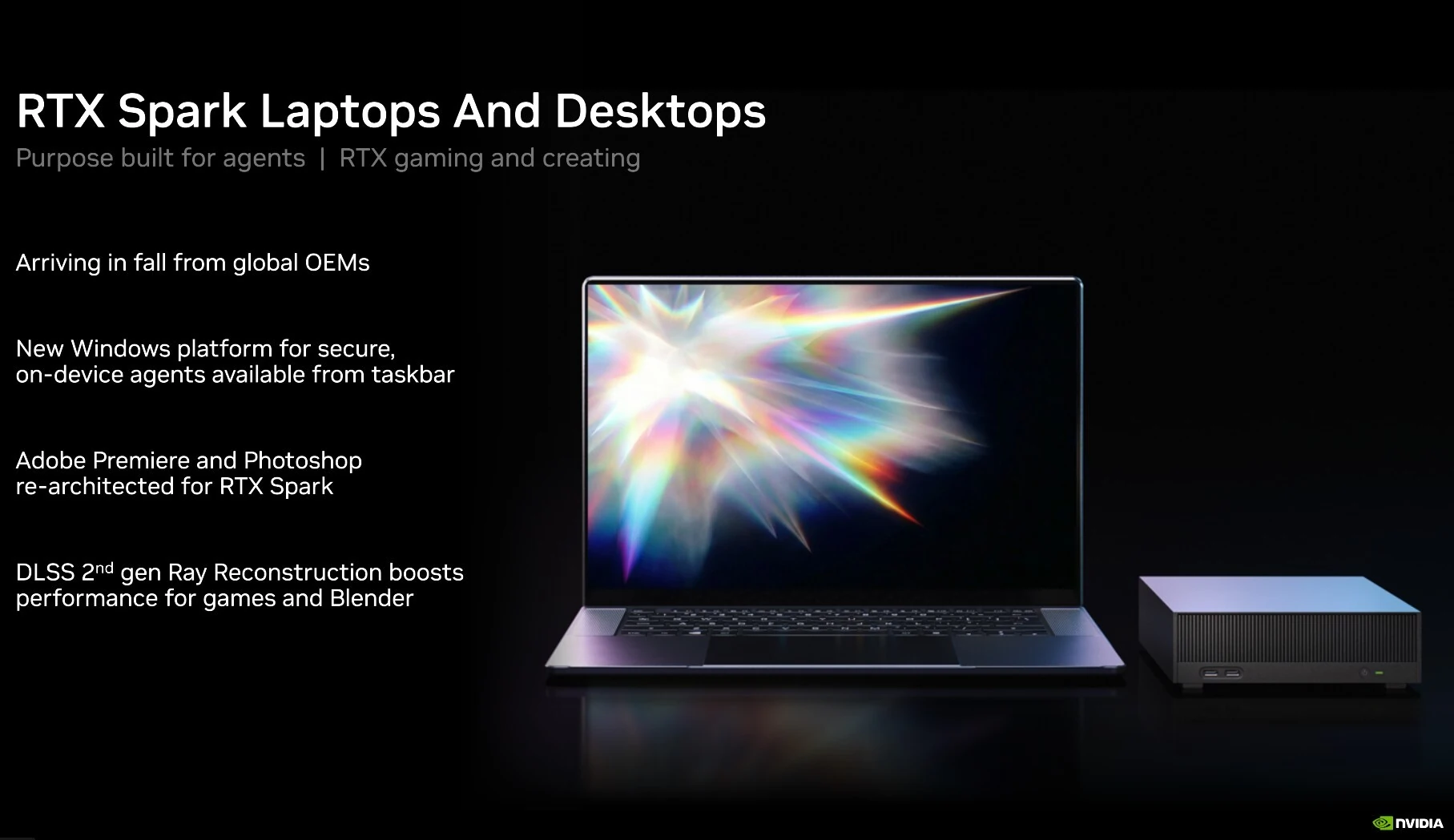
Nonetheless, RTX Spark could mark a significant change in the PC industry which for decades has been dominated by systems comprising an x86 CPU and a discrete GPU. At the very least, it should remove much of the distinction between thin-and-light laptops and powerful bricklike laptops. What it means for the desktop market will be much more interesting to monitor. Look out for RTX Spark laptops and desktop PCs from Scan later this year.
FIRST NVIDIA VERA BENCHMARKS PUBLISHED
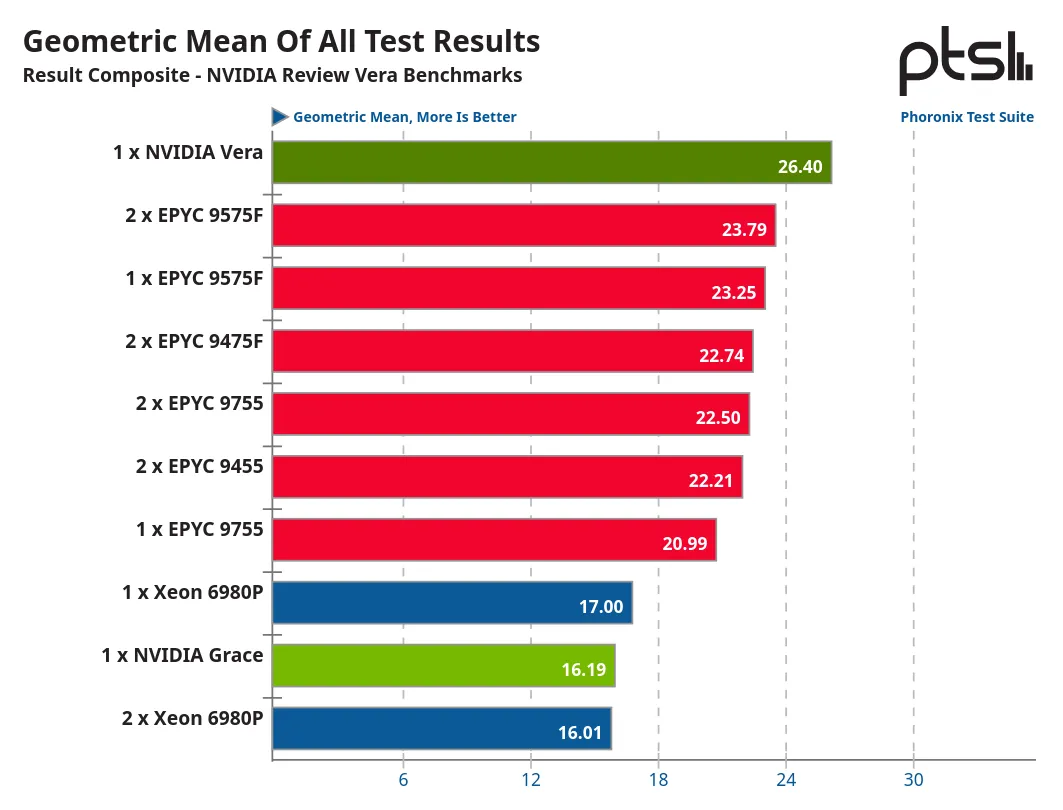
NVIDIA Vera, the next generation CPU designed for reinforcement learning (RL) and agentic AI, has been put through its paces by Phoronix - a leading technology analysis website for Linux hardware reviews and benchmarks. At its launch NVIDIA claimed that Vera 'delivers leading per-core performance and massive memory bandwidth to power thousands of parallel software environments' - and it seems that Phoronix agree. Although it didn't come out on top in every individual benchmark, on average it was the clear leader with Phoronix stating that it exceeded expectations in never seeing an ARM64 processor compete so well against the x86_64 competition. Across the tests Vera delivered 11% better performance over a pair of AMD EPYC 9575F CPUs, 55% over a single Intel Xeon 6980P and 63% over NVIDIA's own previous generation Grace CPU.
The Vera CPU features 88 Arm Olympus cores, each core supports NVIDIA Spatial Multithreading, a new type of multithreading that enables 176 total threads by physically partitioning each core's resources rather than time slicing them, allowing the system to optimise for performance or density at runtime. Furthermore, during testing, the Vera CPU demonstrated a 450W TDP with a further 50W for the LPDDR5X memory - all whilst providing up to 1.2TB/s of memory bandwidth. In contrast the best performing AMD and Intel CPUs had 500W TDPs for the CPU alone and much less memory bandwidth. Keep your eye out for future benchmarking as NVIDIA delivers more Vera infrastructure to its partners and register your interest with Scan today to be first in the queue when Vera-powered systems are available to purchase later this year.
INTEL ANNOUNCES XEON 6+ CPUS FOR AGENTIC AI
Continuing the theme of AI CPU news, Intel has announced a new range of Xeon 6+ processors. These appear to be the successors to Xeon 6 E, which are powered by a large array of power-efficient E-cores, for cloud-scale workloads that demand high task-parallel throughput. Xeon 6+ builds on this, being designed for cloud-native agentic AI workloads, increasing the number of E-cores from 144 to 288 thanks to the Intel 18A manufacturing process. Similarly, the memory controller has been expanded from eight to 12-channels, and the PCIe 5.0 controller from 88 lanes to 96 lanes.
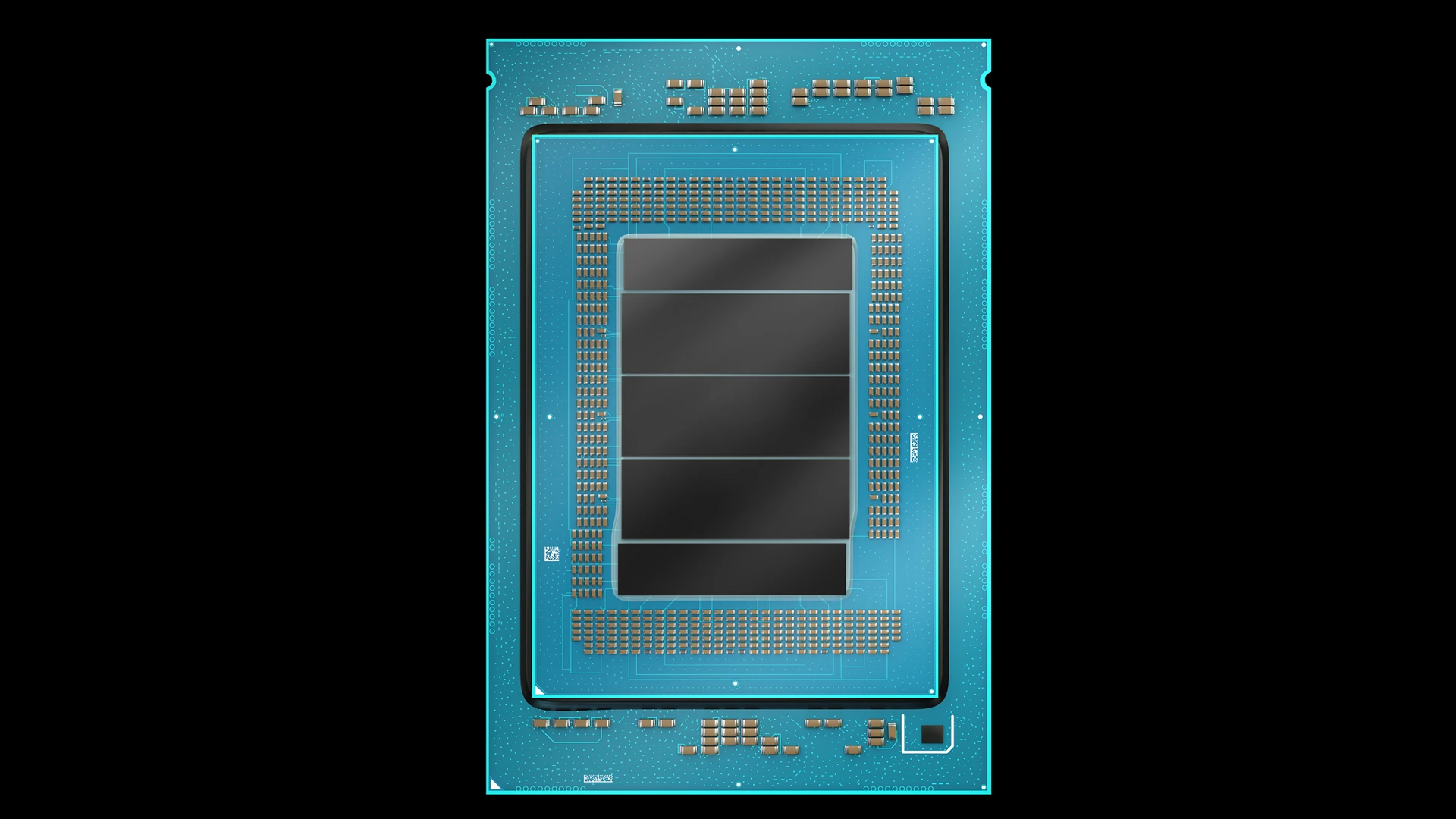
With the growing power demands of datacentre servers, Xeon 6+ introduces a new tool, Application Energy Telemetry, that provides granular analytics of power consumption even down to individual threads. Working both in and out of band management, AET will enable datacentre operations to monitor and allocate power more accurately and developers to optimise code more effectively. Look out for 3XS Servers from Scan, configured with Intel Xeon 6+ CPUs later this year.
AMD TEASES 6TH GEN EPYC CPUS
Rounding up the AI CPU news, AMD has begun the initial stages of production for its 6th gen EPYC server CPUs. Codenamed Venice, they are made using an industry-first 2nm at TSMC, and promise up to 256 Zen 6 cores, with a claimed 70% performance increase over the current Zen 5 based CPUs. The Venice architecture features a new SP7 socket, 16 memory channels delivering up to 1.6TB/s of per-socket bandwidth, with likely PCIe 6.0 support. Whilst 6th generation Venice CPUs are aimed at general-purpose performance, another 6th gen product - Verano - will be launched to tackle high-density cloud and advanced AI workloads. Look out for 3XS Servers from Scan, configured with AMD EPYC 6th gen CPUs later this year.
You can also expect further details on 6th gen EPYC and other AMD technologies at the upcoming AMD Advancing AI 2026 event, being held in San Francisco on 22 – 23rd July. The event promises to showcase numerous AMD technologies aimed at transforming AI and robotic workloads, including the new AMD Instinct MI400-series GPUs, the AMD Helios 72-node GPU rack solution and AMD Primus, a unified training and inference framework. Be sure to check out our August newsletter for all the announcements.
ISIDORE - DEVELOPING AI TO UNDERSTAND OUR SOLAR SYSTEM
Over the last few newsletters we've highlighted research from the Earth Systems Lab (ESL) initiative, showcasing the groundbreaking efforts using AI to expand our knowledge of our planet and its atmospheric systems. While these individual breakthroughs are hugely significant, these projects existing in isolation poses an issue, as to truly address interconnected global challenges, there is a need for orchestrated results that deliver insight across projects. To address this challenge, Isidore, a high-performance cloud storage platform has been established to act as an AI repository searchable via SpaceML.org.
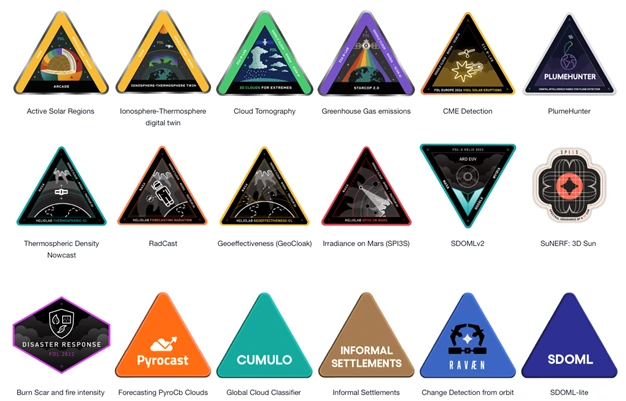
This platform brings together dozens of AI models from five years of ESL research including FloodBrain - an LLM for rapid information collation for flood response teams; Floodcast AI - a model for global river flood predictions up to 3 days ahead; Pyrocast - an end-to-end CNN pipeline to monitor and forecast pyrocumulonimbus events with a 6-hour horizon; SHRUG-FM - a framework that flags uncertain predictions in other climate foundation models; and Lunar-FM - an FM combining 18 moon-centric datasets with an agentic AI NLP overlay. Isidore also includes all the outcomes from the NASA supported HelioLab and LunarLab US-based research teams.
DOBOT ROBOTIC ARMS WITH CYBERSECURITY BUILT IN
DOBOT, one of China's leading robotic arm manufacturers, has announced that its high-payload CR 30H series robot arms have successfully achieved cybersecurity compliance with the award of ISO 10218-1:2025. This new international safety standard specifies the requirements for the inherently safe design of industrial robots including protective measures. Published in early 2025, it replaces the previous 2011 edition to address advancements in robotics and increasing human-robot collaboration. The cybersecurity assessment covers key areas including threat modelling and cybersecurity risk assessment, access control and identity authentication, secure communication mechanisms, configuration and interface protection, secure software update management and port and communication security.
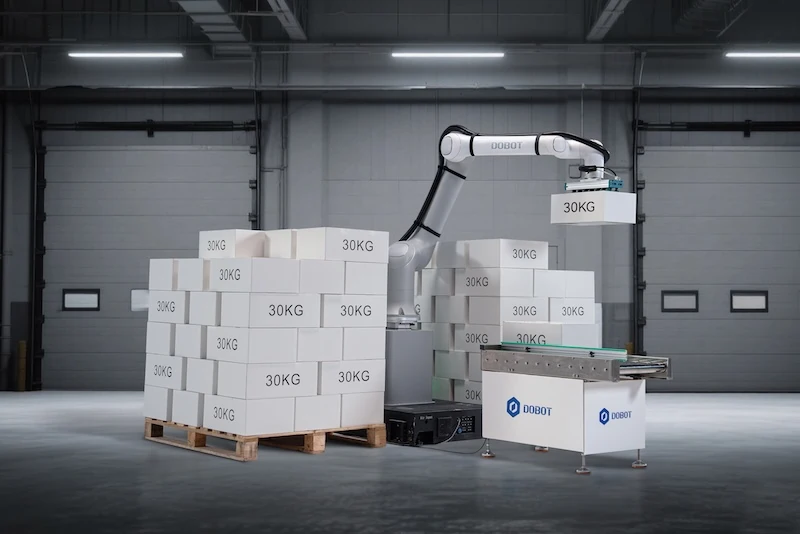
The CR 30H series are heavy-duty arms for industrial automation, combining a 30kg payload, 1,800 mm reach, and class-leading 300°/s joint speed for fast, stable palletising and material handling. They feature HyperMove motion control, built-in torque sensors, and one-hand drag-to-teach programming with ±0.05 mm repeatability and IP67 protection. Contact our specialist AI and robotics team for more information on this and the wide range of Dobot solutions.
AI-POWERED CAMERAS DETECT TRAFFIC OFFENCES
Sussex Police is deploying AI-powered cameras to target the reduction of dangerous driving behaviours. During the last three years in the two counties, 82 people have been involved in a collision where someone was driving whilst using a mobile phone, and 214 people have been injured in a collision due to not wearing a seatbelt. The roll-out follows a successful trial carried by National Highways in 2024, which saw 458 offences detected across just seven days in West and East Sussex alone, including 330 drivers not wearing a seatbelt, 118 drivers on their mobile phone, and 10 where both offences were committed.

The system works using high-definition, infrared cameras mounted on trailers or vans with a steep, downward-looking angle alongside a shallower, forward-looking angle, to capture images through windscreens. The images are then processed through computer vision algorithms to instantly scan for hands holding phones, physical seatbelt clasps, and the diagonal strap across a driver's chest, automatically flagging potential offences. The flagged images and corresponding registration plates are then sent to trained police operators or highways officers for verification and to discard false positives, prior to the registered vehicle keeper being contacted by the police. You can learn more about the growing use of AI applications deployed in smart cities across the UK.
ALL THE LATEST FROM SCAN AT THE MPTS SHOW
The Media Production & Technology Show (MPTS) is the UK's premier event for the media, entertainment, and broadcast industries. Held annually in May at Olympia in London, it brings together over 13,000 creators, technologists, and suppliers to explore the latest innovations in content creation, post-production, audio and AI. The show celebrated its 10-year anniversary and the Scan Pro Video team has been exhibiting for nine of those years, showcasing our cutting-edge solutions for the professional visualisation market.
This year's stand saw collaboration with the Gadget Show team and leaders in virtual production Nightsky Studios, alongside demonstrations of AI-powered visual workflows with NVIDIA DGX Spark, virtual video workstation capabilities on the Scan Cloud platform.
MUST ATTEND AI EVENTS IN JUNE

June is shaping up to be a busy month on the AI event front with plenty of dates for your calendar.
- LONDON TECH WEEK - This year's theme is 'shaping the future of business through technology' embracing AI and quantum computing (Olympia, London | 8-12th June)
- ACCELERATING AI CONFERENCE 2026 - Focused on practical technology improvements and AI integration for businesses (The Ridgeway Centre, Milton Keynes | 9th June)
- SCAN AI CONNECT AT LONDON TECH WEEK FRINGE - Bringing the energy and insight of NVIDIA's GTC conference to London (Onyx Restaurant & Bar | 10th June)
- MEET SCAN AT THE AI SUMMIT LONDON - The leading European summit on AI strategy and real-world enterprise applications (Tobacco Dock, London, Stand 416 | 10-11th June)
- THE RESPONSIBLE AI CONFERENCE - A practitioner-led event covering regulations, ethical AI usage, and data privacy (Cavendish Venues, London | 23rd June)
- DIGITAL HEALTH AND AI CONFERENCE 2026 - Exploring the integration of artificial intelligence in healthcare (The King's Fund, London | 30th June)
Look out for Scan at these events and why not prepare by reading our 7-part AI BLOG that walks you through all the stages of an AI project and helps you choose best practice, avoid pitfalls and achieve maximum ROI. We'll bring you the latest from these shows in our July newsletter.
SCAN DLI COURSE DATES
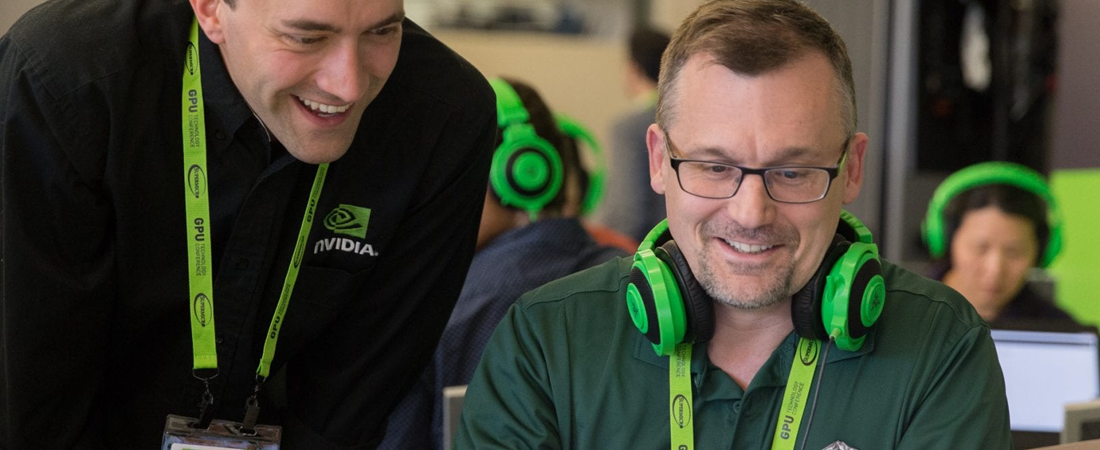
There's still time to register for our next NVIDIA Deep Learning Institute courses. Our DLI courses are delivered by qualified instructors who are in the perfect position to pass on their knowledge and educate developers on how to get the most from the rapidly evolving field of AI. Upcoming dates include:
- ADDING NEW KNOWLEDGE TO LLMS - 15TH JUNE
For further information on these courses and to register, visit our EDUCATION AND TRAINING SERVICES page.