PRESSZONE
AI NEWSLETTER MAY 2026
Welcome to our monthly newsletter dedicated to everything AI.
Here you'll find a roundup of the latest developments from the world of artificial intelligence - new GPU-accelerated systems, partnerships and collaborations, AI breakthroughs, experimental techniques and more. This month's hot topics include:
- NVIDIA Ising - the path to quantum computing
- Self-checking foundation models for disaster prediction
- Rebellions AI brings systems to market
- Waymo starts autonomous vehicle tests on UK roads
- New AI tool for heart failure prediction
- NVIDIA Nemotron 3 – multimodal agent model
- AI events for your calendar
- Scan NVIDIA DLI course schedule
Let's get into it.
NVIDIA ISING - THE PATH TO QUANTUM COMPUTING
NVIDIA has announced Ising - a suite of AI tools for high-performance, scalable quantum error correction and calibration. Ising is named after a landmark mathematical model that dramatically simplified the understanding of complex physical systems. Ising addresses two of the most critical challenges in building hybrid-quantum classical systems, by essentially becoming the operating system of quantum machines, transforming fragile qubits to scalable and reliable quantum-GPU systems.

NVIDIA Ising is based around two customisable models, tools and data that accelerate quantum processors. Firstly, Ising Calibration - a vision language model that rapidly interprets and reacts to measurements from quantum processors, enabling AI agents to automate continuous calibration, reducing the time needed from days to hours. Secondly, Ising Decoding is a 3D convolutional neural network model, that can be optimised for either speed or accuracy, to perform real-time decoding for quantum error correction. This offers a 2.5x uplift in speed and a three-fold increase in accuracy over pyMatching, the current open source industry standard.
Discover more about the extensive range of NVIDIA frameworks and AI models.
SELF-CHECKING FOUNDATION MODELS FOR DISASTER PREDICTION
Earth Systems Lab (ESL) is a public-private partnership with the European Space Agency (ESA) and Trillium Technologies. It applies AI technologies to space science, pushing the frontiers of research, developing new tools to help solve some of the biggest challenges that humanity faces. These include the effects of climate change, predicting space weather, improving disaster response and identifying meteorites that could hold the key to the history of the universe.
The third project results published from the 2025 research sprint deals with geospatial foundation models (GFMs) for Earth observation. They are trained on vast datasets and can learn transferable representations of the Earth's surface that can be adapted to various tasks downstream, which makes them very powerful when attempting to predict disaster likelihood or timelines for events such as wildfires and flooding, and planning the appropriate and timely emergency response. However, there are a growing number of examples that question their reliability when used with real-world data, which could be particularly problematical when used in high-stakes scenarios such as disaster monitoring, where unseen data is common. In response the ESL team developed SHRUG-FM - an AI foundation model that evaluates and grades other GFMs, alerting users to potential limitations. You can learn more by reading the detailed case study.
REBELLIONS AI BRINGS SYSTEMS TO MARKET
Rebellions AI, which completed its Series C funding in September 2025 - including a $250 million investment by Arm - has announced full-scale server systems for AI training. The RebelServer is based on eight Rebel100 AI accelerators - each with 144GB HBM3e memory at 4.8TB/sec bandwidth.
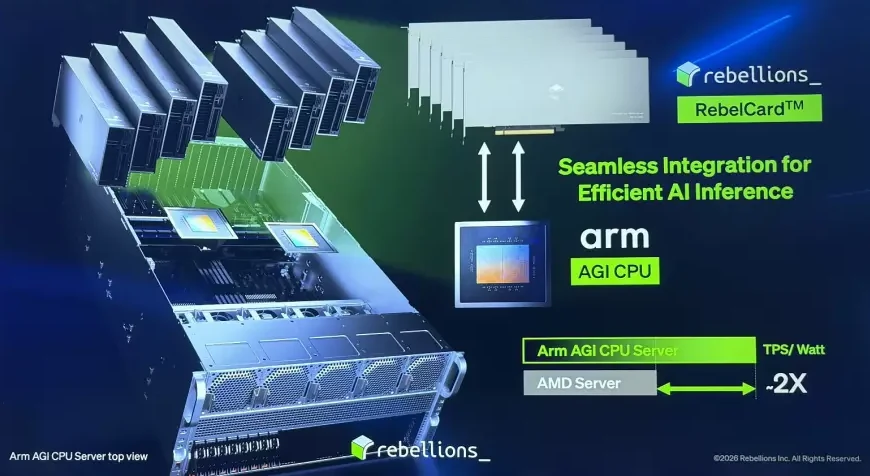
The RebelRack solution features four RebelServer nodes, for a total of 32 accelerators with a total of 45TB of aggregate HBM3E memory, achieving a reported 16 PFLOPS of AI inference performance at FP8 and 8 PFLOPS at FP16. Each server node is configured with eight Rebel100 network cards delivering 400GbE across the stack. The typical power draw of the RebelRack is 5 kilowatts, with a maximum power draw of 7 kilowatts. For advanced AI the RebelPod takes RebelRacks and interlinks them with an 800 GB/sec Ethernet back-end network, with a 25GB/s front-end network linking out to the data residing in other systems. RebelPods will be available in configurations of two, four, six, eight, and sixteen racks, ranging from 64 to 1,024 accelerators in a single system image for running very large inference workloads.
WAYMO STARTS AUTONOMOUS VEHICLE TESTS ON UK ROADS
Waymo - formerly the Google self-driving car project - has started testing its autonomous vehicles on public roads in London as it prepares to launch a commercial robotaxi service this year. A fleet of around 100 all-electric Jaguar I-Pace cars, equipped with Waymo's self-driving system, is being deployed across a 100-square-mile area of the city. Initially, they will have a human safety operator behind the wheel, until the UK government finalises its trial program regulations allowing vehicles to be fully autonomous.

London could prove to be Waymo's first international deployment. However, Waymo is facing competition from Wayve and Uber, which are also carrying out trials in London too, with aspirations to launch their own fleets of autonomous taxis.
NEW AI TOOL FOR HEART FAILURE PREDICTION
Over 350,000 annual CT scans are routinely done at NHS hospitals in order to spot problems in the heart, typically to look for fatty plaques in coronary arteries. Researchers at the Radcliffe Department of Medicine at the University of Oxford trained an algorithm on over 59,000 images to assess the fat around the heart and whether a person had developed heart failure in the next five years to learn how to spot the early signs of the condition. The tool was then tested using scan results from a further 13,424 people in England, and found that it could predict the risk that a person developed heart failure in the next five years with 86% accuracy.
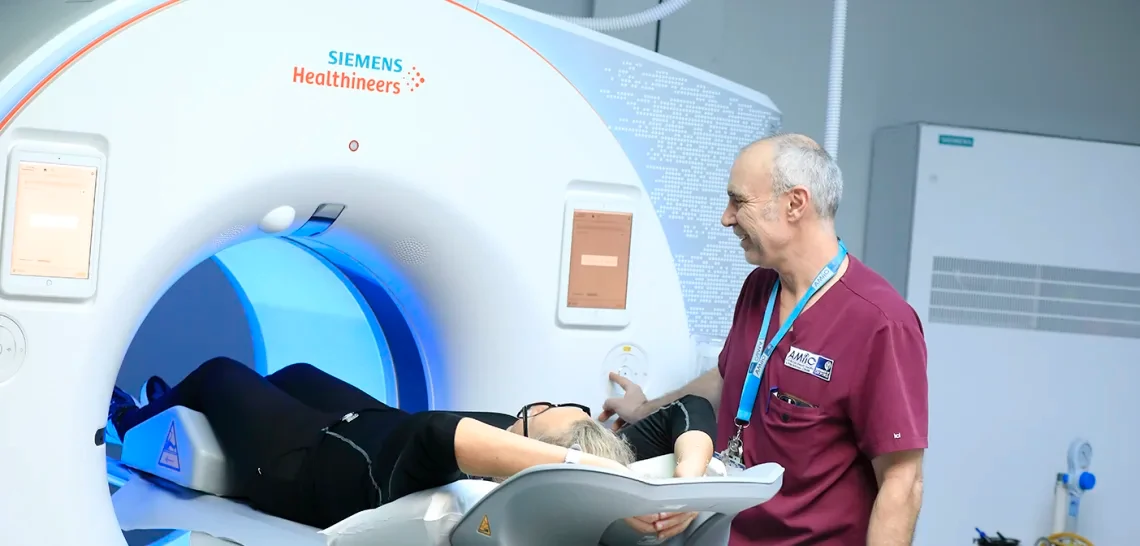
This type of AI analysis would allow doctors to warn a person at high risk of developing heart failure. The study found that those in the highest risk group were 20 times more likely to develop heart failure than those in the lowest risk group. The people in the highest risk group had around a one in four chance of developing heart failure within five years. Wide application of this information, could try and reduce heart failure levels amongst the population.
AI assisting clinical staff is becoming much more common in the healthcare sector and Scan has a proven track record of being involved in projects at Durham University and Federated learning across London NHS trusts and COVID prediction in NHSGCC.
NVIDIA NEMOTRON 3 NANO OMNI – MULTIMODAL AGENT MODEL
NVIDIA has launched Nemotron 3 Nano Omni - an open multimodal model that unifies vision, audio and language to streamline the development of AI agents. Previously, separate language, vision and speech models would have performed multiple inference passes resulting in higher latency and context fragmentation, not to mention greater development costs.
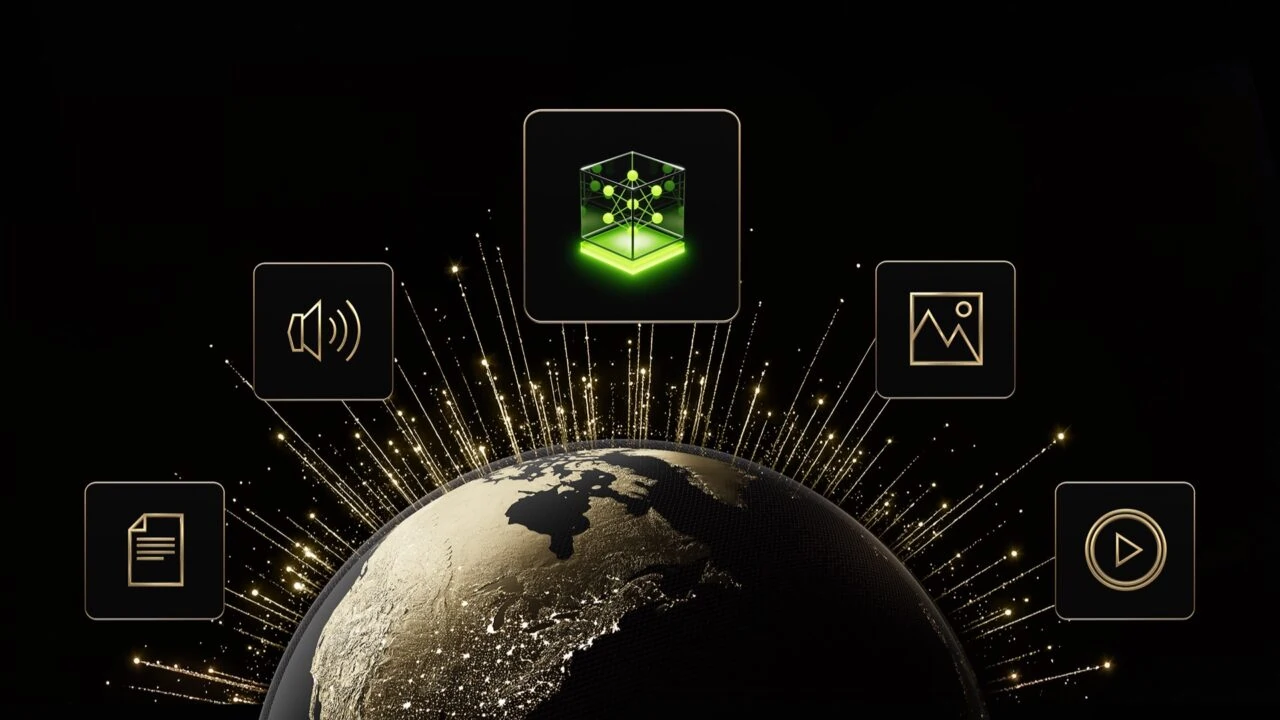
By combining vision and audio encoders within a hybrid mixture-of-experts architecture, Nemotron 3 Nano Omni eliminates the need for separate perception passes, driving improved context relation and inference efficiency at scale, with up to 9x higher throughput versus other open omni-modal models.
Discover more about the extensive range of NVIDIA frameworks and AI models.
AI EVENTS FOR YOUR CALENDAR


There are a number of key AI-focused events in the UK coming later this year, providing valuable insights into the latest AI innovations and technologies, as well as trusted advice on how to get started with your AI projects. On 10-11th June we have the AI Summit London, at the Tobacco Dock, followed by the AI World Congress at the Great Hall on the 23-24th June. Later in the year is Big Data LDN, on the 23-24th September at Olympia, London.
Scan’s next Springboard event brings together innovators, builders, and industry leaders for insightful presentations, meaningful conversations and high-value networking. Register now for the 28th May.
Look out for Scan at all these events and why not prepare by reading our 7-part AI Blog that walks you through all the stages of an AI project and helps you choose best practice, avoid pitfalls and achieve maximum ROI.
SCAN NVIDIA DLI COURSE SCHEDULE
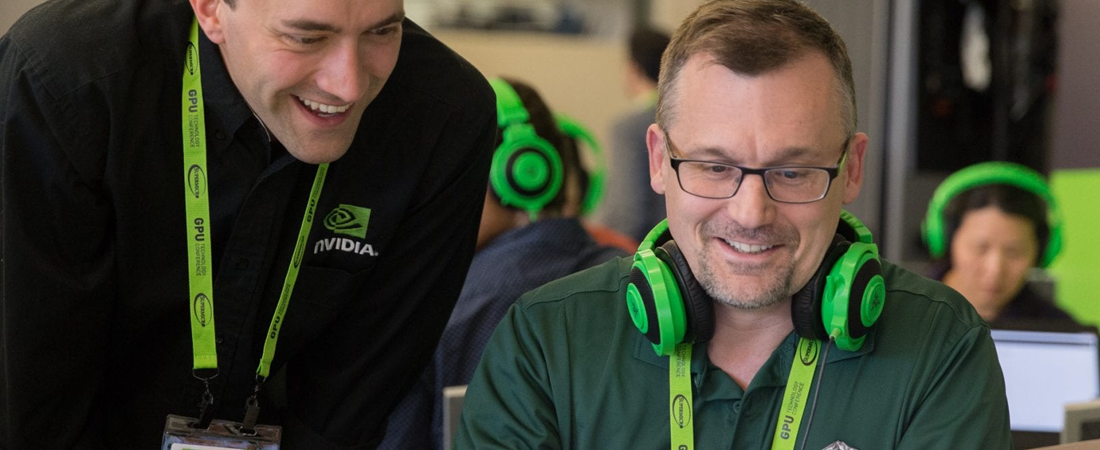
The next round of NVIDIA Deep Learning Institute (DLI) courses scheduled for 2026 has been confirmed and is as follows:
- DATA PARALLELISM: HOW TO TRAIN DEEP LEARNING MODELS ON MULTIPLE GPUS - 4TH JUNE 2026
For further information on these courses, visit our Education and Training Services page.