PRESSZONE
AI NEWSLETTER MARCH 2026
Welcome to our monthly newsletter dedicated to everything AI.
Here you'll find a roundup of the latest developments from the world of artificial intelligence - new GPU-accelerated systems, partnerships and collaborations, AI breakthroughs, experimental techniques and more. This month's hot topics include:
- New groundbreaking research published from ESL 2025
- Unitree G1 humanoid robot’s adventure at -47°C
- NVIDIA Blackwell Ultra benchmarked at agentic AI
- AI tools could save lives in busy hospitals
- Get ready for NVIDIA GTC 2026
- Generative AI being integrated into finance industry
- Wildlife conservation using AI is the future
- AI events for your calendar
- Scan NVIDIA DLI course schedule
Let's get into it.
NEW GROUNDBREAKING RESEARCH PUBLISHED FROM ESL 2025
Earth Systems Lab (ESL) by is a public-private partnership with the European Space Agency (ESA) and Trillium Technologies. It applies AI technologies to space science, pushing the frontiers of research, developing new tools to help solve some of the biggest challenges that humanity faces. These include the effects of climate change, predicting space weather, improving disaster response and identifying meteorites that could hold the key to the history of the universe.
The first project results published from the 2025 research sprint is 3D Clouds for Climate Extremes - a study aimed at better prediction of cloud formation and evolution during extreme weather events such as hurricanes. Through innovative use of vision transformers and masked autoencoder models, the research team illustrated the potential of providing continuous 3D modelling for cloud patterns in extreme climate events, based on combining multiple geostationary satellite data to improve forecasts with a high degree of generalisation. You can learn more by reading the detailed CASE STUDY.
UNITREE G1 HUMANOID ROBOT’S ADVENTURE AT -47°C
A Unitree G1 humanoid robot has just completed an extreme cold weather trial in the Altay region of Xinjiang, China. The robot completed over 130,000 steps in temperatures as low as -47.4°C, confirming that operation in such extreme environments is possible. During the trial, the AI-powered G1 followed a pre-planned path across the snow, drawing a Winter Olympics emblem 186 x 100 meters in size, without direct human control, adjusting its balance on ice and uneven snow.
To operate effectively in the cold environment, engineers from Unitree Robotics wrapped its torso in a bright orange winter jacket and put plastic sleeves around its legs and feet. These extra layers helped shield motors, joints, and battery packs from ice and wind. Internally, the robot relied on BeiDou Satellite Navigation software for centimetre-level positioning, while its adaptive path planning software helped it pick each step across the frozen terrain. Sensors including 3D lidar and depth cameras fed constant data about the surroundings to keep the robot upright. Discover more about the G1 and other GPU-enabled Unitree humanoid and quadruped models by reading our ROBOTS BUYERS GUIDE.
NVIDIA BLACKWELL ULTRA BENCHMARKED AT AGENTIC AI
SemiAnalysis, an independent research and analysis company specialising in the semiconductor and AI industries, has demonstrated that the NVIDIA Blackwell Ultra platform, in the form of the GB300 NVL72 SUPERPOD offers up to 50x higher performance (tokens per watt) and 35x lower cost than the Hopper-based DGX H200. Using its InferenceX benchmark different tensor parallel sizes and maximum concurrent requests are presented as a throughput versus latency graph.
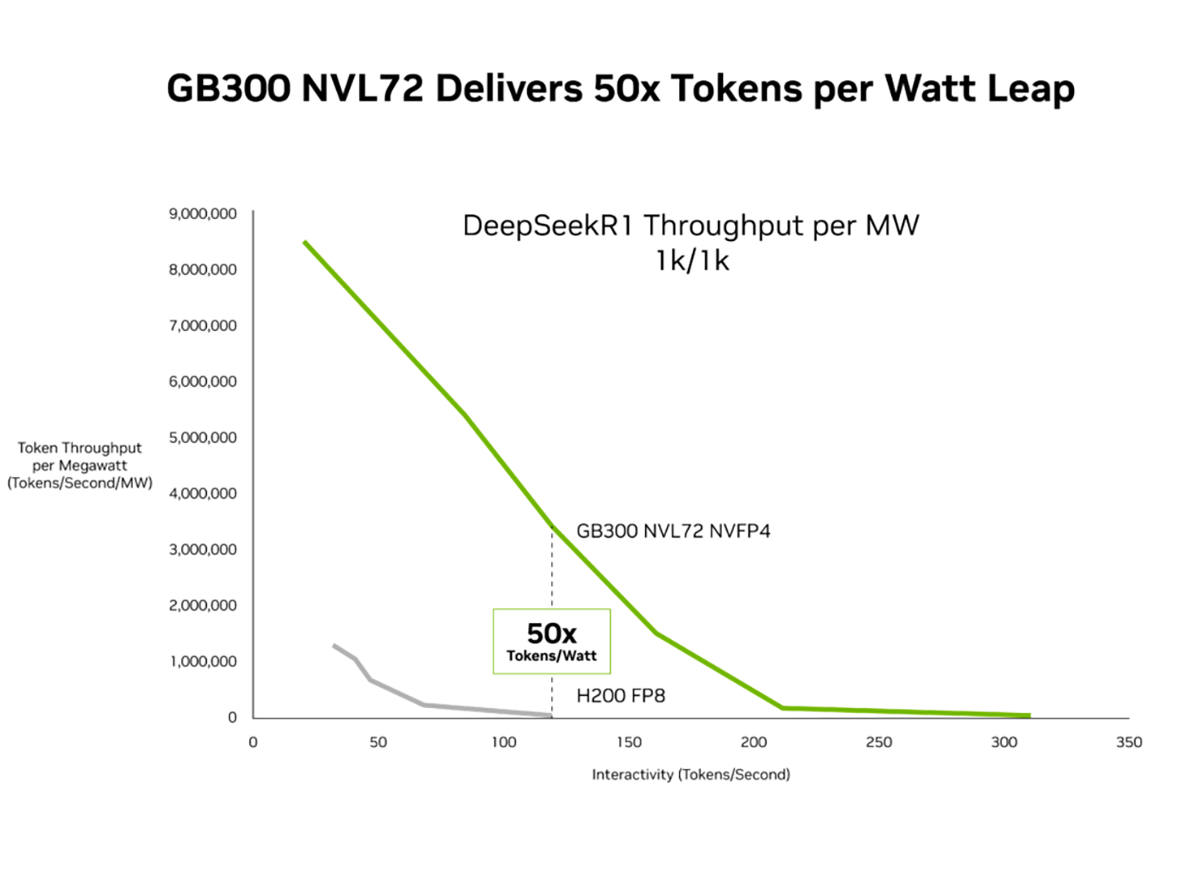
The benchmark results show that Blackwell Ultra is well suited to AI inferencing of this kind due to its GPU kernels being optimised for efficiency and low latency, making the most of its immense compute capabilities and boosting throughput. Additionally, the NVIDIA NVLink Symmetric Memory enables direct GPU-to-GPU memory access for more efficient communication; and programmatic dependent launch minimises idle time by launching the next kernel’s setup phase before the previous one completes. These performance gains translate most dramatically at low latency, where agentic applications operate delivering up to 35x lower cost per token compared with the Hopper platform.
AI TOOLS COULD SAVE LIVES IN BUSY HOSPITALS

Researchers from Durham University, the Northern Care Alliance NHS Foundation Trust and the University of Greater Manchester, supported by the National Institute for Health and Care Research (NIHR) and the Medical Research Council (MRC) have developed an AI model that can better predict a patient’s risk when they are being treated in hospital. Using data from almost 175,000 admissions at Salford Royal Hospital, the model looked at the patient’s full electronic health record, written notes made by clinicians and when patients arrived at the Emergency Department, to produce a personalised risk score.
This helps staff identify which patients are most likely to become critically unwell within the next 24 hours and need urgent attention. Furthermore it improves on the existing NEWS2 (National Early Warning Score 2) assessment which is based on paper-style charts and uses limited data. During testing, at the same level of false alarms, the AI system correctly identified 92% of patients who later deteriorated, compared with just 13% using NEWS2. You can learn more by reading the full BRITISH MEDICAL JOURNAL PAPER.
AI assisting clinical staff is becoming much more common in the healthcare sector and Scan has a proven track record of being involved in projects at Durham University and FEDERATED LEARNING ACROSS LONDON NHS TRUSTS and COVID PREDICTION IN NHSGCC.
GET READY FOR NVIDIA GTC 2026
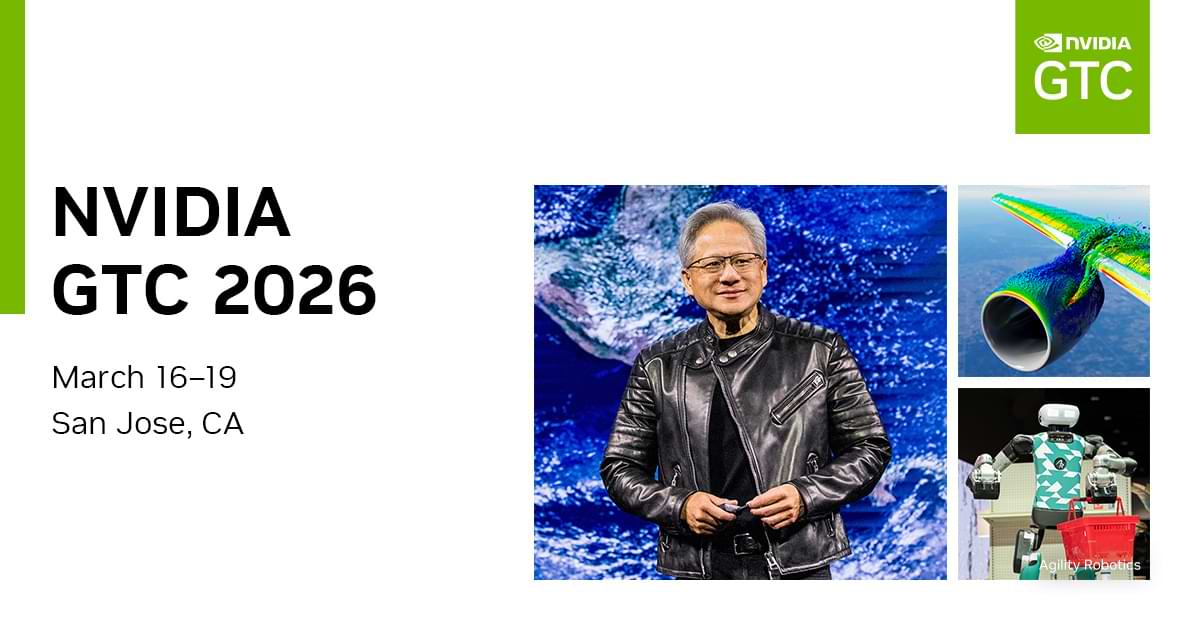
NVIDIA GTC is the premier global AI conference, where developers, researchers, and business leaders come together to explore the next wave of AI innovation. From physical AI and AI factories to agentic AI and inference, GTC 2026 will showcase the breakthroughs shaping every industry. Don’t forget to register and check out the GTC AGENDA and range of keynotes happening from 16-19th March.
Scan is also excited to be heading back to NVIDIA GTC 2026. Alongside showcasing our latest AI‑ready solutions, we’ll also be hosting a special Scan Springboard Social in San Jose. An evening of drinks, food, and relaxed networking with industry friends, the event takes place at 7:30pm on 19 March 2026 at Eos & Nyx - REQUEST A SPACE now so you don’t miss out.
GENERATIVE AI BEING INTEGRATED INTO FINANCE INDUSTRY

After a long experimental phase, AI is now being effectively integrated in many financial workflows., including customer service, document management and software development. In customer service, generative AI is being integrated into digital assistants, with banks such as NatWest announcing that it has led to quicker resolution times and a reduced need for human intervention. Some instances even include voice-to-voice applications that can be used to report suspected fraud that feature tone and conversational nuance.
Staff within finance organisations are being given access to and being encouraged to make use of tools such as Microsoft Copilot, and in-house document management systems that use notes, meeting summaries, and correspondence to understand clients’ circumstances. The systems generate summaries of meetings and documents, reducing the time required to review and record information, releasing 30% more time for direct client face time. Advisers are reporting they spend more time giving advice rather than administration.
AI coding is also being increasing used with engineers in some institutions producing over a third of their software code with AI including reviewing and testing. Learn more about AI IN THE FINANCE INDUSTRY.
WILDLIFE CONSERVATION USING AI IS THE FUTURE
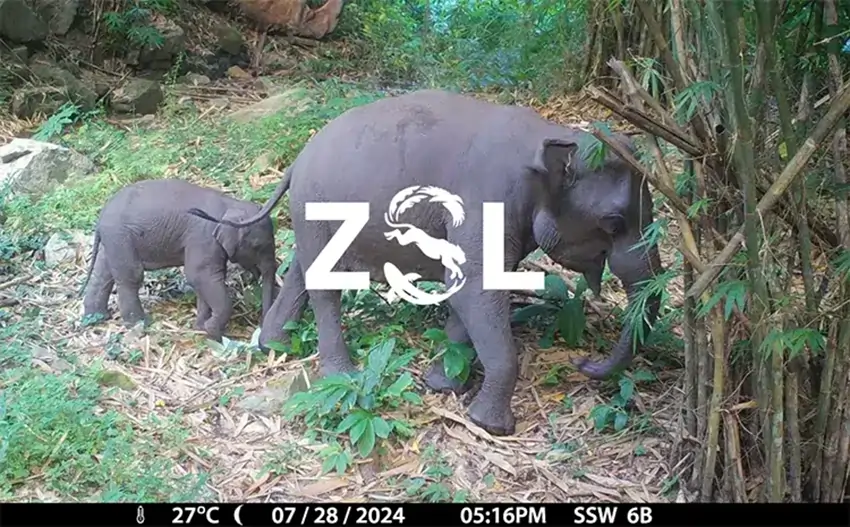
A growing number of AI-powered initiatives is focused on wildlife conservation, helping to address the often-sporadic nature of data availability. It has been highlighted that fewer than 25% of countries currently have clear goals aligned with the Kunming-Montreal Global Biodiversity Framework. This agreement, adopted in December 2022 by 196 parties at COP15, is designed to halt and reverse biodiversity loss by 2030 and achieve a ‘living in harmony with nature’ vision by 2050.
AI-based initiatives are breaking down some of the barriers by making data much more available and much more generalisable to a range of habitats. Success stories include Wildlife Insights, developed by a group of conservation organisations, to create the world's largest publicly accessible database of camera trap images – 253 million images of 4,292 species, across 112 countries - for use in training AI models. Similarly, Global Fishing Watch, uses AI to analyse the movement of ships to identify potential illegal activity like fishing in protected areas.
ZSL has also installed the first SUPERCOMPUTING INFRASTRUCTURE of its kind in order to accelerate analysis of vast quantities of wildlife imagery to better understand the behaviour and movements of animals, helping researchers better understand how climate change and human activity impacts biodiversity.
AI EVENTS FOR YOUR CALENDAR
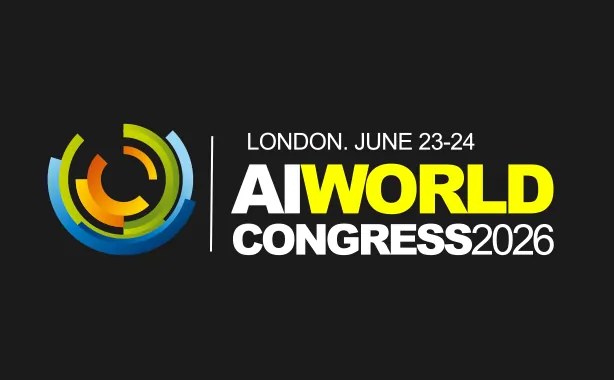
There is a number of key AI-focused events in the UK coming later this year, providing valuable insights into the latest AI innovations and technologies, as well as trusted advice on how to get started with your AI projects. On 10-11th June we have the AI SUMMIT LONDON, at the Tobacco Dock, followed by the AI WORLD CONGRESS at the Great Hall on the 23-24th June.
Look out for Scan at all these events and why not prepare by reading our 7-part AI BLOG that walks you through all the stages of an AI project and helps you choose best practice, avoid pitfalls and achieve maximum ROI.
SCAN NVIDIA DLI COURSE SCHEDULE
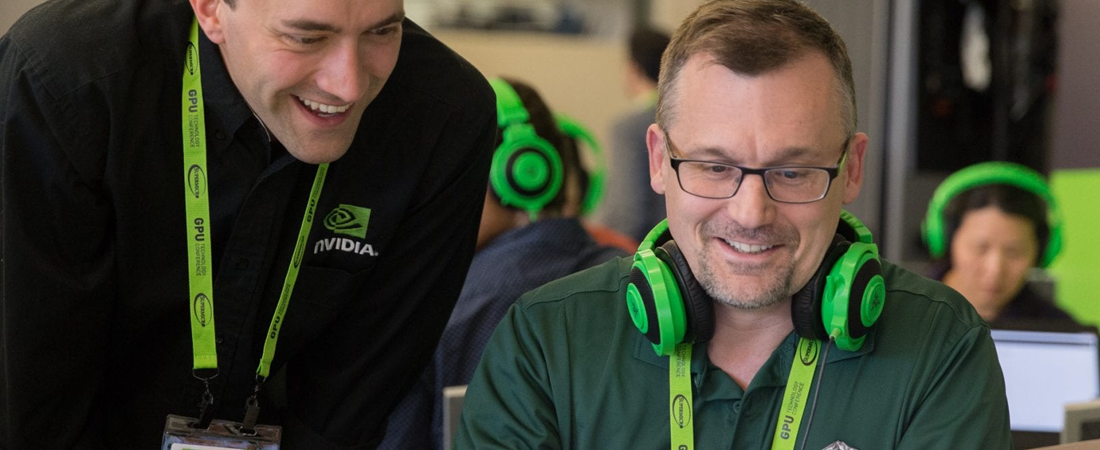
The next round of NVIDIA Deep Learning Institute (DLI) courses scheduled for 2026 has been confirmed and is as follows:
- BUILDING TRANSFORMER-BASED NATURAL LANGUAGE PROCESSING APPLICATIONS - 23RD APRIL 2026
- DATA PARALLELISM: HOW TO TRAIN DEEP LEARNING MODELS ON MULTIPLE GPUS - 4TH JUNE 2026
To reserve your place on these course head over to our EDUCATION AND TRAINING SERVICES.