
Welcome to our monthly AI newsletter. This month, we cover IBM's dual-ISA processor, NHS heart disease detection, PEAK:AIO's Open pNFS storage, the World Humanoid Robot Games, the ESL 2026 Live Showcase, even more AI processor news from Hot Chips, upcoming AI events and NVIDIA Deep Learning Institute courses.
Revolutionary IBM Processor Runs Two ISAs at Once
Chip and system architects joined together at the Hot Chips conference in Palo Alto to discuss the future of microprocessor design and related integrated circuits. This year's conference took place over three days, with dozens of presentations from companies including familiar names in AI such as AMD, Arm, IBM, Intel, Fujitsu, Google, Microsoft, NVIDIA, Open AI and Waymo.
The major announcement from IBM showcased the latest roadmap for its Z architecture - a 64-bit mainframe computer instruction set architecture (ISA) designed for high-volume transaction processing, extreme reliability and robust security. The 'Z' stands for zero downtime, as the platform is built with redundant, hot-swappable hardware components to achieve continuous operations (99.99999% uptime), backed up by the fact that around 70% of the world's financial services tasks are performed by IBM Z mainframes.
The new processor highlighted on the roadmap is a revolutionary new mainframe-grade, dual-ISA CPU. The chip boasts eleven IBM Z cores operating at 5.7+ GHz on a 2nm process, but each core can natively execute both z/Architecture and Arm AArch64!
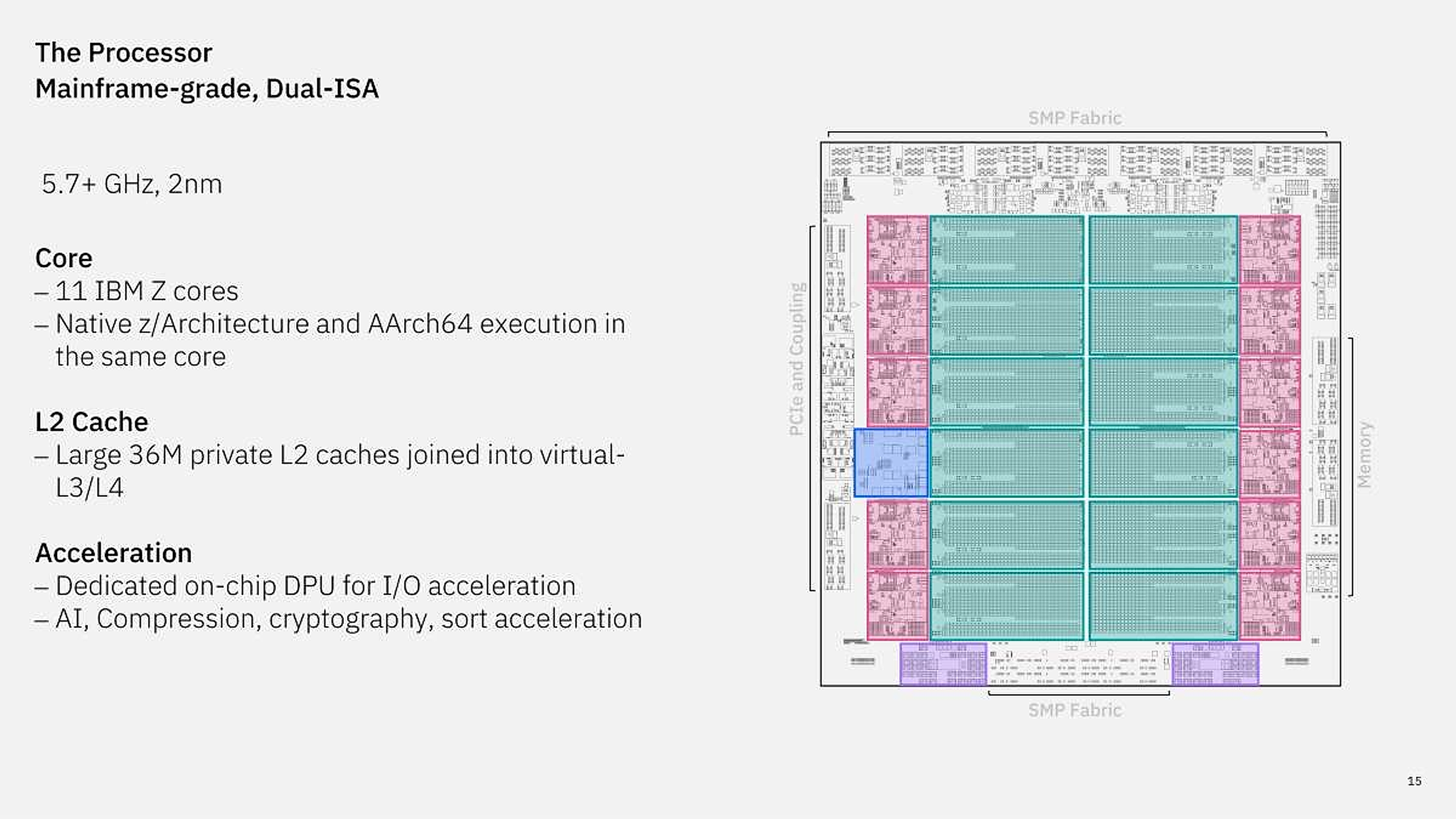
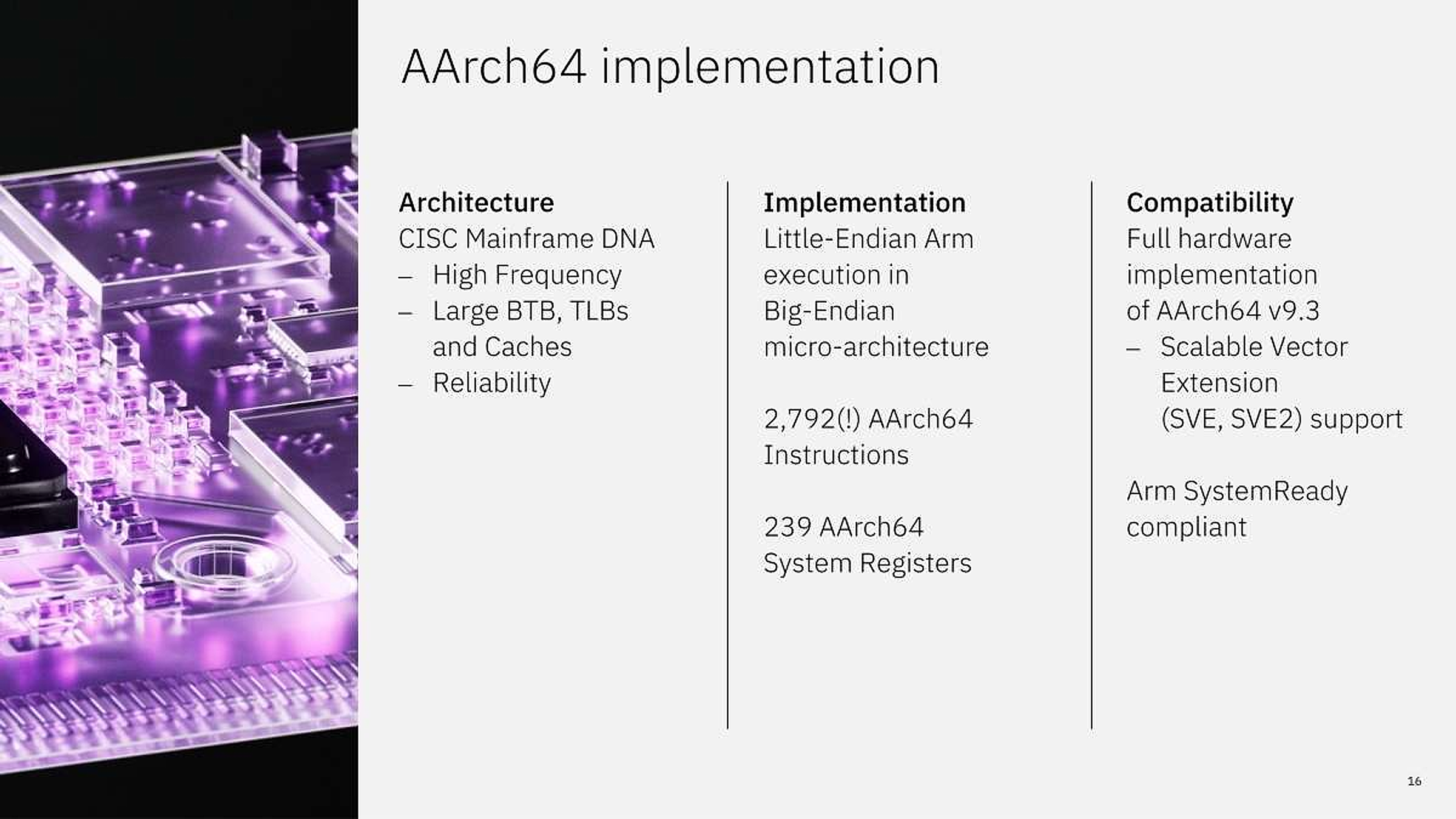
This isn't a chip with two sets of cores - one for Arm and one for IBM Z - every single core natively understands and runs both z/Architecture and Arm code. What's more, it runs Arm software directly on the hardware instead of translating it slowly, using the open-source KVM hypervisor to hand tasks to the correct mode smoothly, allowing it to switch between IBM Z mode and Arm mode in just one nanosecond.
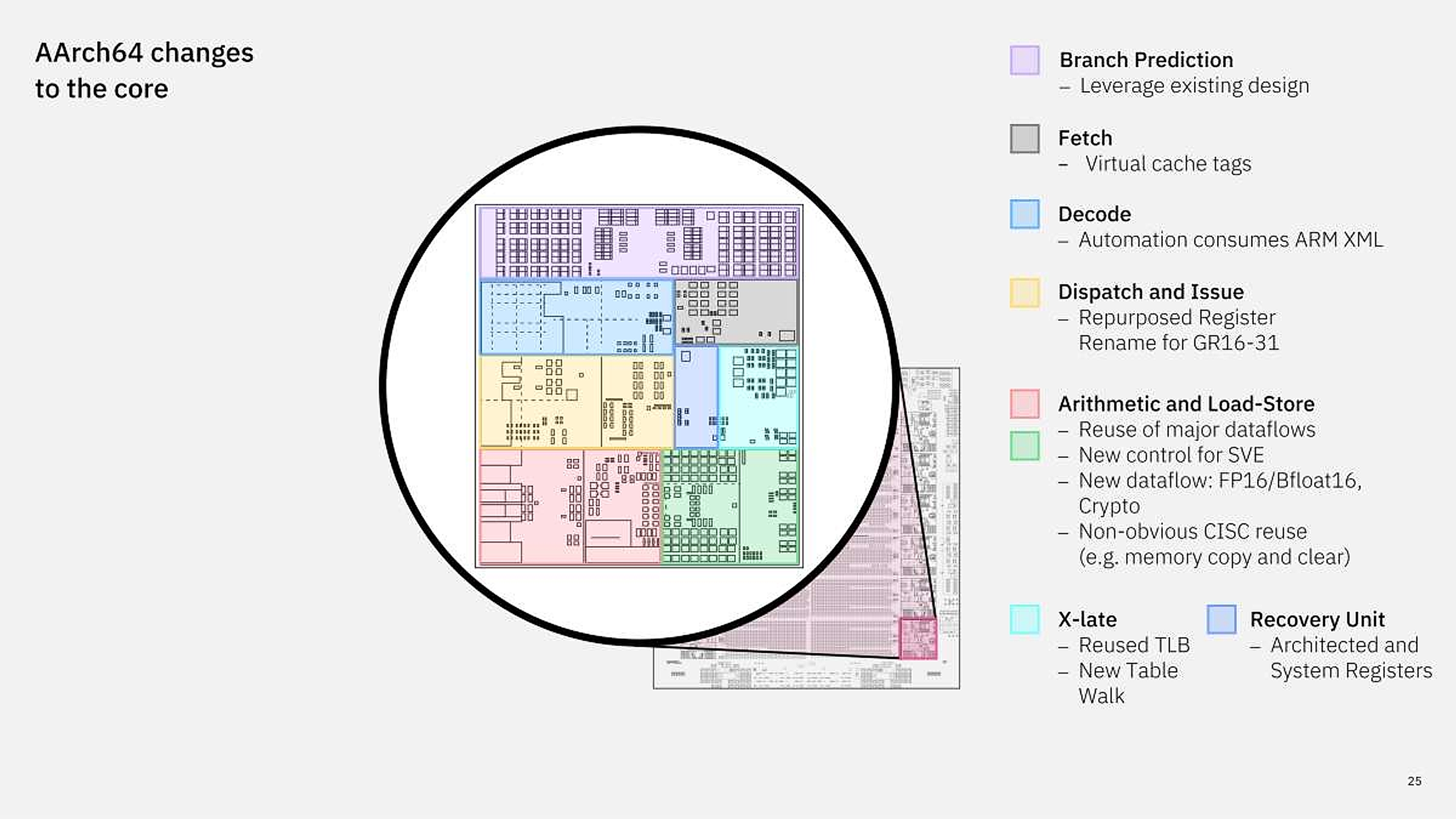
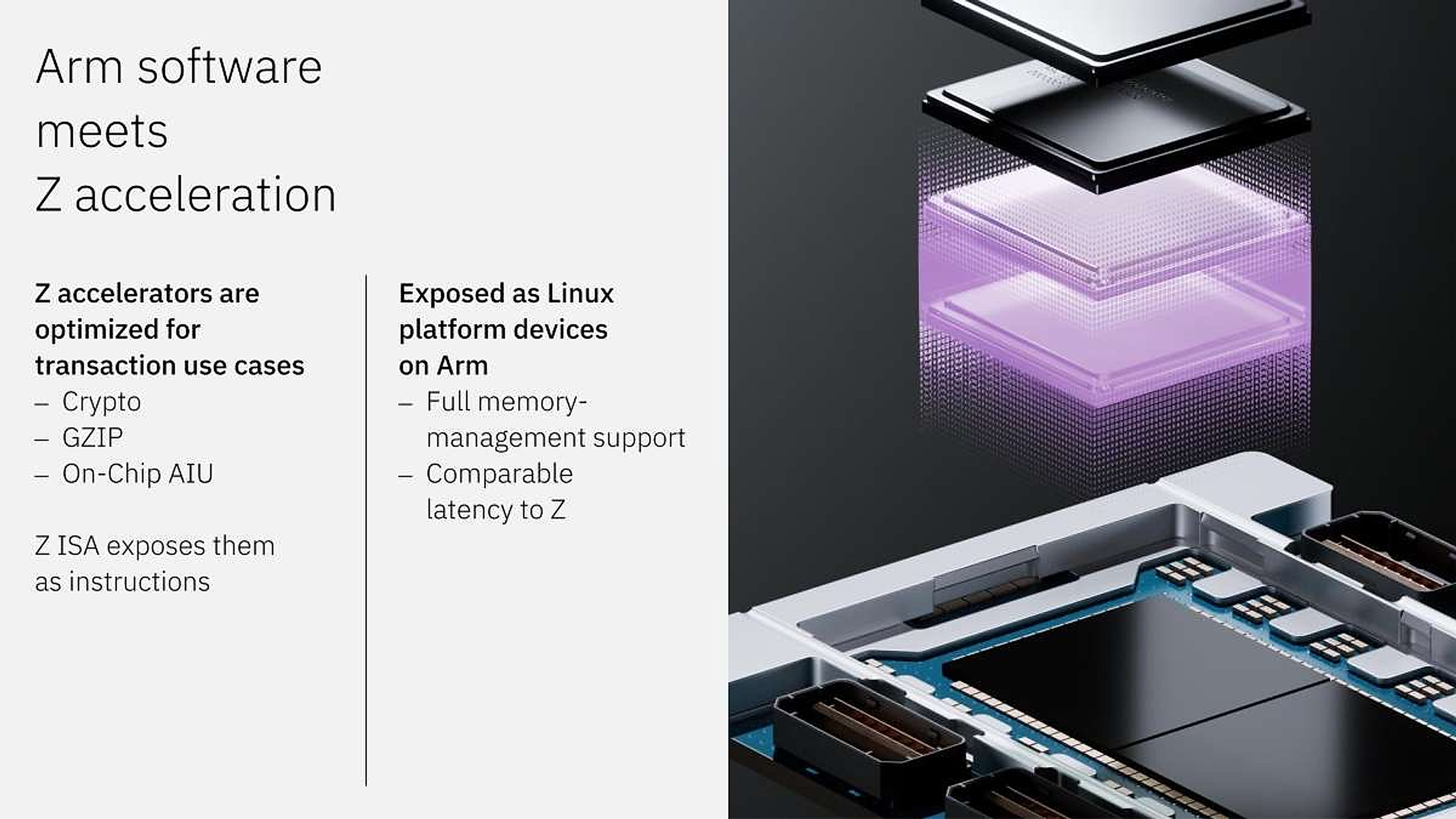
If that wasn't enough the chip also includes built-in AI inference accelerators for fraud detection, plus cryptography and data processing units. These features are key for its intending use of bridging two worlds and enabling the banking and governmental applications that run secure traditional z/OS transactions to sit alongside the modern Arm-based AI and cloud tools on a single silicon architecture. Although this is a level above the AI servers we're used to, it does represent a huge leap forward in unifying disparate architectures, seemingly without any compromise. It also leads to lots of tantilising thoughts about combining other ISAs, such as a x86 + Arm for desktop PCs and workstations, giving you the best of both worlds in one device. One can but dream!
NHS Using AI to Spot Heart Disease
A new AI model developed by researchers at Imperial College London is being trialed in the NHS as an early warning system for heart conditions. Revealed at the European Society of Cardiology congress in Munich, the model examines ECG results, and in just two seconds can identify signs of heart failure and heart valve disease. This speeds up diagnosis, potentially skipping the need to wait months for an echocardiogram, enabling faster treatment. In the original 76,000 patient trial in the US, the AI tool was up to 81% accurate at identifying heart failure, and up to 90% accurate for heat valve disease.
Discover how Scan has helped other organisations implement AI in their healthcare research.



PEAK:AIO Launches Open pNFS Storage for Large AI Clusters
The software defined specialist PEAK:AIO, which pioneered the concept of AI-optimised storage in 2019, has released a new platform Open pNFS. Built on the foundations of AI Data Server, Open pNFS is an open standard, vendor-agnostic parallel Network File System platform designed to eliminate storage bottlenecks in AI and HPC environments.
It leverages technologies including RDMA, NVMe, and CXL to provide a standards-based alternative to traditional proprietary parallel file systems while enabling storage performance to scale linearly as AI workloads grow. The pNFS architecture separates metadata services from the metadata store, allowing resources to scale dynamically and independently of the underlying storage, enabling thousands of servers to serve the largest AI and HPC environments.
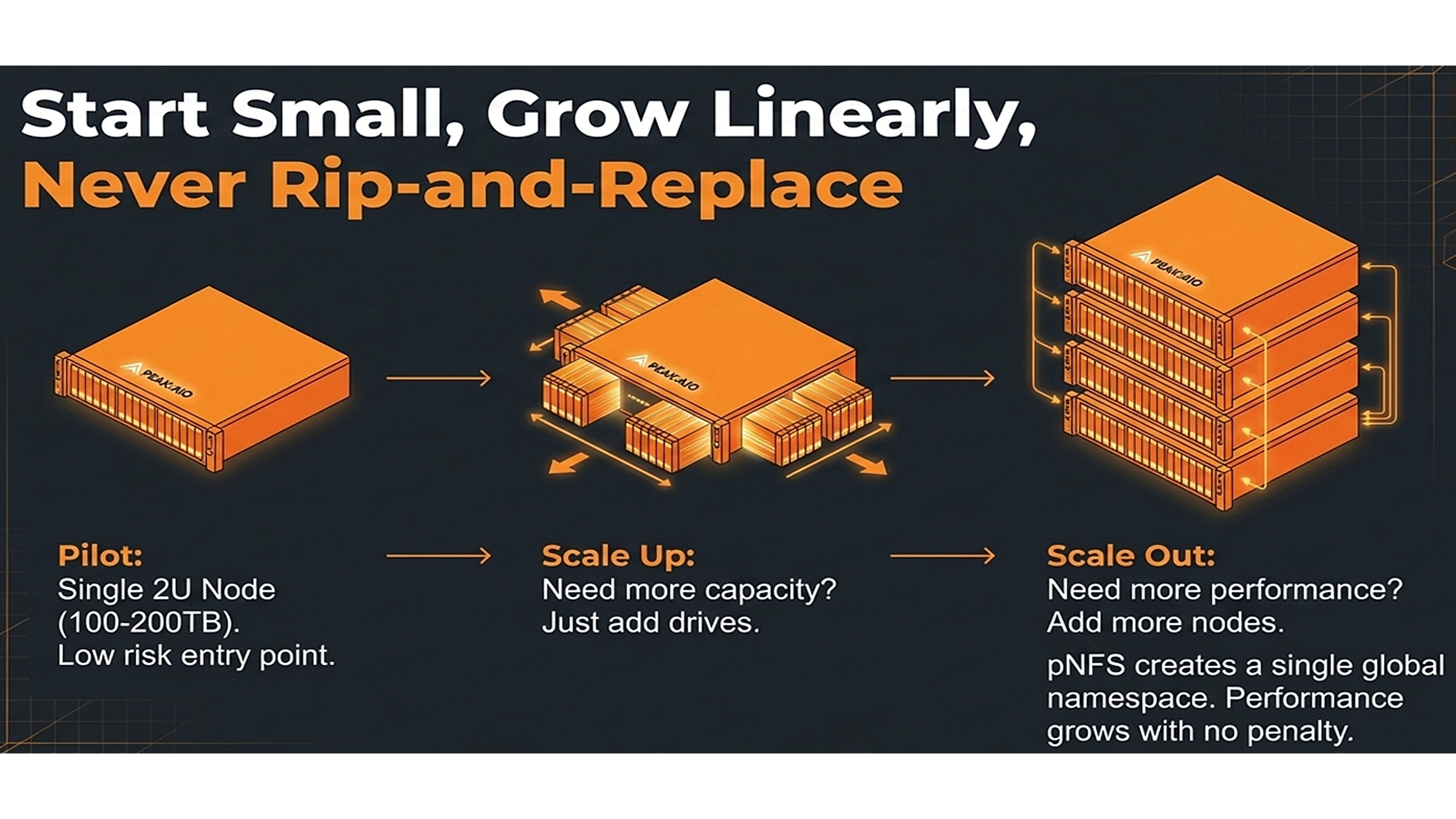
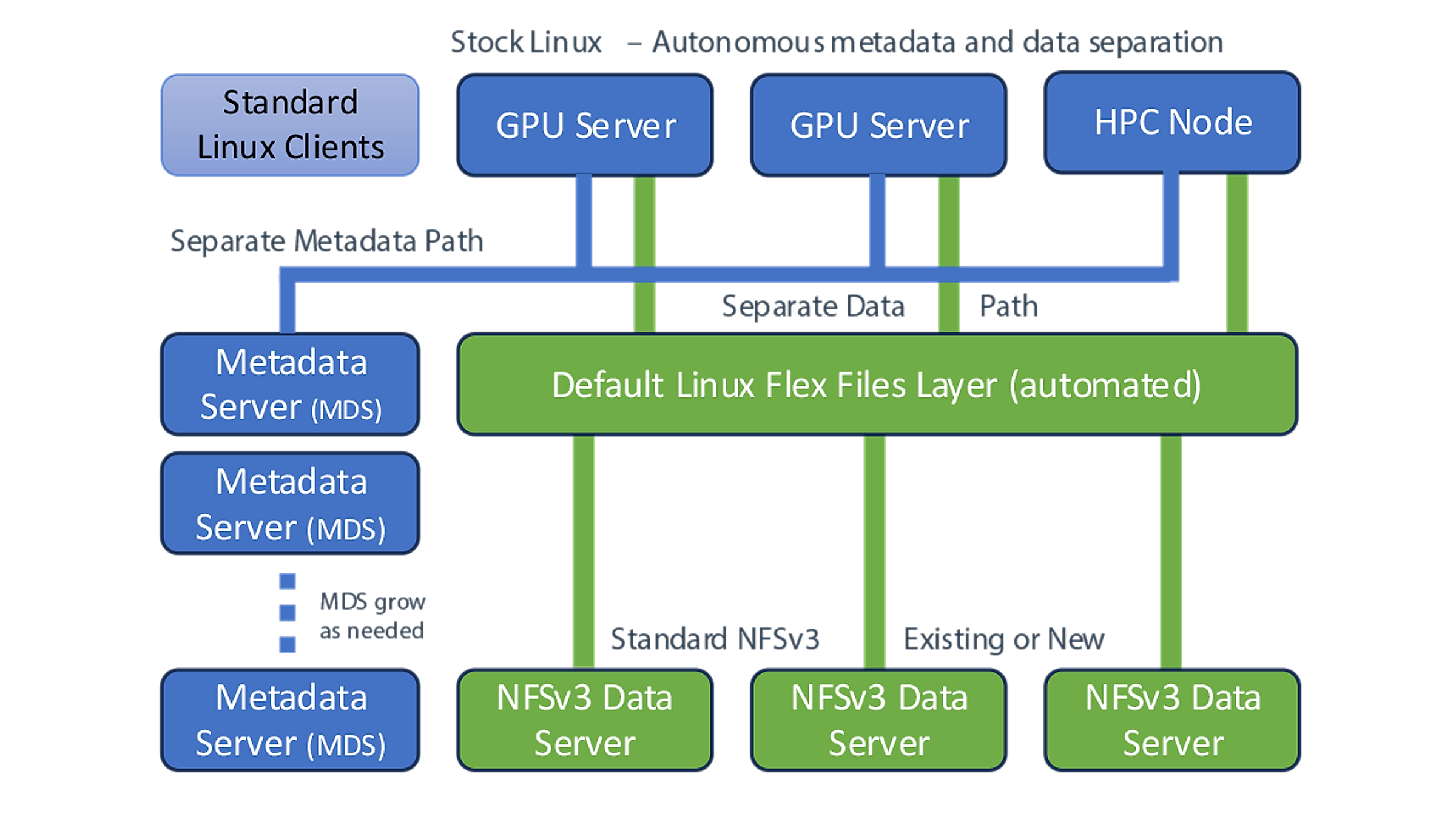
AI Data Server is already widely used across the UK including major installations throughout the including the NHS and University of Liverpool, so it'll be interesting to see how Open pNFS helps customers scale up their AI projects. Find out more about PEAK:AIO storage platforms available at Scan.
New Records Set at the World Humanoid Robot Games
The second World Humanoid Robot Games recently took place in Beijing, with 2,056 humanoid robots from 666 teams, including models from Scan partner Unitree. This year's games included 51 events, testing the robot's strength, speed and flexibility. These include traditional athletic and sport events, as well as real-world tasks such as household chores, firefighting and industrial tasks.
Notable records set this year include a new time of just 9.39 seconds to run 100m by the appropriately-named Lightning robot, beating Usain Bolt's record of 9.58 seconds; and a standing high jump of 2.88m, smashing last year's record of 0.95m, and surpassing Javier Sotomajor's 2.45m.
However, the games weren't without controversy this year, with some robots struggling to stop at the end of races, going so far as to crash into barriers and catch on fire. Even so, the games provide a timely proof of capability as humanoid robots is such a rapidly evolving field.
Browse the range of humanoid robots available at Scan.
ESL 2026 Live Showcase
For the last seven years, Scan has supported Earth Systems Lab (ESL) research. In doing so, we are part of a great scientific initiative using AI to tackle some of the biggest challenges facing humanity today. Following on from our halfway point update on the ESL challenges last month, we can now bring you the coverage from the Live Showcase event held earlier in August. This acts as a round-up of the eight week sprint period, prior to the teams' writing up their findings in full technical memorandum papers.

This years' challenges were MoEarths (Mixture of Earths), Living Forest and Tropical Cyclone Dynamics. Read our full update to watch each of the teams' presentations.
Intel Xeon 7 and Inferencing GPU Unveiled
Intel caught our eye, unveiling not just one, but two new architectures optimised for AI inferencing at Hot Chips 2026.
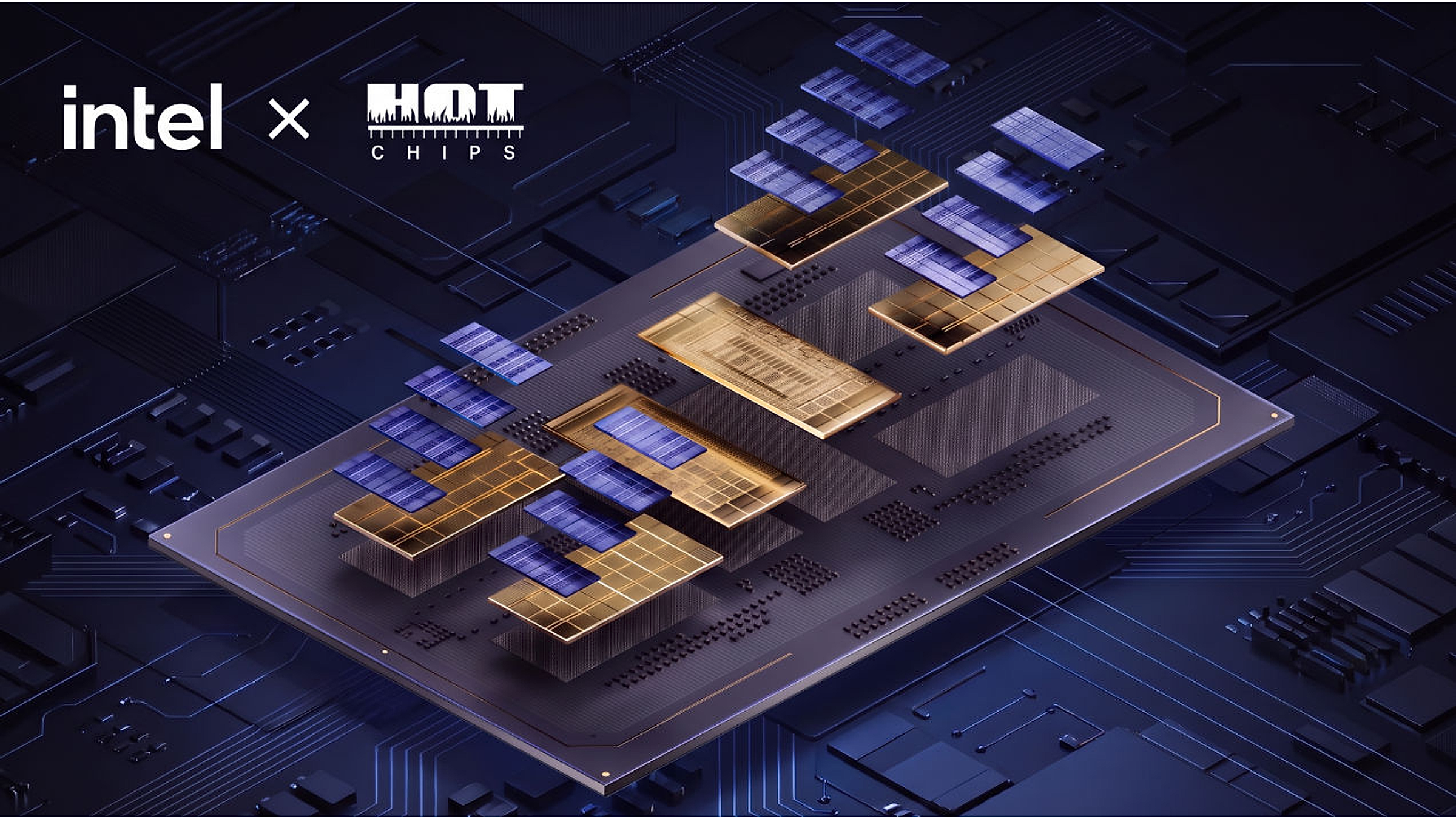
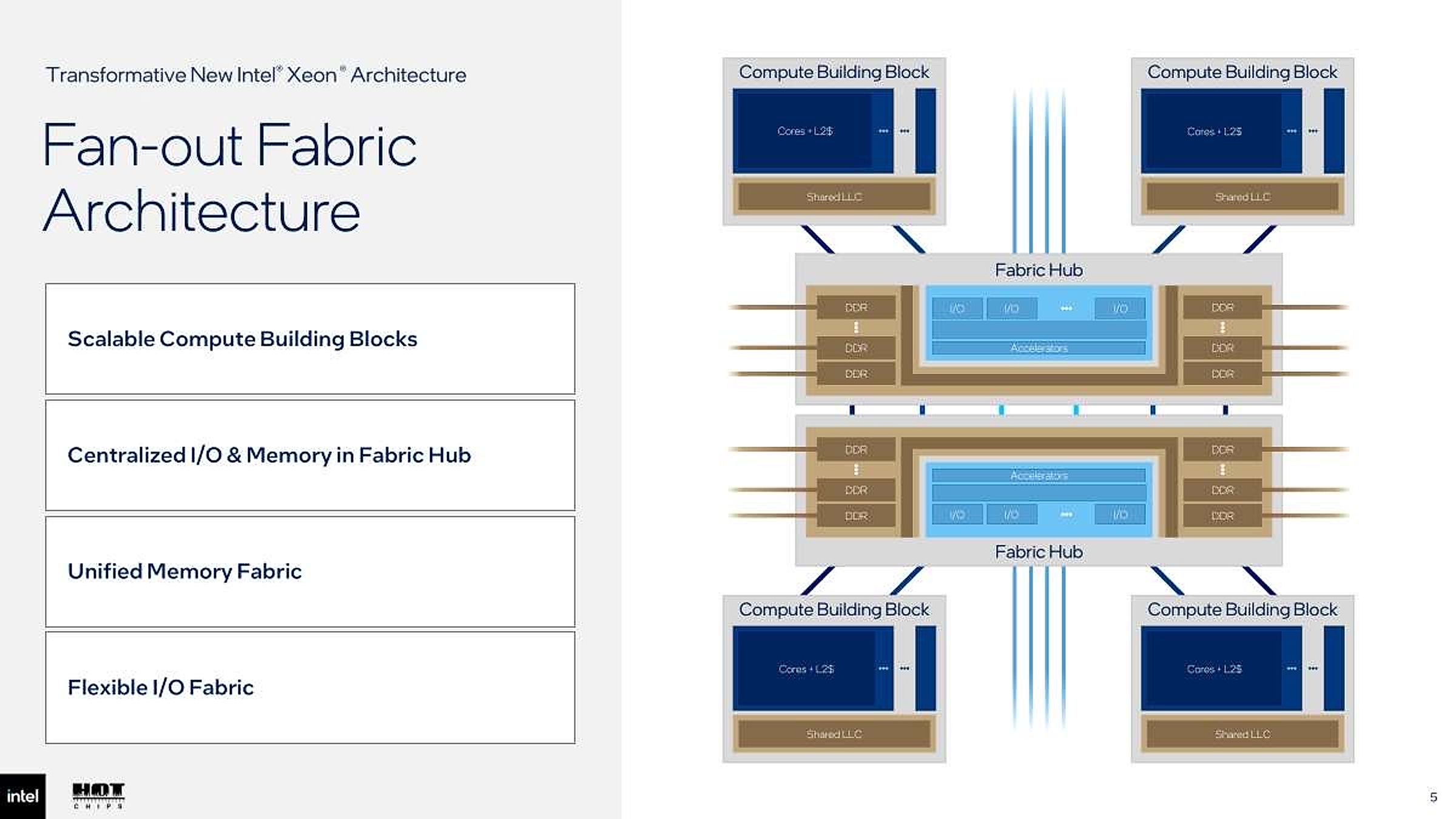
The first of these, Diamond Rapids, will form the next generation of Xeon 7 CPUs scheduled for 2027. Built using the Intel 18A-P process, these new CPUs comprise a new Fabric Hub design which houses the memory and I/O, surrounded by multiple compute blocks. This should be much more scalable than previous designs, which used a mesh or ring-based architecture. As proof of this, Diamond Rapids scales up to 256 cores, double that of current Xeon 6 P models, with a vast 1.28GB cache to provide fast storage for inferencing models that are so demanding on memory subsystems.
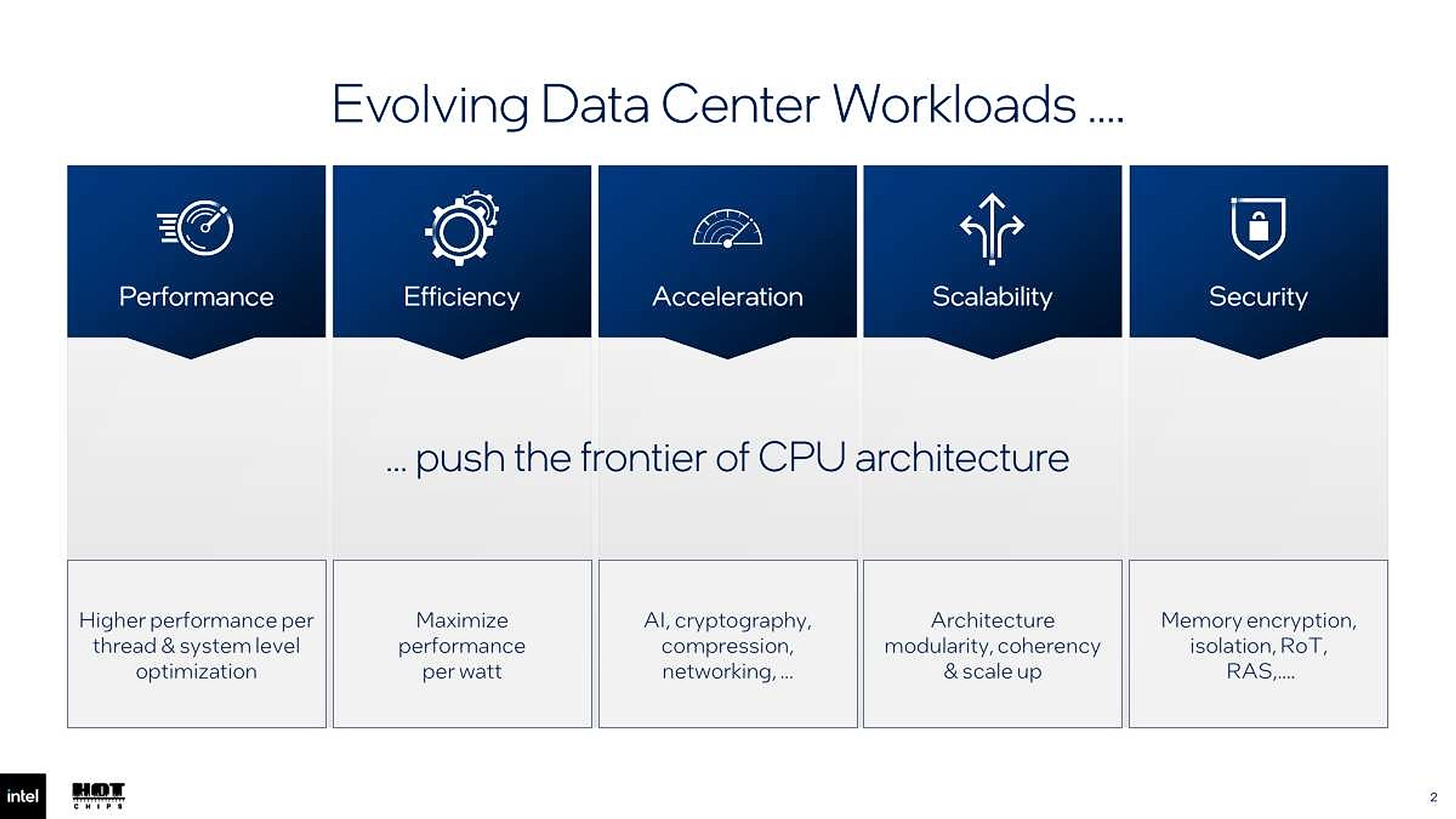
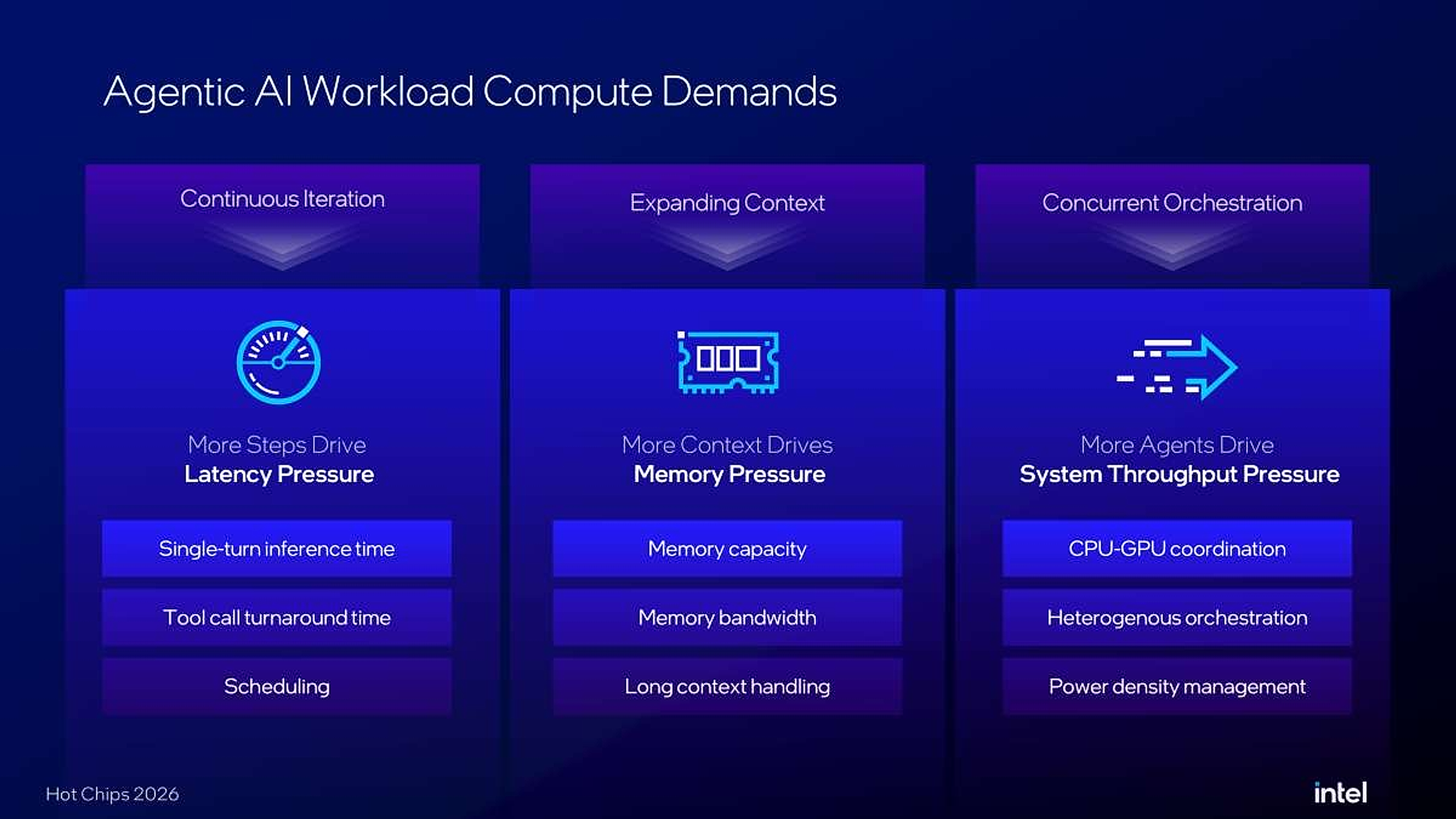
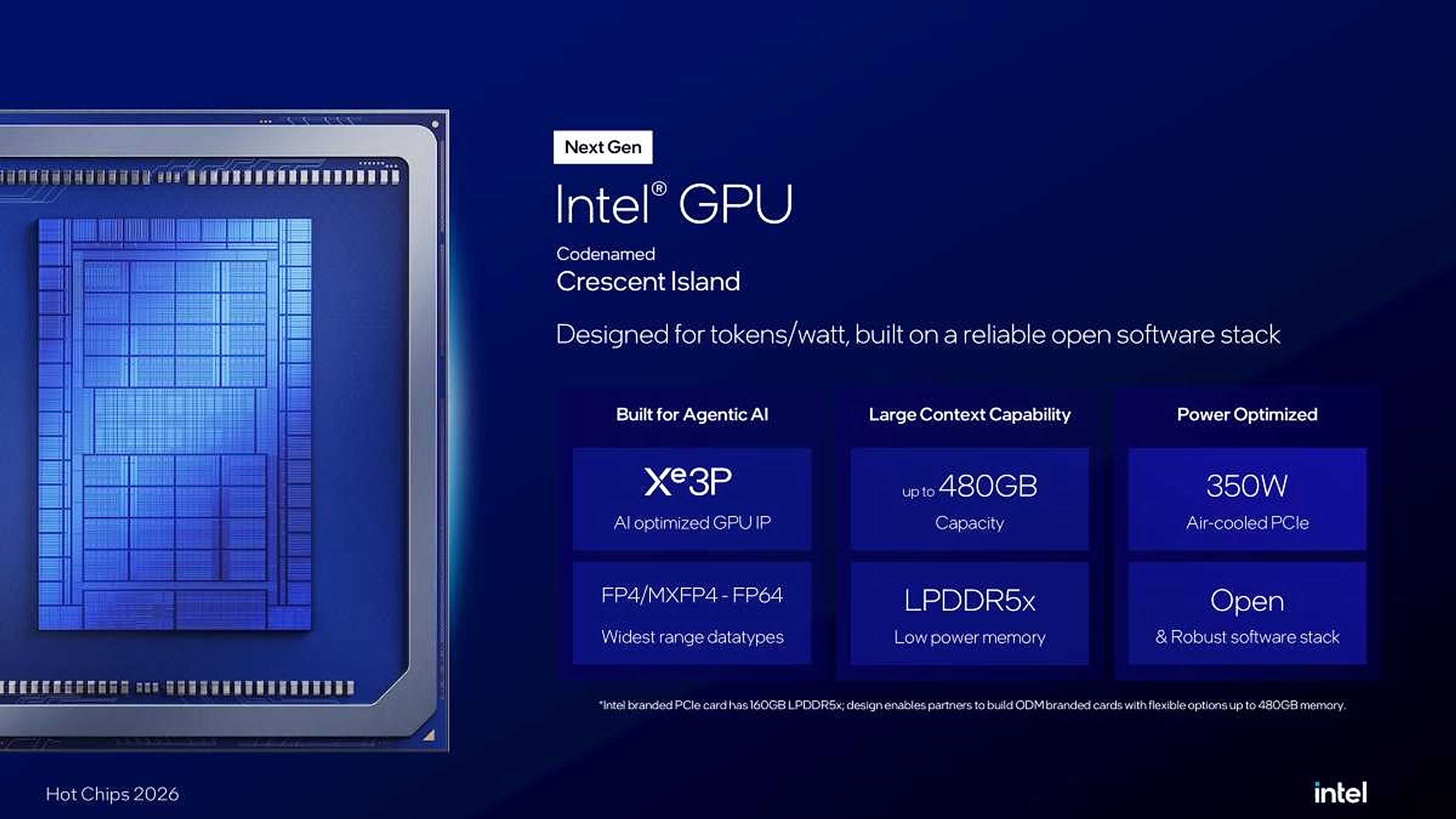
The second architecture, Crescent Island, is for a new family of low-power GPUs. Powered by Intel's existing Xe GPU architecture, these new GPUs will have up to 32 Xe cores and 256 XMX engines and up to 480GB of LPDDR5X memory. As a result, Crescent Island cards will be air-cooled, having a TDP of just 350W and will fit inside standard PCIe slots; three increasingly rare attributes in the AI market which is otherwise increasingly dominated by liquid-cooled SXM GPUs with a TDP measured in kW. This should make Crescent Island GPUs a lot more flexible, giving more businesses the opportunity to run sovereign AI agents on their own hardware, although it remains to be seen what customers think of the trade-off in raw performance versus more power-hungry GPUs which require more infrastructure to deploy.
No doubt, we'll be seeing more about both of these new architectures over the coming months and will see Diamond Rapids based Xeon 7s at the heart of many AI servers from Scan as we move into 2027.
Arm AGI CPU Details Revealed
Arm also used Hot Chips to reveal more info on the architecture of its recently announced AGI CPU that we wrote about in April's newsletter. To recap, AGI is Arm's first in-house branded CPU, compared to its previous designs that are licensed to other companies such as NVIDIA and Qualcomm.
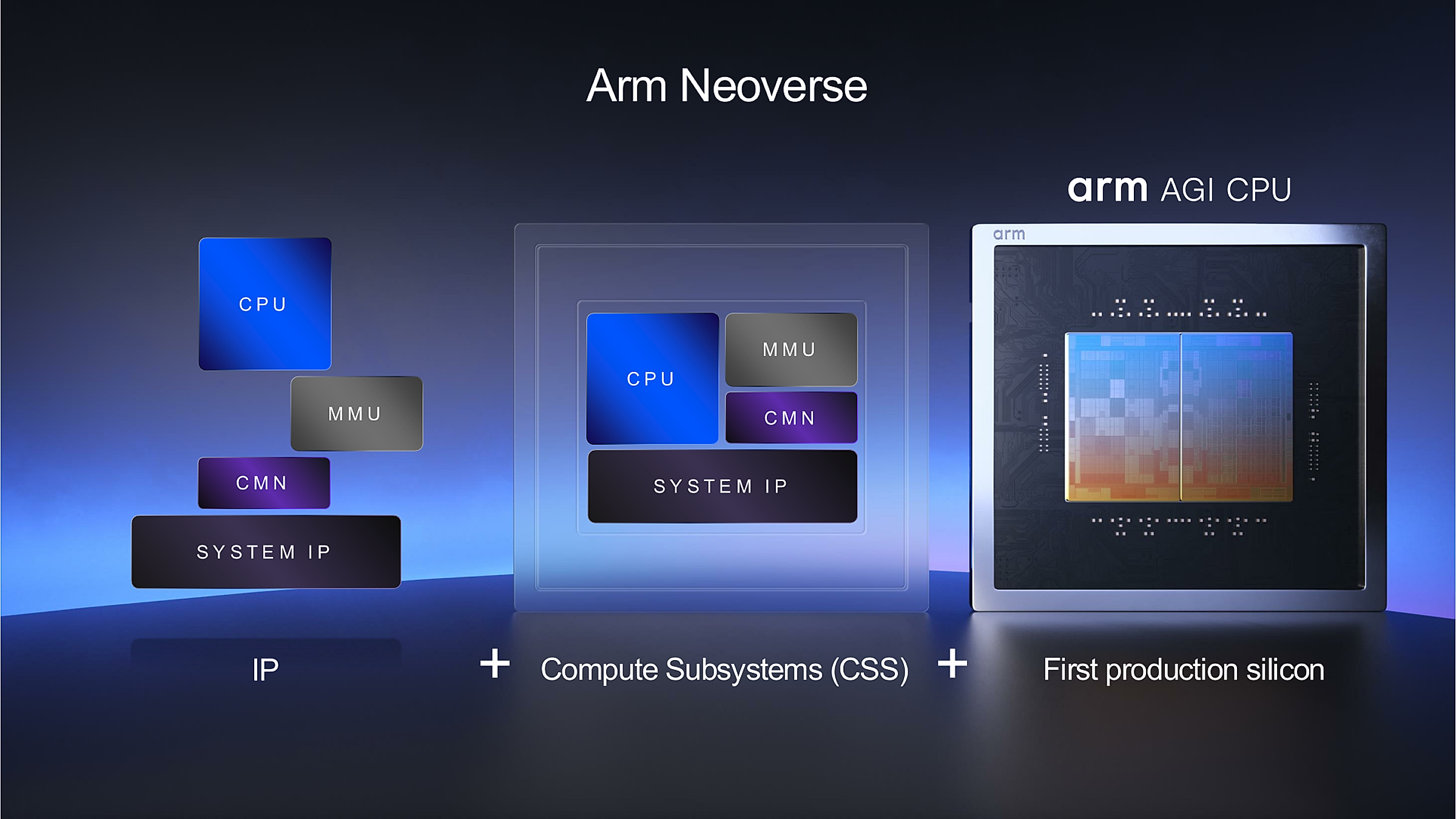
At Hot Chips, Arm explained that AGI is made from two chiplets, each with 70 Neoverse V3 cores, with SMP support for two CPUs in a server, and is planning on making SKUs with 64, 128 and 136 cores at different frequencies.
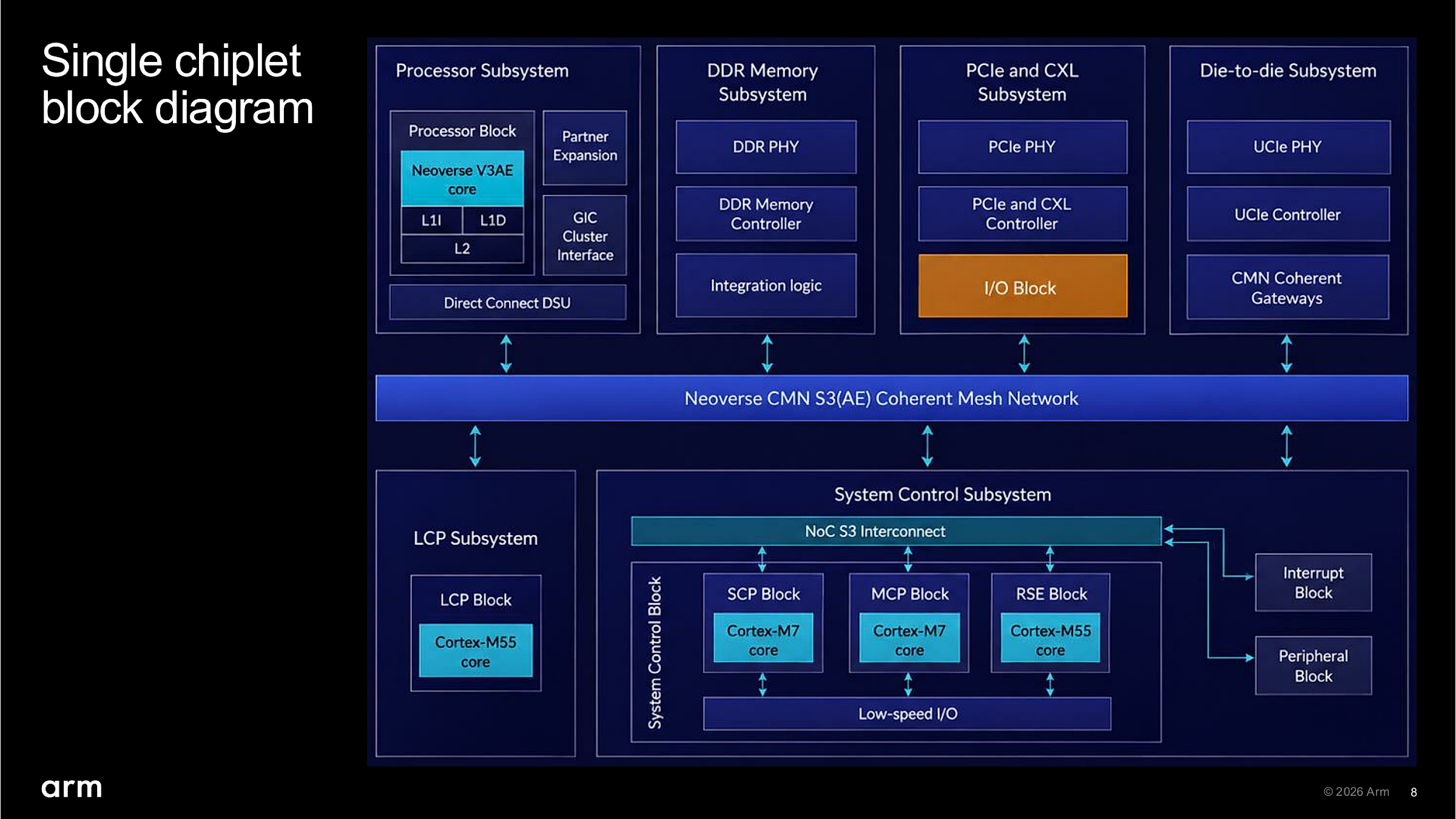
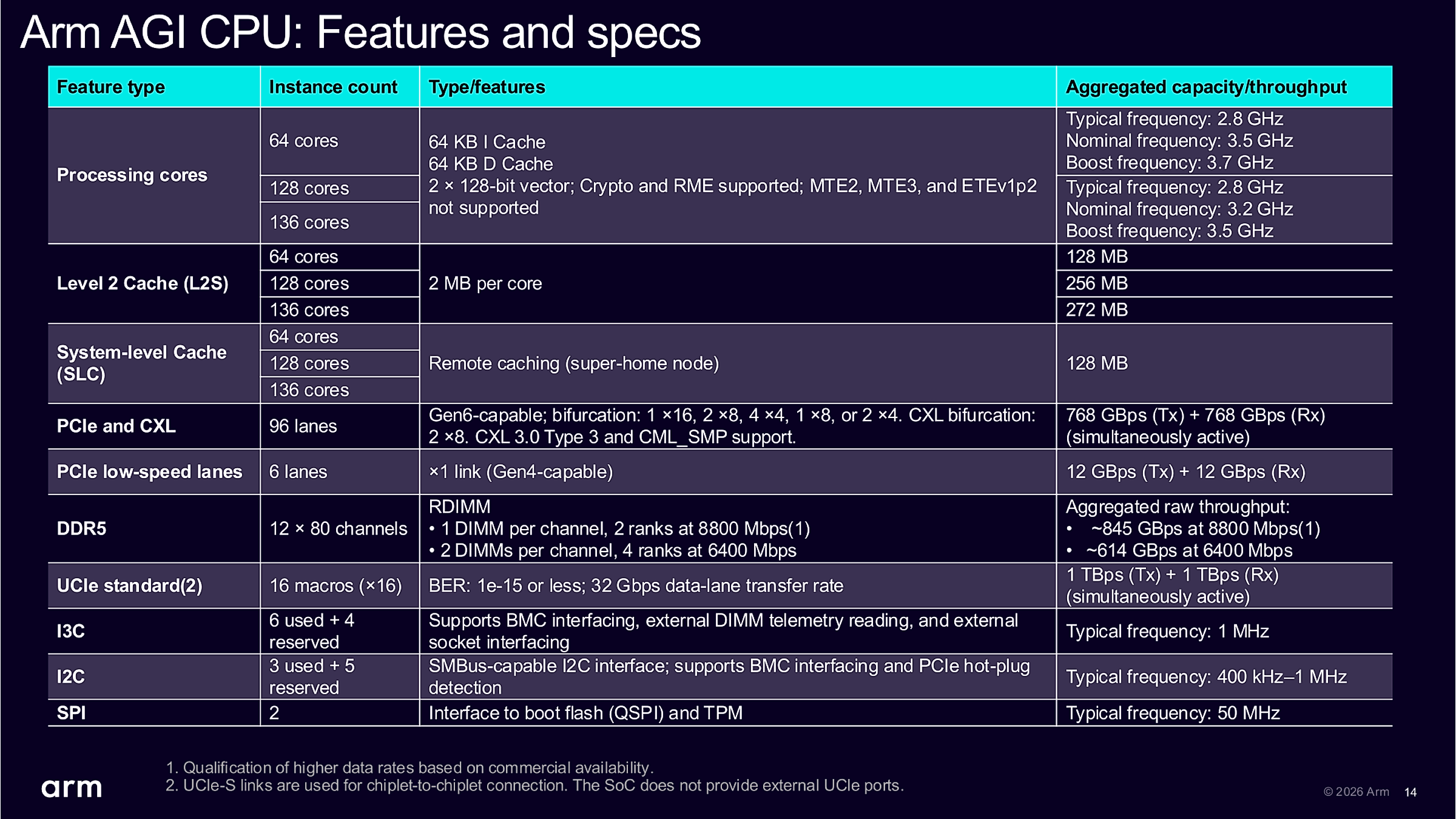
Arm isn't just focused on delivering a CPU either, it's also working with key server brands such as Scan partner Supermicro to develop standalone and rack-scale systems, plus the necessary software to make a new CPU brand viable for end customers, not just an interesting technology demonstration.
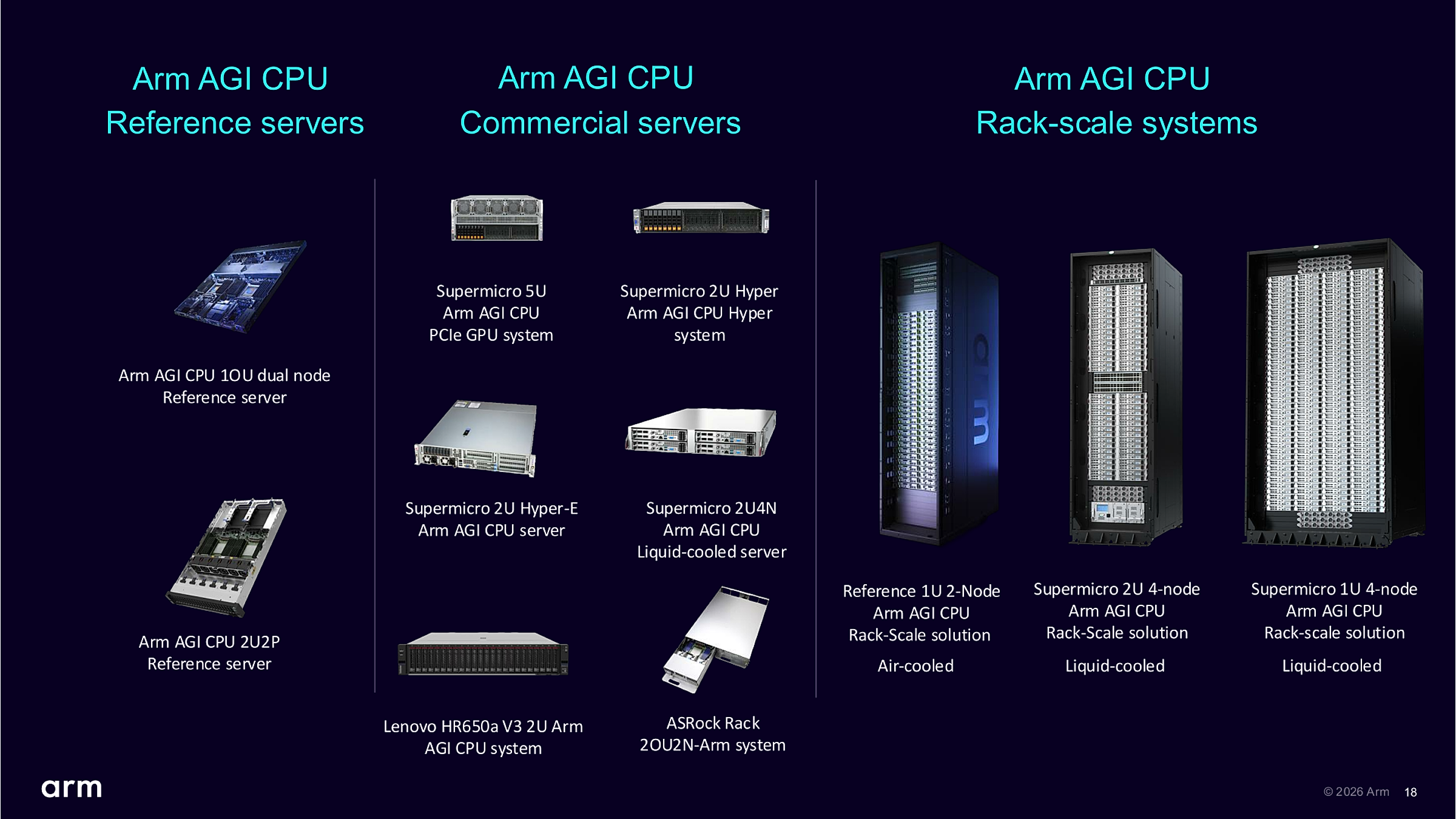
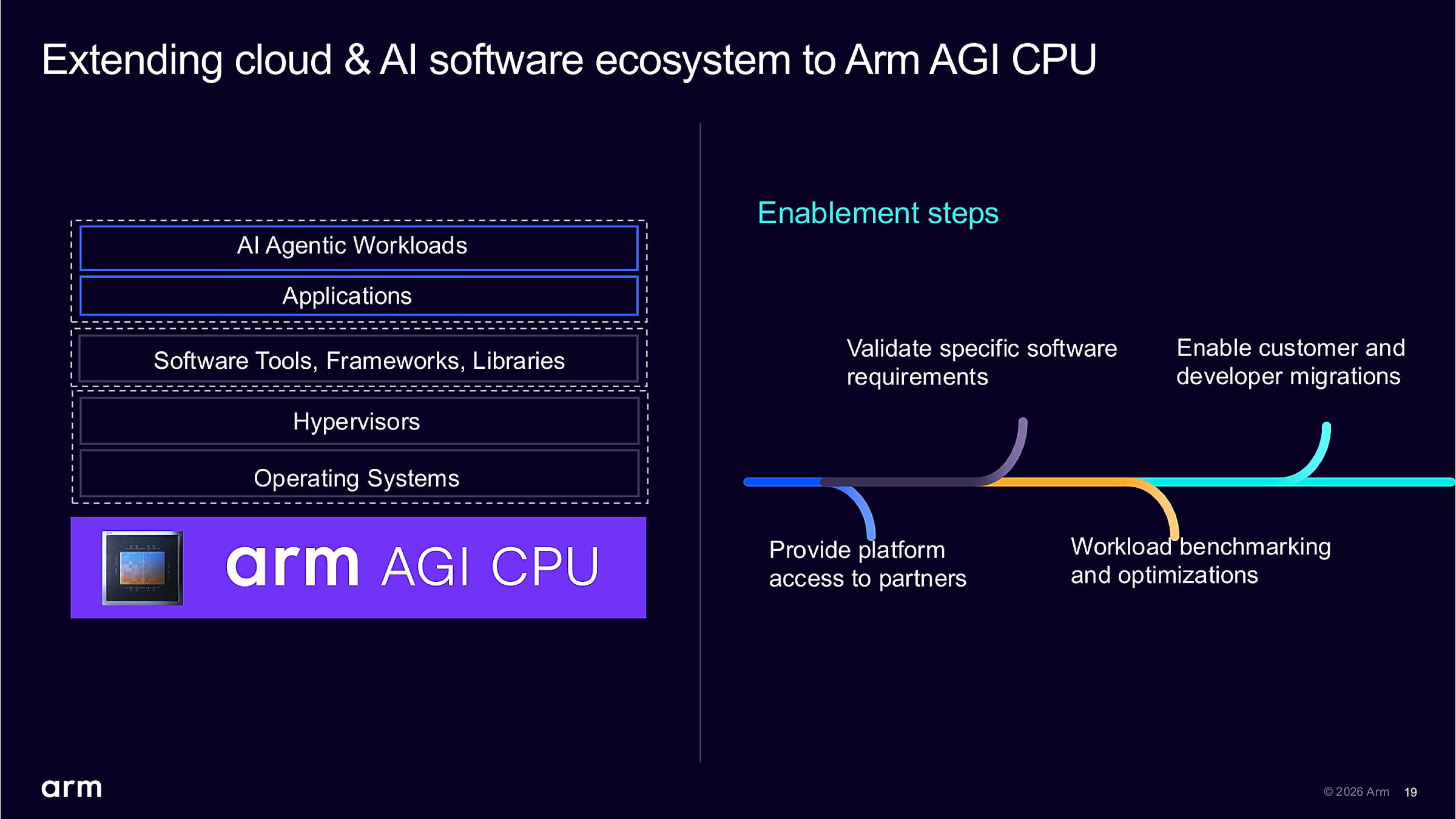
Let us know your thoughts on Arm AGI and if you'd like more info.
OpenAI Makes Its Own Processor… in Just Nine Months
Also at Hot Chips, OpenAI took time out from releasing AI models determined to hack their way into other companies to announce its first in-house developed hardware. Jalapeno, is more than a processor, it's a system built in conjunction with Broadcom, designed to speed up OpenAI's own inference workloads.
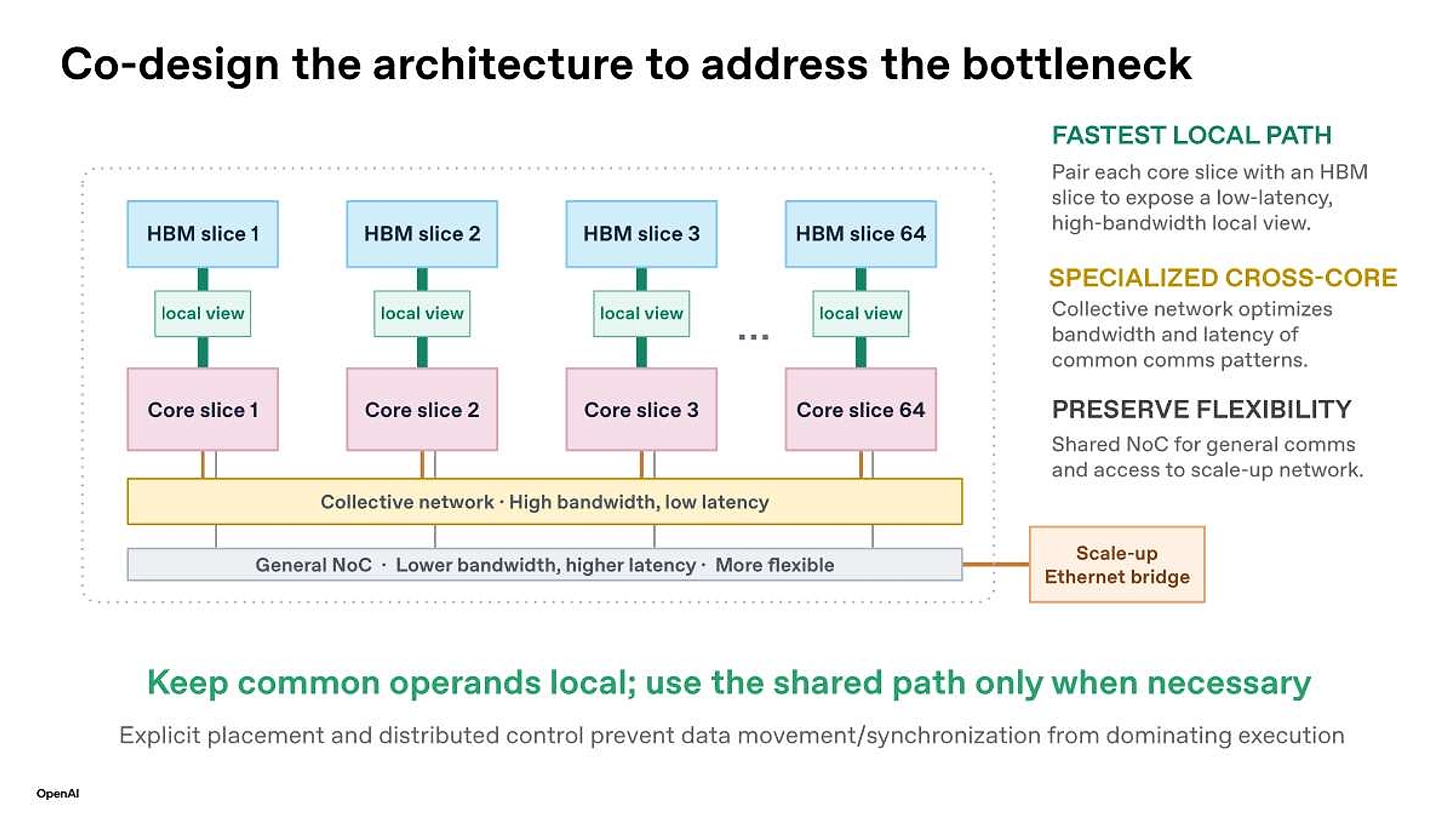
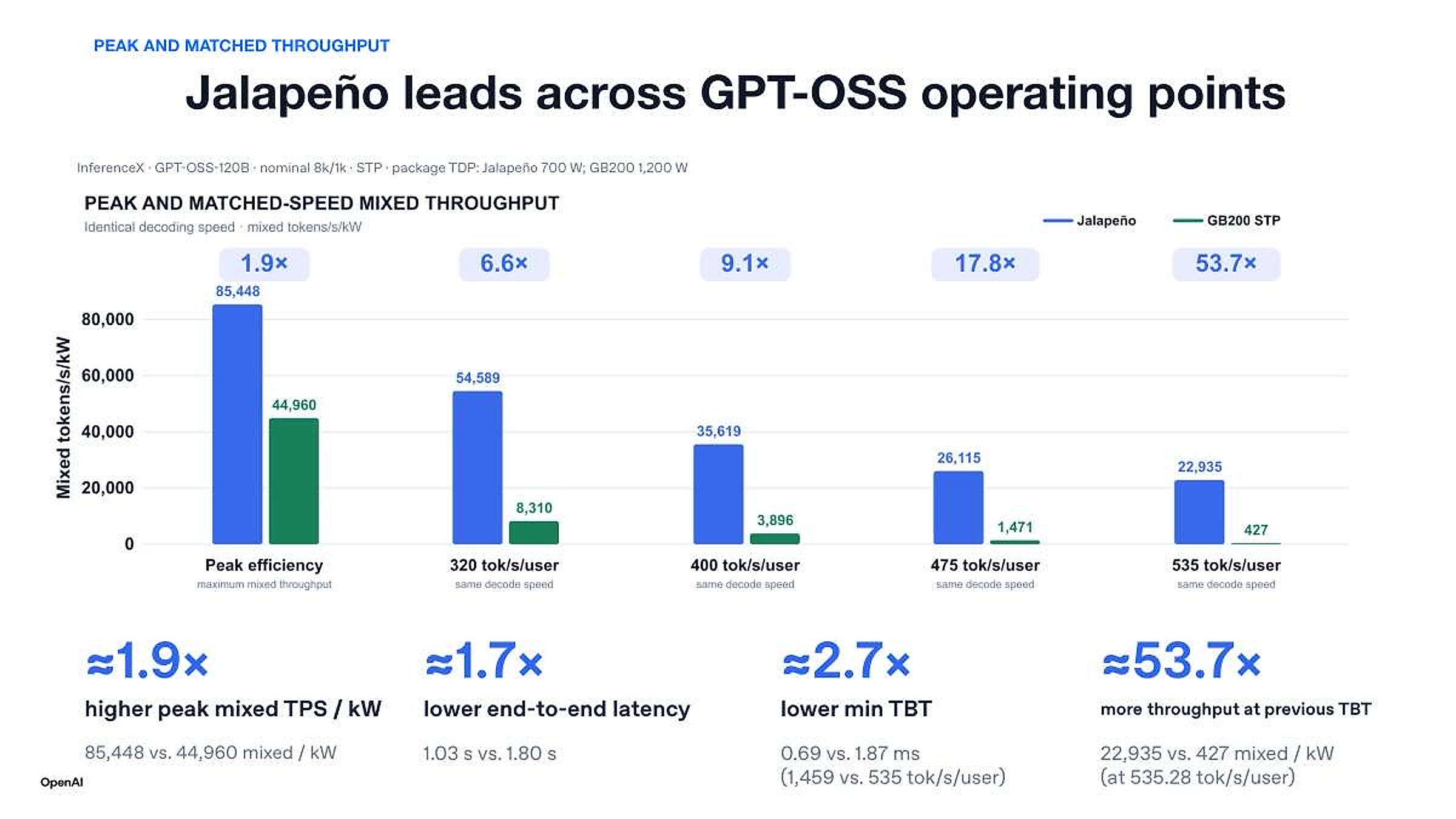
Like a lot of next-generation AI processors, Jalapeno has been designed around minimising latency between processor cores and memory, speeding up the token rate in MoE models. It comprises 128 ASICs, linked with Broadcom Tomahawk 6 switches, for a total of 2,048 chips in a system. Each processor core has its own direct connection to a slice of HBM memory, rather than all the cores sharing access to a centralised memory controller. OpenAI claims that Jalapeno delivers up to 53.7x more tokens per second than the NVIDIA GB200 STP, which is quite remarkable.
What's even more remarkable is that OpenAI only started the Jalapeno project nine months ago, an incredible achievement as new processors usually take years to create. OpenAI chalks this down to having used AI extensively during the design process, using an internal AI model and the XLS hardware description language.
While its unclear at this stage whether OpenAI intends to sell Jalapeno, or keep it purely for inhouse use, its clear that the company is trying to be more independent and less reliant on traditional processor providers such as AMD, Intel and NVIDIA.
Google Details 8th Gen TPUs Optimised for MoE Inferencing
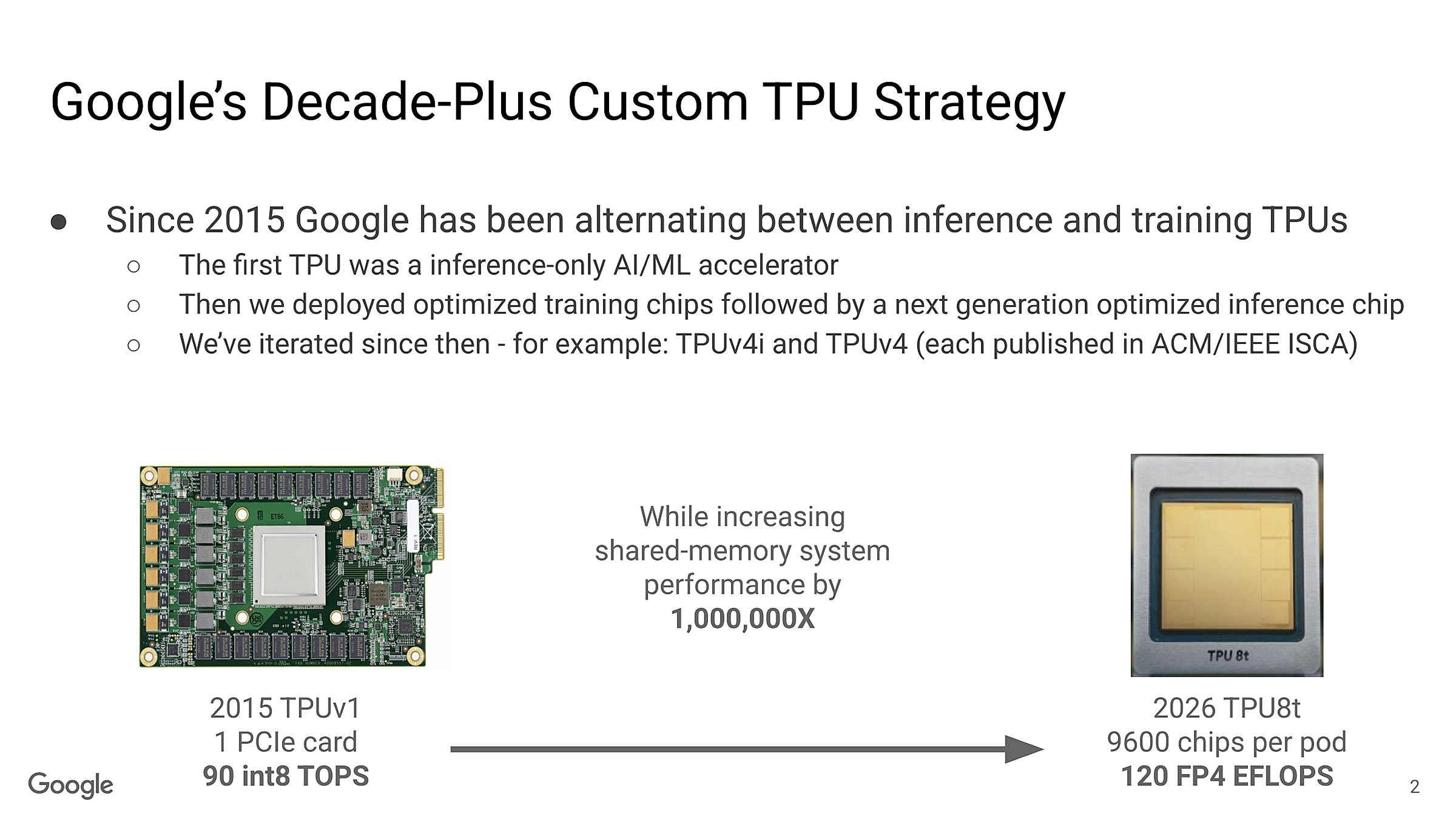
Google also took to the stage at Hot Chips to reveal its eighth generation of TPU (Tensor Processor Unit). These are Google's own proprietary AI accelerators, designed for its own in-house use. Unlike previous generations of TPU, there are two models, the 8t for training and the 8i for inferencing, the former giving Google independence from using NVIDIA or AMD GPUs for training.
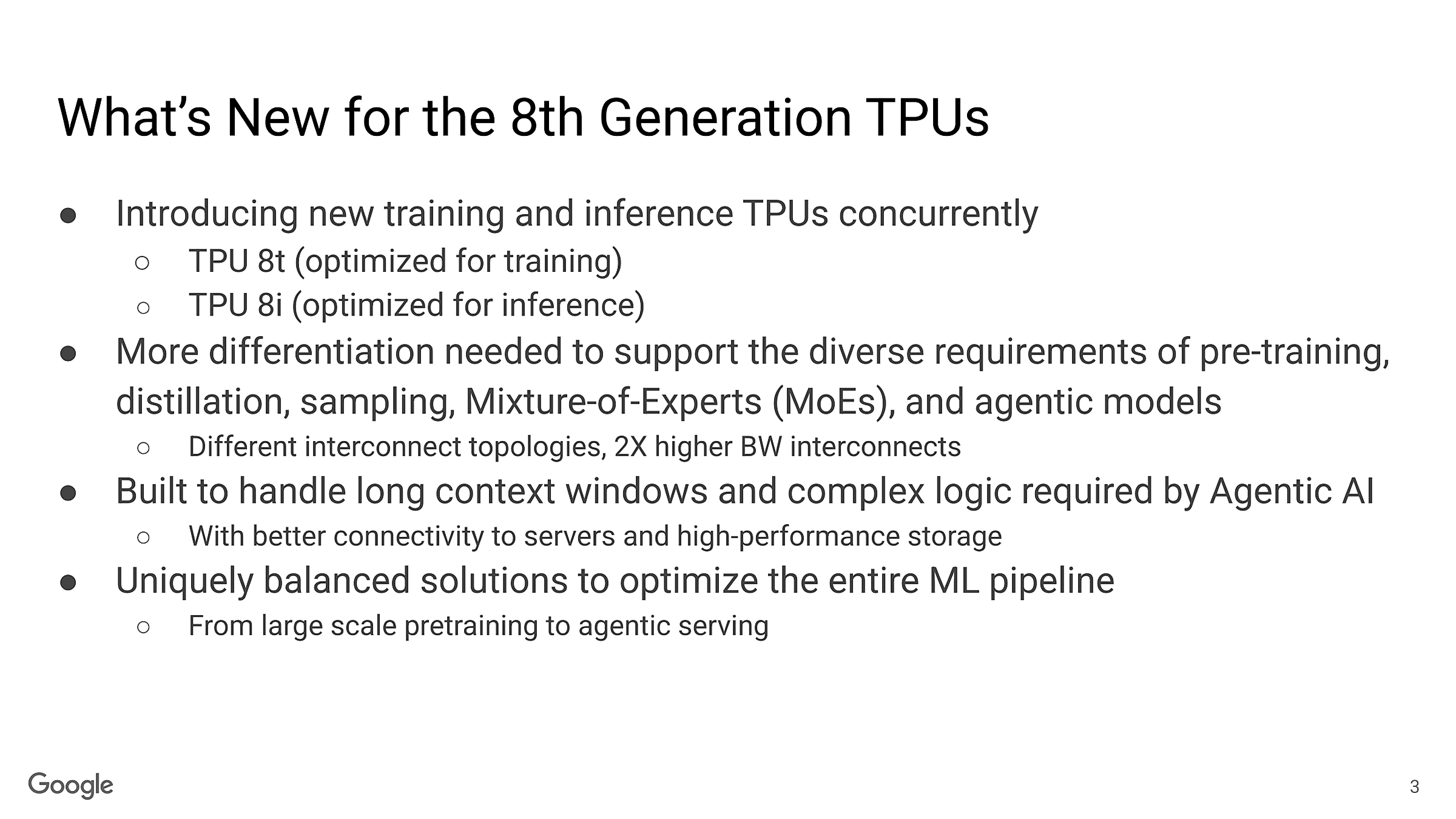
Following the trend of favouring memory performance over brute FLOP performance for MoE inference, the two chips differ in that the 8i has more, and lower latency SRAM and HBM memory than the 8t.
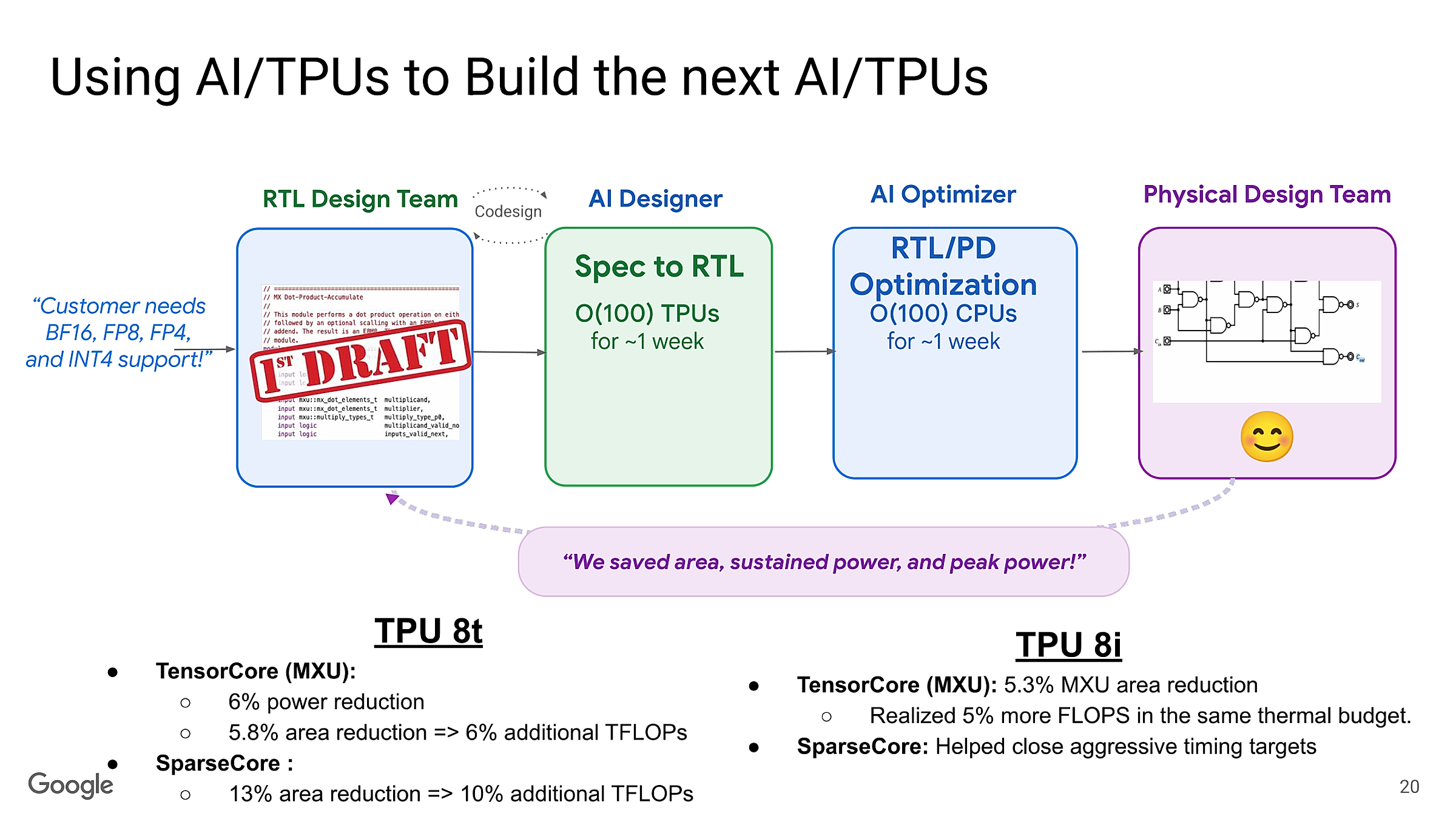
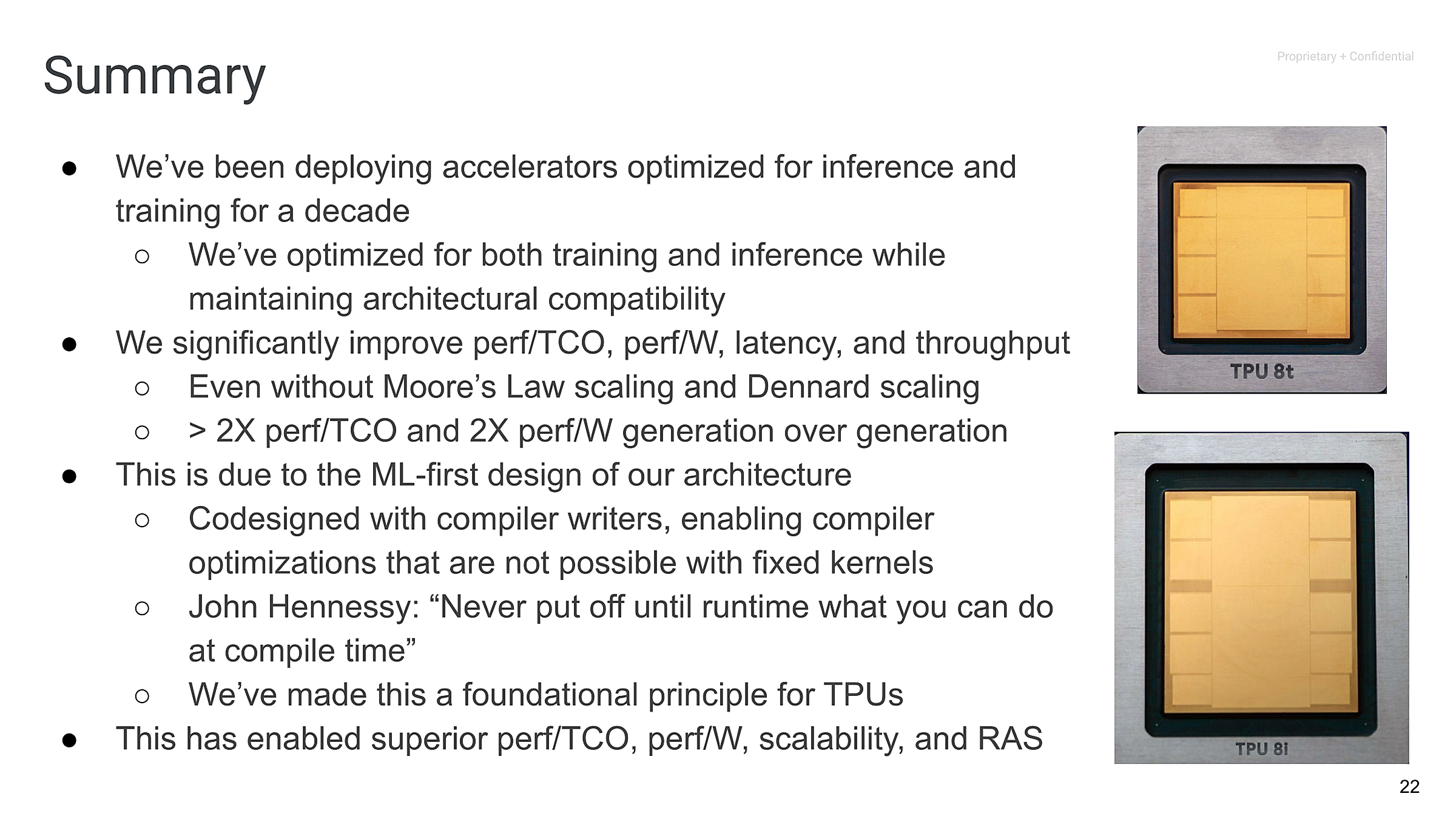
Like Open AI, Google also revealed it's employed AI in the development of its eighth generation TPUs, enabling it to cut power usage and increase the number of cores. Google typically doesn't share much about its TPUs, as they are purely for their own in-house use, so its really interesting to see how a company with a 10 year track record in designing AI processors is working, and how MoE inferencing is changing design priorities.
NVIDIA to Acquire Hugging Face

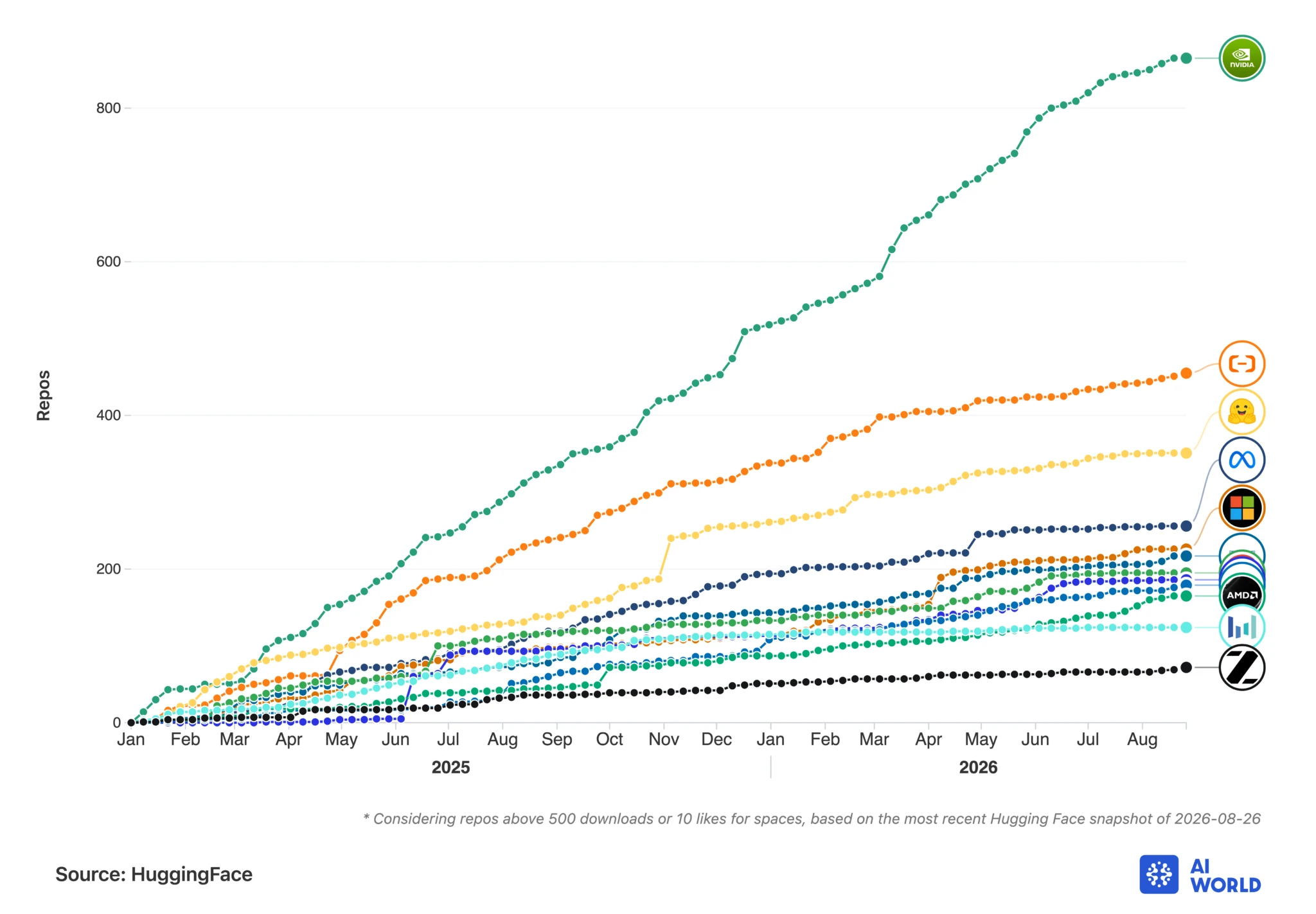
NVIDIA has agreed to acquire the open-source AI developer platform Hugging Face for $12.9bn. Hugging Face is the central hub for open AI development, hosting over 18 million builders, 3 million models, and 500,000 datasets, so the acquisition positions NVIDIA closer to the software and open-source models that run directly on its hardware.
As Hugging Face acts as a foundational, neutral ground for competing models such as Meta's Llama and Mistral, the buyout has raised questions about competition and potential ecosystem lock-in, but NVIDIA CEO Jensen Huang and Hugging Face CEO Clément Delangue confirmed that the platform will remain entirely open. They state developers will not be required to use NVIDIA compute to build or deploy models, and the platform will continue to support alternative hardware vendors, cloud providers, and open-inference frameworks. Although it is fair to say that by owning the go-to software and model platform, NVIDIA secures its dominant market position even if customers use alternative chips or cloud providers.
NVIDIA has been the largest contributor of open models and data to Hugging Face, releasing more than 500 models with over 250 open datasets. These models can then be modified or built on top of by developers anywhere.
The deal was officially signed on September 2, 2026. It is expected to completely finalise and close in the first half of 2027, pending necessary regulatory approvals. For the geeks amongst you, the exact acquisition figure of $12,930,300,000 contains an intentional tech Easter egg. The digits 129,303 correspond to the Unicode representation for the 🤗 emoji, officially known as the "Hugging Face" emoji.
AMD Threadripper Halo Station AI Workstation Revealed

At the IFA show in Berlin AMD revealed some preliminary details about a new high-end AI workstation, the Threadripper Halo Station. The headline specs are a Threadripper PRO 9955WX CPU, 2TB of RAM and four Instinct MI350P GPUs for a grand total of 576GB of HBM3e VRAM.
As such, the AMD Threadripper Halo Station is clearly aimed at a similar market as the NVIDIA DGX Station, in other words for individuals or small teams developing, training and inferencing AI models who don't want to, or can't access more powerful datacentre or cloud compute. Coming in 2027, it'll be interesting to see how this impacts the market, as more competition is undoubtedly a good thing, driving innovation.
Must Attend AI Events

The remaining months of 2026 show no sign of slowing down when it comes to events to learn more from the movers and shakers in AI.
- HumanX Europe - For all AI builders, operators, investors, corporates and policymakers from Europe and beyond (RAI, Amsterdam | September 22-24)
- CBRE - Unites CBRE clients and supplier partners including Scan (Old Billingsgate, London | September 24)
- NVIDIA GTC Berlin - NVIDIA's AI conference showcasing the latest developments in hardware, software and applications (Tempodrom and STATION-Berlin, Berlin | October 21-22)
- Future of AI Summit 2026 - Features prominent industry speakers from global financial institutions focusing on high-level enterprise strategy (Convene 22 Bishopsgate, London | November 4-5)
- Hack for Impact - Build autonomous systems that think, act, and run anywhere, whilst also making a positive impact on the world. (TBC, Sheffield | November 13)
- AI World Congress 2026 - Bringing together a unique blend of professionals from across the AI ecosystem (Kensington Conference and Events Centre, London | November 25-26)
- Robot Manipulation Workshop - A range of research talks, poster sessions, panel discussions and forums, lab tours, and networking events (UCL East Robotics & London College of Fashion, London | January 7-8)
Look out for Scan at these events and why not prepare by reading our 7-part AI Project Planning Blog that walks you through all the stages of an AI project and helps you choose best practice, avoid pitfalls and achieve maximum ROI. We'll also bring you any news from these shows in our future newsletters.
Upcoming NVIDIA Deep Learning Institute Courses
The NVIDIA Deep Learning Institute offers hands-on training for developers, data scientists, and researchers looking to solve challenging problems with deep learning and accelerated computing. DLI courses are delivered by qualified Scan and NVIDIA instructors who will pass on their knowledge and educate developers on how to get the most in these rapidly evolving fields.
The next round of NVIDIA DLI courses scheduled for 2026 and 2027 are:
- Adding New Knowledge to LLMs -September 14th
- Rapid Application Development Using Large Language Models - September 28th
- Adding New Knowledge to LLMs - October 5th
- NVIDIA Isaac for Accelerated Robotics -November 9th
- Building RAG Agents with LLMs -December 7th
- Building Agentic AI Application with LLMs - January 25th 2027
- Building AI Agents with Multimodal Models - February 8th 2027
- NVIDIA Isaac for Accelerated Robotics - March 10th 2027
Head over to our website for details on each of these DLI courses and reserve your space.