AMD Processor Families

To simplify this vast array of CPUs, AMD has given each of these ranges a name – Ryzen, Threadripper and EPYC, with some further divided into sub families designated by a number - 9, 7, 5 and 3. This guide focuses on Ryzen and Threadripper CPUs for desktop PCs and workstations, with a separate guide for AMD EPYC SERVER CPUS.

Over the years AMD has released new generations of CPUs using this naming scheme. You can spot the generation as 9000-series, 7000- and so forth.
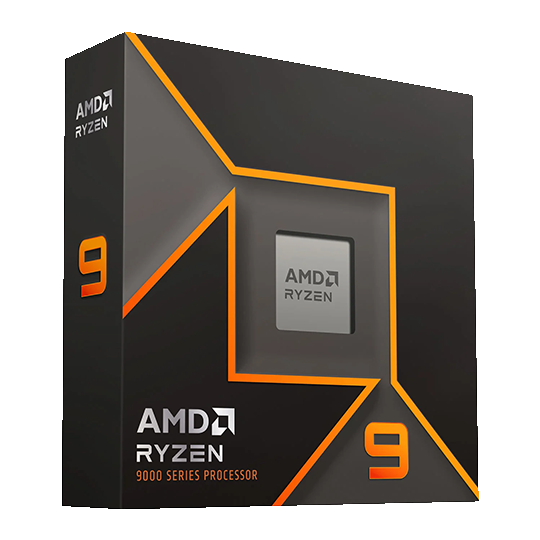
AMD processor families including Ryzen and Threadripper
AMD Ryzen processor branding

AMD Ryzen

AMD Ryzen CPUs are optimised for gaming, office applications and mid-level content creation workloads.
AMD Threadripper workstation processor branding

AMD Threadripper

AMD Threadripper CPUs are optimised for mid-range workstation workflows such as graphics, video and data analysis.
AMD Threadripper PRO workstation processor branding

AMD Threadripper Pro

AMD Threadripper PRO CPUs are optimised for the most demanding workstation workflows such as graphics, video, data analysis and AI.

AMD EPYC server processor branding

AMD EPYC

AMD EPYC CPUs are optimised for demanding 24/7 server operations including graphics, video, data analysis and AI.
AMD Desktop Processor Range

The range of AMD Ryzen CPUs can broadly be split into the following groups, giving an indication into their relative performance and cost.

Relative Performance

Ryzen 9 High End
Ryzen 7 Mid Range
Ryzen 5 Mid Range
Ryzen 3 Entry Level

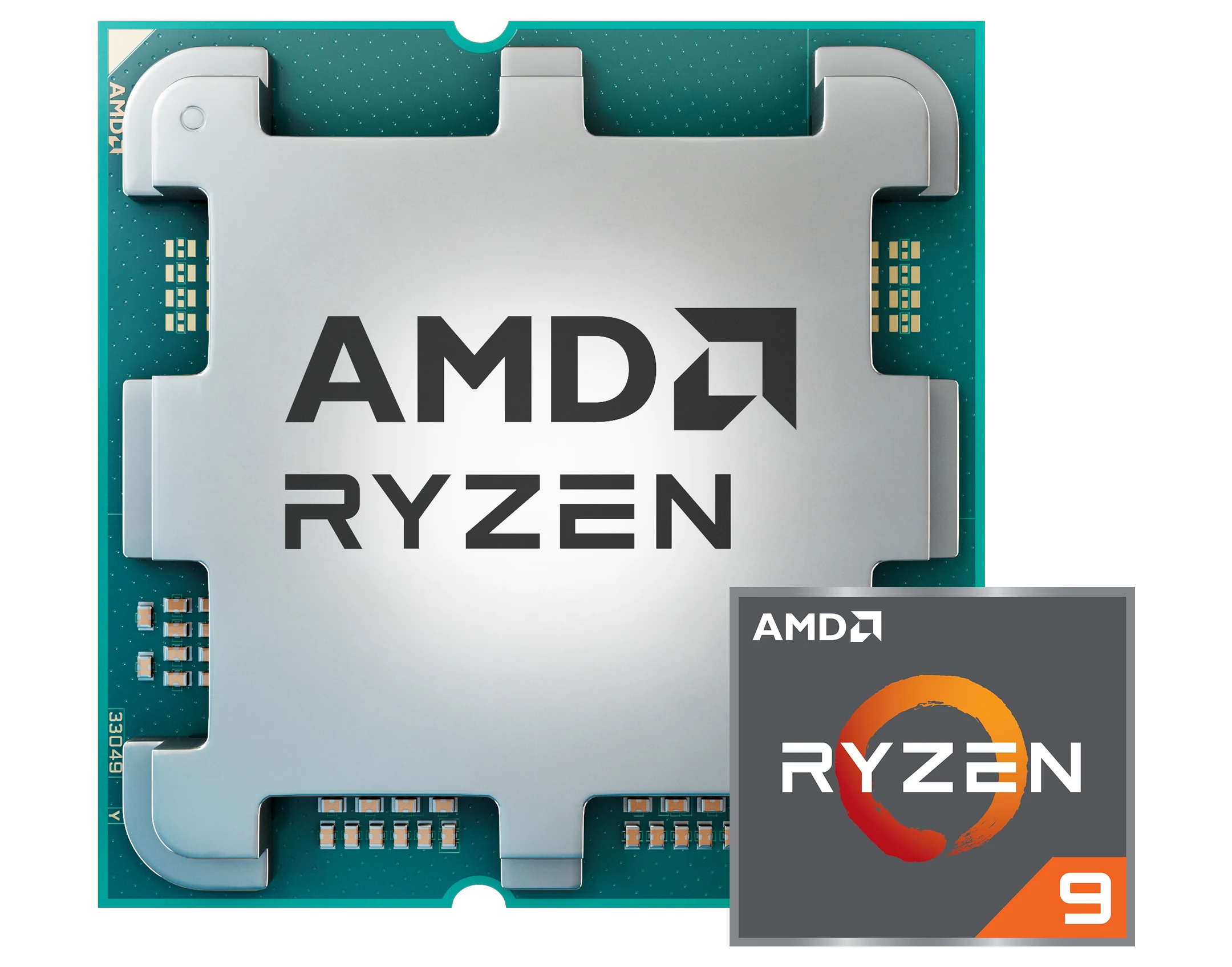
AMD Ryzen 9

Architecture: Zen 5

Compatible Chipsets: X870E, X870, B850, B840, B650

3XS Recommends: Ryzen 9 9950X3D

Ryzen 9 processors sit at the top of AMD's mainstream desktop range. With up to 16 cores and 32 threads, they deliver exceptional performance for gaming, streaming and demanding creative workloads. X3D models feature extra cache for class-leading gaming performance.

To learn more about compatible motherboards for AMD CPUs, read our AMD motherboard buyers guide.

VIEW LATEST RYZEN 9
AMD Ryzen 9 processor

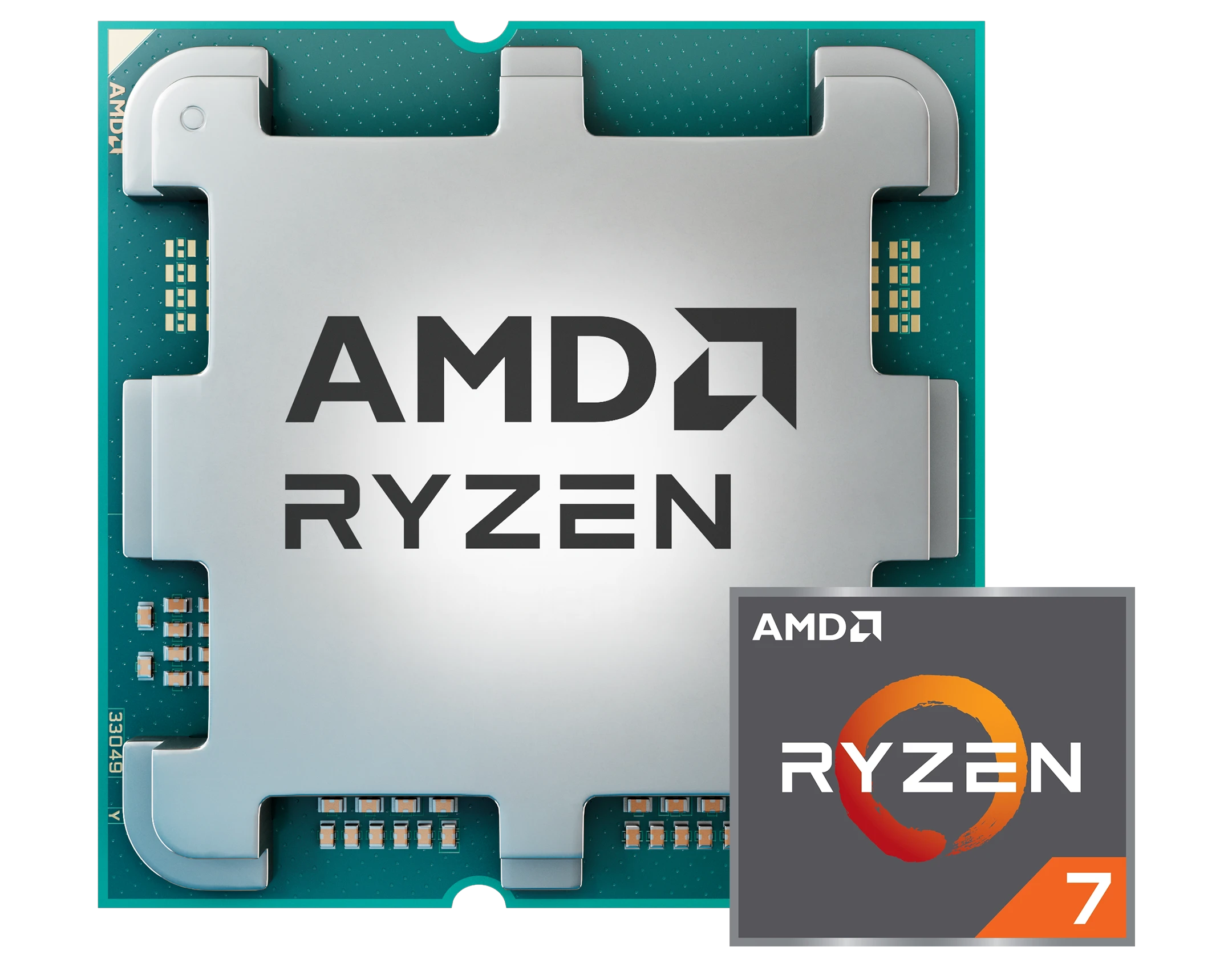
AMD Ryzen 7

Architecture: Zen 5

Compatible Chipsets: X870E, X870, B850, B840, B650

3XS Recommends: Ryzen 7 9800X3D

Ryzen 7 processors offer an excellent balance of price and performance. With eight cores and strong single-threaded speed, they're perfect for high-end gaming, mid-range, content creation, and everyday productivity.

To learn more about compatible motherboards for AMD CPUs, read our AMD motherboard buyers guide.

VIEW LATEST RYZEN 7
AMD Ryzen 7 processor

AMD Ryzen 5

Architecture: Zen 5

Compatible Chipsets: B850, B840, B650

3XS Recommends: Ryzen 5 9600X

Ryzen 5 processors deliver excellent value for gaming and multitasking. With up to six cores, they are a strong choice for mid-range systems and content creators on a budget.

To learn more about compatible motherboards for AMD CPUs, read our AMD motherboard buyers guide.

VIEW LATEST RYZEN 5
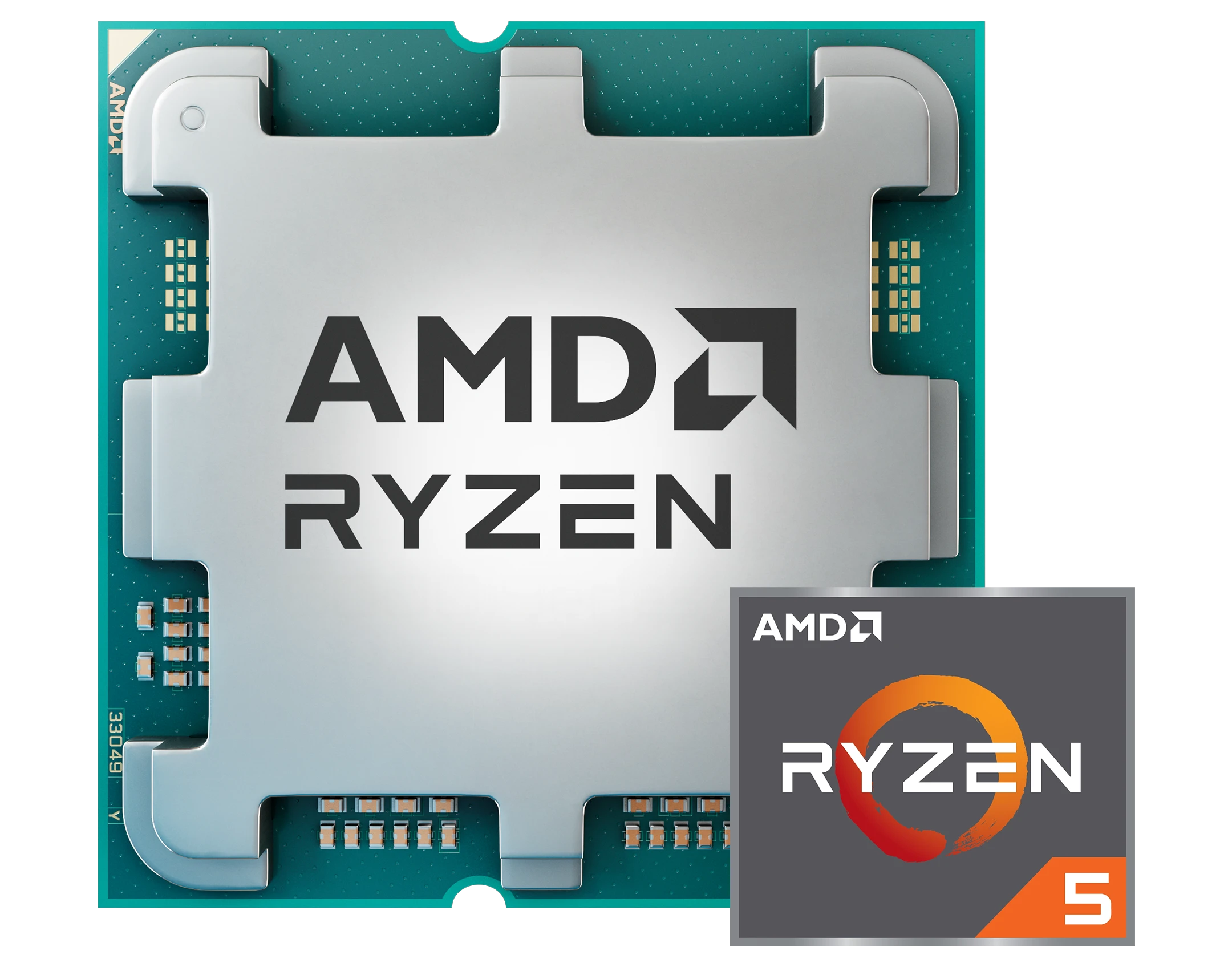
AMD Ryzen 5 processor

AMD Ryzen 3

Architecture: Zen 2

Compatible Chipsets: B550, B450, A520

3XS Recommends: Ryzen 3 4100

Ryzen 3 processors are AMD's entry-level CPUs, ideal for everyday computing, light gaming and office applications at an affordable price.

To learn more about compatible motherboards for AMD CPUs, read our AMD motherboard buyers guide.

VIEW LATEST RYZEN 3
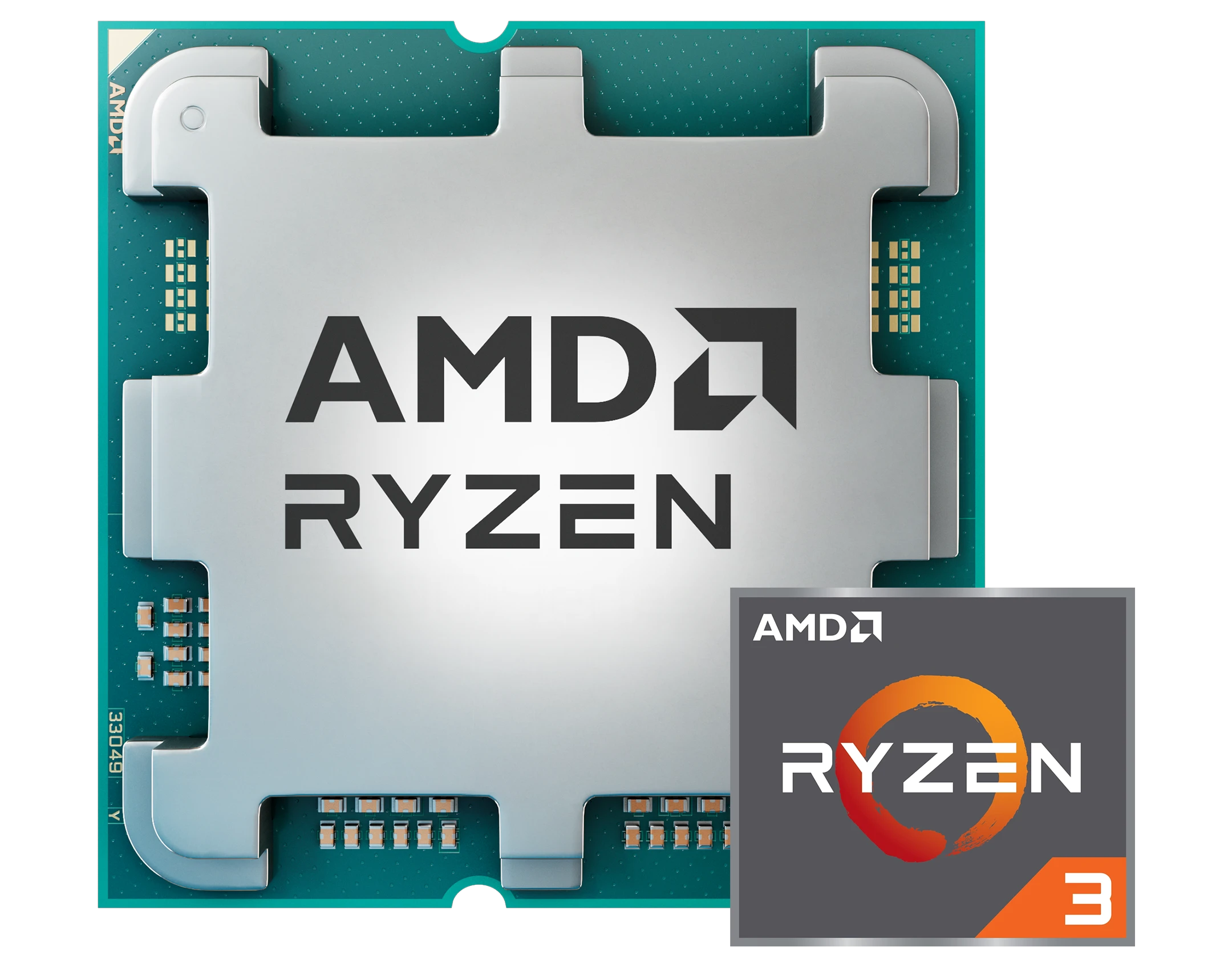
AMD Ryzen 3 processor

CPU Naming Conventions

Although we've recommended a CPU from each range on the tabs above, it will help to understand what the CPU letters and numbers mean, should you want to select a different model. The below diagrams give an indication to what the different sections of a CPUs name refers to.

Ryzen

Family

Range

9

9

This one-digit number signifies the series, i.e. 9 for 9000-series and 7 for 7000-series.

950

This three-digit number indicates the model number. A higher number typically indicates faster performance.

X3D

Some, but not all processors have a combination of letters on the end that signify special features. X3D is for processors with extra cache and G is for processors with more powerful graphics.

Summary

The below table offers a quick recap of comparative performance out of 10 for different workloads - always select a CPU based on the most demanding workloads you intend to have, otherwise you may find your PC ends up being under-powered when you need it the most.

Ryzen 9 Ryzen 7 Ryzen 5 Ryzen 3
Gaming 10 8 6 4
Streaming 10 8 6 4
Content Creation 8 6 4 2
Multitasking 8 6 4 2

AMD Workstation Processor Range

AMD Ryzen 9, 7 and 5 CPUs are still a valid choice for workstations, just bear in mind that performance and multitasking capabilities will decrease as you go down the ranges. For this reason, AMD also offer a range of dedicated workstation processors derived from its EPYC server range. These are termed Threadripper and Threadripper PRO and provide greater reliability and security in a wide range of creative applications, with expanded platform capabilities for VFX, rendering, complex CAD, CAE and AI. To help users pick the most suitable AMD Threadripper processor, their chips are divided into several families.

Relative Performance

Threadripper PRO High End
Threadripper Mid Range

AMD Threadripper PRO

Architecture: Zen 5

Compatible Chipsets: WRX90, TRX50

3XS Recommends: Threadripper PRO 9995WX

The Threadripper PRO 9000 WX-series represents AMD's most powerful workstation CPUs. With up to 96 cores and 192 threads, eight-channel memory and 128 PCIe 5.0 lanes, they are built for the most demanding professional workloads such as 3D rendering, VFX, scientific simulation and AI development.

To learn more about compatible motherboards for AMD Threadripper PRO CPUs, read our AMD MOTHERBOARDS BUYERS GUIDE.

VIEW LATEST THREADRIPPER PRO
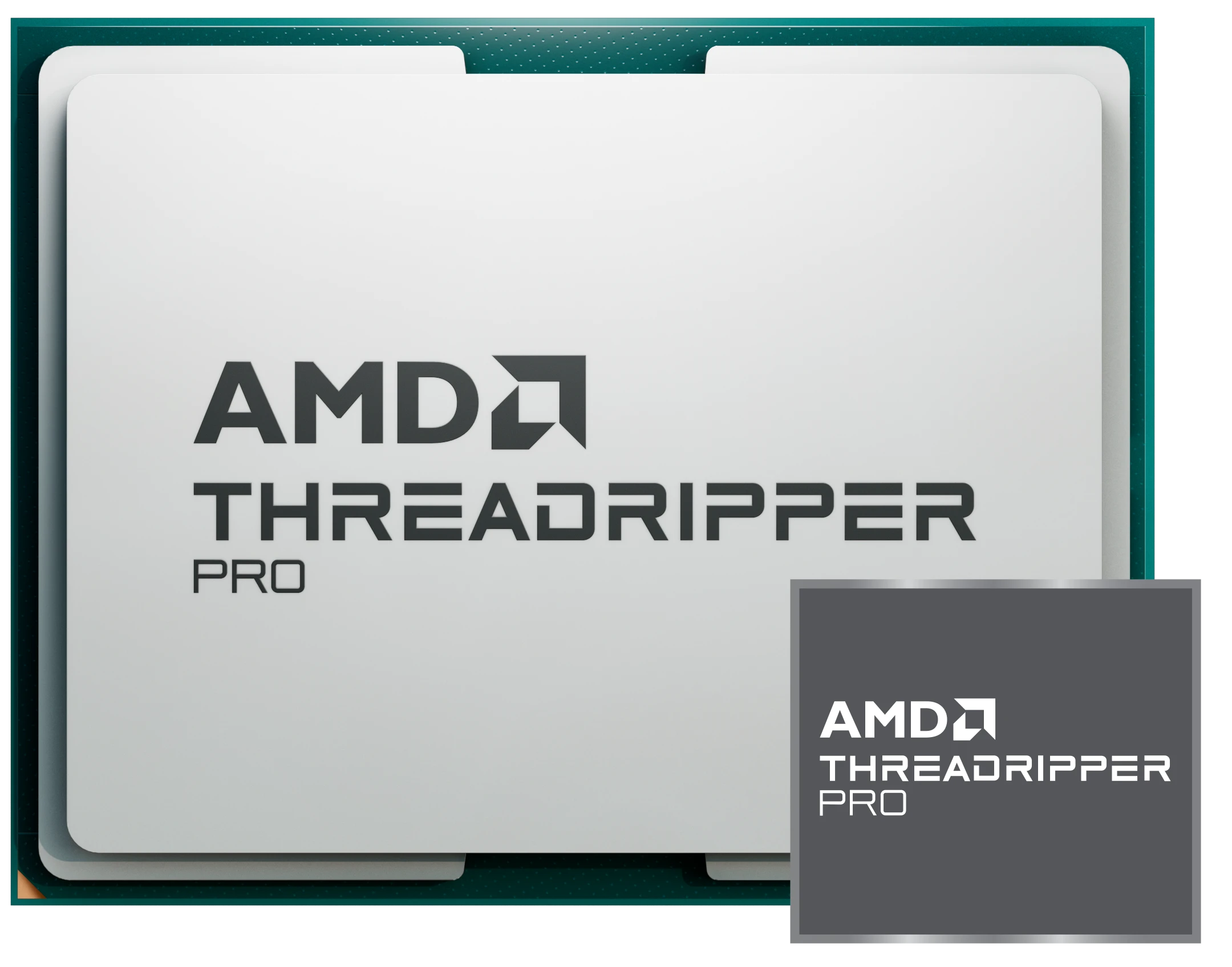
AMD Threadripper PRO processor

AMD Threadripper

Architecture: Zen 5

Compatible Chipsets: TRX50

3XS Recommends: Threadripper 9980X

Threadripper X-series processors bring workstation-class performance to ultra high-end desktop PCs. With up to 64 cores and 128 threads, they are ideal for heavy multitasking, content creation and high-resolution video workflows.

To learn more about compatible motherboards for AMD Threadripper CPUs, read our AMD MOTHERBOARDS BUYERS GUIDE.

VIEW LATEST THREADRIPPER
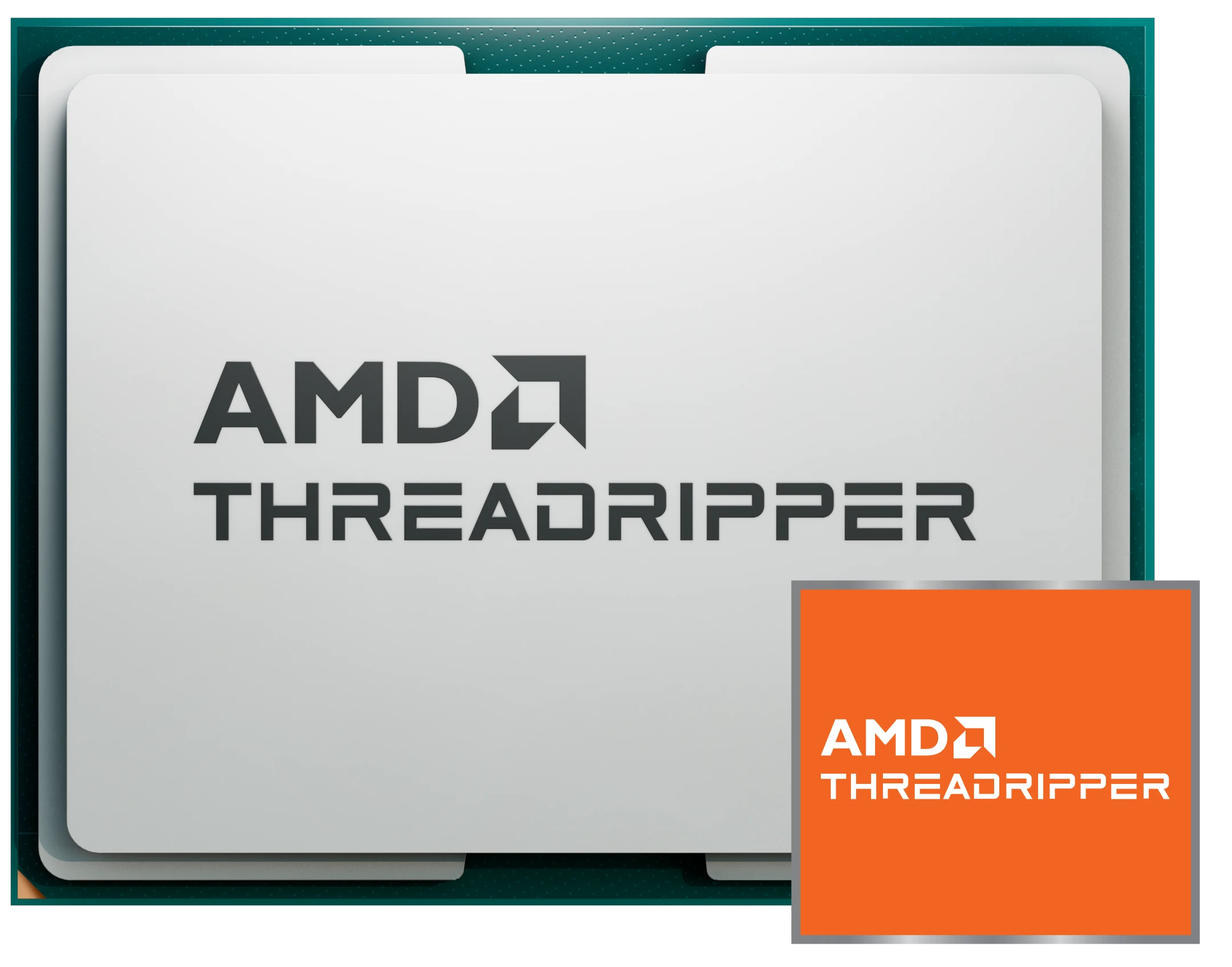
AMD Threadripper processor

CPU Naming Conventions

The diagram below will help you to understand what the CPU letters and numbers mean when looking at all the different Threadripper processors.

Threadripper

Family

PRO

Modifier for the range if it’s a PRO processor.

9

This one-digit number signifies the series, i.e. 9 for 9000-series and 7 for 7000-series.

995

This three-digit number indicates the model number. A higher number typically indicates faster performance.

W / WX

A ‘WX’ indicates a Threadripper PRO and a ‘X’ indicates a Threadripper

Summary

The below table offers a quick recap of comparative performance for different workloads and key specifications – always select a CPU on the most demanding workloads you intend to have, otherwise you may find your workstation ends up being under-powered when you need it the most.

Threadripper PRO Threadripper
SPECS
Architecture Zen 5 Zen 5
Socket TR5 TR5
Maximum Cores / Threads 96 / 192 64 / 128
Maximum Cache 384MB 256MB
Memory Controller Eight-channel Four-channel
Maximum Memory 2TB 2TB
Memory Type DDR5 ECC Registered DDR5 ECC Registered
Memory Frequency 6,400MHz 6,400MHz
PCIe 5.0 / 4.0 / 3.0 Lanes 128 / 0 / 8 48 / 32 / 8
Integrated GPU
AMD PRO Manageability
AMD PRO Security
Overclocking
Maximum TDP 350W 350W

Technical Comparison

The table below includes not only the latest AMD desktop CPUs but also a selection of models going back several generations so you can see how the capabilities of the newest models compare to their forebears.

Series RYZEN THREADRIPPER PRO RYZEN THREADRIPPER RYZEN 9 RYZEN 7 RYZEN 5 RYZEN 3
Model 9995WX 9985WX 9975WX 9965WX 9955WX 7995WX 7985WX 7975WX 7965WX 5995WX 5975WX 5965WX 9980X 9970X 9960X 7980X 7970X 7960X 9950X3D2 9950X3D 9900X3D 9950X 9900X 7950X3D 7950X 5950X 5900XT 7900X3D 7900X 5900X 7900 9850X3D 9800X3D 9700X 8700G 7800X3D 7700X 7700 5800X3D 5800XT 5800X 5700X 5700G 9600X 8600G 8500G 7600X 7600 5600X 5600 5600G 5500 4100
Architecture Zen 5 Zen 5 Zen 5 Zen 5 Zen 5 Zen 4 Zen 4 Zen 4 Zen 4 Zen 3 Zen 3 Zen 3 Zen 5 Zen 5 Zen 5 Zen 4 Zen 4 Zen 4 Zen 5 Zen 5 Zen 5 Zen 5 Zen 5 Zen 4 Zen 4 Zen 3 Zen 3 Zen 4 Zen 4 Zen 3 Zen 4 Zen 5 Zen 5 Zen 5 Zen 4 Zen 4 Zen 4 Zen 4 Zen 3 Zen 3 Zen 3 Zen 3 Zen 4 Zen 5 Zen 4 Zen 4 Zen 4 Zen 4 Zen 3 Zen 3 Zen 3 Zen 3 Zen 2
Socket TR5 TR5 TR5 TR5 TR5 TR5 TR5 TR5 TR5 sWRX8 sWRX8 sWRX8 TR5 TR5 TR5 TR5 TR5 TR5 AM5 AM5 AM5 AM5 AM5 AM5 AM5 AM4 AM4 AM5 AM5 AM4 AM5 AM5 AM5 AM5 AM5 AM5 AM5 AM5 AM4 AM4 AM4 AM4 AM4 AM5 AM5 AM5 AM5 AM5 AM4 AM4 AM4 AM4 AM4
Cores / Threads 96 / 192 64 / 128 32 / 64 24 / 48 16 / 32 96 / 192 64 / 128 32 / 64 24 / 48 64 / 128 32 / 64 24 / 48 64 / 128 32 / 64 24 / 48 64 / 128 32 / 64 24 / 48 16 / 32 16 / 32 12 / 24 16 / 32 12 / 24 16 / 32 16 / 32 16 / 32 16 / 32 12 / 24 12 / 24 12 / 24 12 / 24 8 / 16 8 / 16 8 / 16 8 / 16 8 / 16 8 / 16 8 / 16 8 / 16 8 / 16 8 / 16 8 / 16 8 / 16 6 / 12 6 / 12 6 / 12 6 / 12 6 / 12 6 / 12 6 / 12 6 / 12 6 / 12 4 / 8
Base Frequency 2.5GHz 3.2GHz 4.0GHz 4.2GHz 4.5GHz 2.5GHz 3.2GHz 4.0GHz 3.8GHz 2.7GHz 3.6GHz 3.8GHz 3.2GHz 4.0GHz 4.2GHz 3.2GHz 4.0GHz 2.8GHz 4.3GHz 4.3GHz 4.4GHz 4.3GHz 4.4GHz 4.2GHz 4.5GHz 3.4GHz 3.3GHz 4.4GHz 4.7GHz 3.7GHz 4.0GHz 4.7GHz 4.7GHz 3.8GHz 4.2GHz 4.2GHz 4.5GHz 3.8GHz 3.4GHz 3.8GHz 3.8GHz 3.4GHz 4.3GHz 3.9GHz 4.3GHz 3.5GHz 4.7GHz 3.8GHz 3.7GHz 3.5GHz 3.9GHz 3.6GHz 3.8GHz
Turbo Frequency 5.4GHz 5.4GHz 5.4GHz 5.4GHz 5.4GHz 5.1GHz 5.1GHz 5.3GHz 5.3GHz 4.5GHz 4.5GHz 4.5GHz 5.4GHz 5.4GHz 5.4GHz 5.1GHz 5.3GHz 5.3GHz 5.6GHz 5.7GHz 5.5GHz 5.7GHz 5.6GHz 5.7GHz 5.7GHz 4.9GHz 4.8GHz 5.6GHz 5.6GHz 4.8GHz 5.4GHz 5.6GHz 5.2GHz 5.5GHz 5.1GHz 5.0GHz 5.4GHz 5.3GHz 4.5GHz 4.8GHz 4.7GHz 4.6GHz 4.6GHz 5.4GHz 5.0GHz 5.0GHz 5.3GHz 5.1GHz 4.6GHz 4.4GHz 4.4GHz 4.4GHz 4.0GHz
Level 3 Cache 384MB 256MB 128MB 128MB 64MB 384MB 256MB 128MB 128MB 288MB 144MB 72MB 256MB 128MB 128MB 320MB 160MB 152MB 192MB 128MB 128MB 64MB 64MB 128MB 64MB 64MB 64MB 128MB 64MB 64MB 64MB 96MB 96MB 32MB 16MB 96MB 32MB 32MB 96MB 32MB 32MB 32MB 20MB 32MB 16MB 16MB 32MB 32MB 32MB 32MB 32MB 19MB 6MB
Memory Controller Eight-channel Eight-channel Eight-channel Eight-channel Eight-channel Eight-channel Eight-channel Eight-channel Eight-channel Eight-channel Eight-channel Eight-channel Four-channel Four-channel Four-channel Four-channel Four-channel Four-channel Dual-channel Dual-channel Dual-channel Dual-channel Dual-channel Dual-channel Dual-channel Dual-channel Dual-channel Dual-channel Dual-channel Dual-channel Dual-channel Dual-channel Dual-channel Dual-channel Dual-channel Dual-channel Dual-channel Dual-channel Dual-channel Dual-channel Dual-channel Dual-channel Dual-channel Dual-channel Dual-channel Dual-channel Dual-channel Dual-channel Dual-channel Dual-channel Dual-channel Dual-channel Dual-channel
Maximum Memory 2TB ECC Registered 2TB ECC Registered 2TB ECC Registered 2TB ECC Registered 2TB ECC Registered 2TB ECC Registered 2TB ECC Registered 2TB ECC Registered 2TB ECC Registered ECC Registered ECC Registered ECC Registered 2TB ECC Registered 2TB ECC Registered 2TB ECC Registered 1TB ECC Reg 1TB ECC Reg 1TB ECC Reg 256GB 192GB 192GB 192GB 192GB 128GB 128GB 128GB 128GB 128GB 128GB 128GB 128GB 192GB 192GB 192GB 128GB 128GB 128GB 128GB 128GB 128GB 128GB 128GB 128GB 192GB 128GB 128GB 128GB 128GB 128GB 128GB 128GB 128GB 128GB
Memory Type DDR5 DDR5 DDR5 DDR5 DDR5 DDR5 DDR5 DDR5 DDR5 DDR4 DDR4 DDR4 DDR5 DDR5 DDR5 DDR5 DDR5 DDR5 DDR5 DDR5 DDR5 DDR5 DDR5 DDR5 DDR5 DDR4 DDR4 DDR5 DDR5 DDR4 DDR5 DDR5 DDR5 DDR5 DDR5 DDR5 DDR5 DDR5 DDR4 DDR4 DDR4 DDR4 DDR4 DDR5 DDR5 DDR5 DDR5 DDR5 DDR4 DDR4 DDR4 DDR4 DDR4
Memory Frequency 6,400MHz 6,400MHz 6,400MHz 6,400MHz 6,400MHz 5,200MHz 5,200MHz 5,200MHz 5,200MHz 3,200MHz 3,200MHz 3,200MHz 6,400MHz 6,400MHz 6,400MHz 5,200MHz 5,200MHz 5,200MHz 5,600MHz 5,600MHz 5,600MHz 5,600MHz 5,600MHz 5,200MHz 5,200MHz 3,200MHz 3,200MHz 5,200MHz 5,200MHz 3,200MHz 5,200MHz 5,600MHz 5,600MHz 5,600MHz 6,000MHz 5,200MHz 5,200MHz 5,200MHz 3,200MHz 3,200MHz 3,200MHz 3,200MHz 3,200MHz 5,600MHz 6,000MHz 6,000MHz 5,200MHz 5,200MHz 3,200MHz 3,200MHz 3,200MHz 3,200MHz 2,666MHz
PCIe 5.0 / 4.0 / 3.0 Lanes 128 / 0 / 8 128 / 0 / 8 128 / 0 / 8 128 / 0 / 8 128 / 0 / 8 128 / 0 / 8 128 / 0 / 8 128 / 0 / 8 128 / 0 / 8 0 / 128 / 0 0 / 128 / 0 0 / 128 / 0 48 / 32 / 8 48 / 32 / 8 48 / 32 / 8 48 / 32 / 8 48 / 32 / 8 48 / 32 / 8 24 / 0 / 0 24 / 0 / 0 24 / 0 / 0 24 / 0 / 0 24 / 0 / 0 24 / 0 / 0 24 / 0 / 0 0 / 20 / 0 20 / 20 / 0 24 / 0 / 0 24 / 0 / 0 0 / 20 / 0 24 / 0 / 0 24 / 0 / 0 24 / 0 / 0 24 / 0 / 0 0 / 16 / 0 24 / 0 / 0 24 / 0 / 0 24 / 0 / 0 0 / 20 / 0 20 / 20 / 0 0 / 20 / 0 0 / 20 / 0 0 / 0 / 20 24 / 0 / 0 0 / 16 / 0 0 / 10 / 0 24 / 0 / 0 24 / 0 / 0 0 / 20 / 0 0 / 20 / 0 0 / 0 / 20 0 / 0 / 20 0 / 0 / 16
Integrated GPU
TDP 350W 350W 350W 350W 350W 350W 350W 350W 350W 280W 280W 280W 350W 350W 350W 350W 350W 350W 200W 170W 120W 170W 120W 120W 170W 105W 105W 120W 170W 105W 65W 120W 120W 120W 65W 120W 105W 65W 105W 105W 105W 65W 65W 65W 65W 65W 105W 65W 65W 65W 65W 65W 65W

Ready to Buy?

View the range of AMD Desktop CPUs.

AMD intro image

Need Help Choosing?

If you have any further questions about AMD processors, don't hesitate to get in touch with one of our friendly advisors.

Frequently Asked Questions FAQ

The CPU (Central Processing Unit), or processor for short acts as the brain of a PC or workstation, controlling almost all functions. AMD manufactures a wide range of CPUs designed for use in everything from entry-level PCs and high-performance PCs for gamers, through to professional workstations and servers.

Many CPUs include an integrated GPU (Graphics Processing Unit). These act in the same capacity as a discrete graphics card, rendering the graphics that appear on your monitor. Although integrated GPUs are less capable than discrete graphics cards, they are ideal for everyday office applications and entry-level gaming.

If you’re running more demanding games we recommend reading our AMD Radeon graphics card buyers guide and NVIDIA GeForce graphics card buyers guide.

The motherboard chipset is the main component on a motherboard, determining which CPUs it can support. Its therefore critical to make sure you choose a motherboard that is compatible with your CPU – you can see this information listed on each of the tabs in this guide.

AMD manufacturers a wide range of motherboard chipsets aimed at high-end, mid-range and entry-level systems. You can find more information about specific motherboard chipsets in our AMD motherboard buyers guide.

TDP (Thermal Design Power) is a measure of how much electrical power a component a CPU consumes at maximum load. A higher TDP usually indicates higher performance and means the CPU will require a more capable air cooler or watercooler to operate.

The latest AMD desktop CPUs are Ryzen 9000-series and Threadripper 9000-series, both of which are based on the Zen 5 architecture.

The best AMD desktop processor for gaming is a Ryzen 9 and the best processor for workstation applications is Threadripper PRO.

The best AMD desktop processor for gaming is a Ryzen 9 and the best processor for workstation applications is Threadripper PRO.

Ryzen 9 is faster than Ryzen 7 for gaming and content creation.

You shouldn’t simply consider which brand is best. This is because AMD and Intel both make a huge range of desktop CPUs, each optimised for different workloads, across a wide price range.

To choose the right processor you need to know:

  1. What are you going to use the PC for?, i.e. gaming, video editing, rendering, AI etc
  2. What is your budget

With the answers to the above in mind you should read our AMD desktop CPU buyers guide and Intel desktop CPU buyers guide.

The equivalent processor to the Intel Core i7 is an AMD Ryzen 7.

Ryzen 9 has more cores than Ryzen 7 so is better for content creation workloads. If gaming is your primary use, then make sure to choose a processor with X3D on the end of the name for the best performance.

Ryzen 7 has fewer cores than Ryzen 9 so is inferior for content creation workloads. If gaming is your primary use, then make sure to choose a processor with X3D on the end of the name for the best performance.

Ryzen 7 is ideal for gaming, providing higher frame rates than Ryzen 5 or 3.

Ryzen 7 is considered mid-range, sitting in between the higher spec Ryzen 9 and lower spec Ryzen 5.

Intel produces two main range of desktop CPU, Ryzen and Threadripper. Ryzen CPUs are optimised for gaming, office applications and mid-level content creation workloads while AMD Threadripper CPUs are optimised for demanding workstation workflows such as graphics, video and data analysis.

Yes, AMD Threadripper can be used for gaming, although they are optimised for professional graphics workloads such as AEC & BIM, CAD & CAE, rendering, VFX, video editing and AI.

Yes, AMD Threadripper can be used for gaming, although they are optimised for professional graphics workloads such as AEC & BIM, CAD & CAE, rendering, VFX, video editing and AI.

AMD Threadripper is optimised for professional graphics workloads such as AEC & BIM, CAD & CAE, rendering, VFX, video editing and AI.

Ryzen 9 is better for gaming due to its higher clock frequency. However, Threadripper is still very good for gaming, so if you’re looking for a single PC for content creation and gaming Threadripper is the way to go.

Threadripper is overkill for gaming, as its main advantages (more cores, more PCIe lanes) over Ryzen are not beneficial for gaming. However, Threadripper is still very good for gaming, so if you’re looking for a single PC for content creation and gaming Threadripper is the way to go.

AMD Threadripper PRO CPUs have the highest number of cores.

Threadripper is better for professional graphics workloads such as AEC & BIM, CAD & CAE, rendering, VFX, video editing and AI; while Ryzen 9 is better for gaming.

AMD Threadripper is optimised for professional graphics workloads such as AEC & BIM, CAD & CAE, rendering, VFX, video editing and AI. As such Threadripper will provide higher performance in these workloads than a Ryzen CPU.

AMD Threadripper is optimised for professional graphics workloads such as AEC & BIM, CAD & CAE, rendering, VFX, video editing and AI. As such a Threadripper CPU will provide higher performance in these workloads than a Ryzen CPU.

AMD PRO Manageability is a suite of features on AMD Threadripper PRO CPUs enabling network administrators to remotely access workstations using the DASH protocol.

AMD PRO Security is a suite of features on AMD Threadripper PRO CPUs that provides additional system security, such as Memory Guard that encrypts data while stored in system RAM.