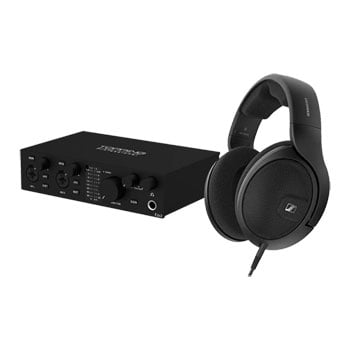

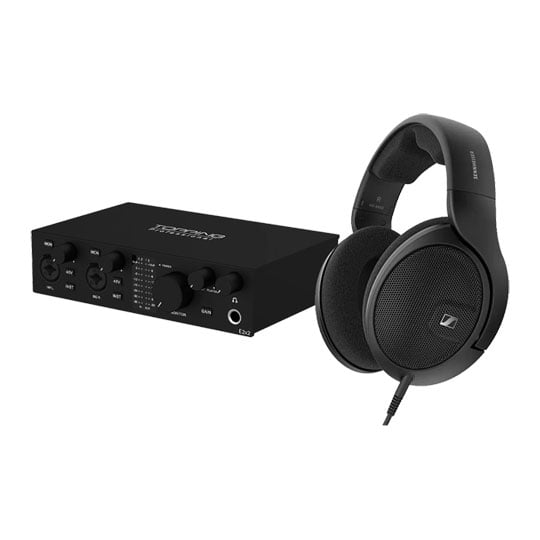
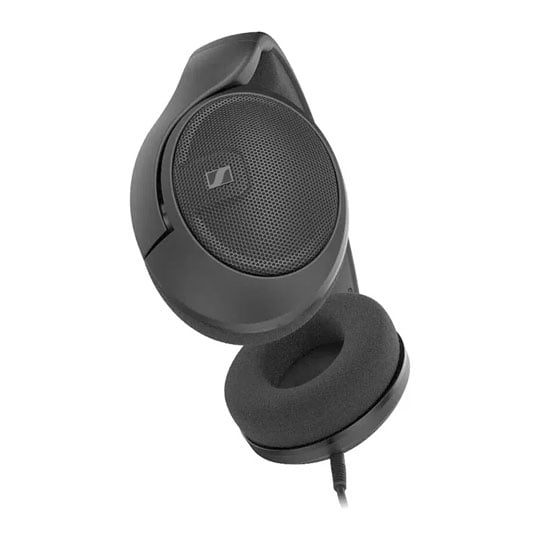


Topping Pro E2x2 + Sennheiser HD 560S Bundle
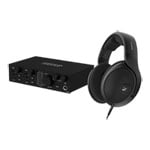
Topping Pro - E2x2 2 In / 2 Out USB Audio Interface + Sennheiser - HD 560S Open-Back Audiophile Headphones
Email me when the availability or price changes
Finance this product
- From £12.16 / month (APR 16.9%) for 24 months or 0% for 4 months
- Spend over £390.00 and Buy Now, Pay Later or spread the cost of your finance over 24-48 months with a 10% deposit.
- SCANPROTECT Protect against installation damage for 28 days.
Topping Pro - E2x2 USB Audio Interface
& Sennheiser - HD 560S Open-Back Headphones

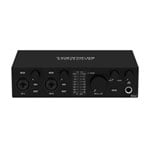
designed to get the best possible results from headphonesThe Topping Pro E2x2 is a compact, 2 In / 2 Out Bus powered interface with quiet, powerful preamps and a class leading headphone amplifier that can power any studio headphone. Together with the Sennheiser HD 560S open-back audiophile headphones, you'll hear music with great detail, enough to have you feeling like you're hearing your favourite songs for the first time all over again. A match made in heaven, available to you from Scan Pro Audio.
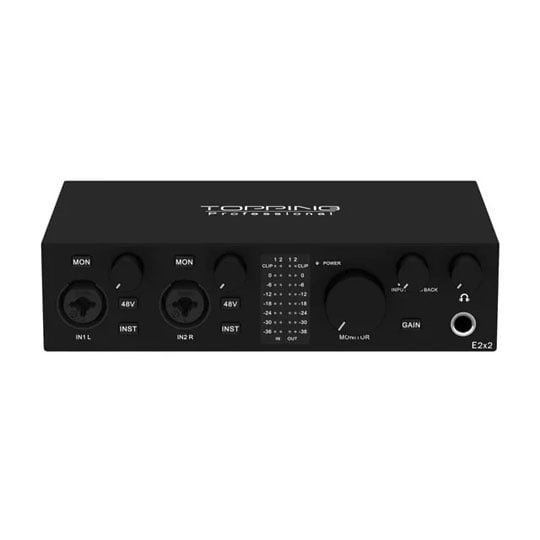
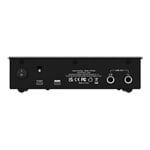
Topping Pro E2x2 USB Audio Interface

designed to get the best possible results from headphonesWith the rise in producers working and mixing in headphones, it is surprising that the headphone output on most small interfaces is often underpowered, unable to run to a good volume with low distortion on all but the most efficient, low impedance headphones. Topping Pro’s Interface range is designed to get the best possible results from headphones, so even for hard to drive models you won’t need an external headphone amp.
The E2x2 headphone output has up to 580mW of power and a Hi/Lo gain switch. It is equally suitable for high impedance models as ones with low impedance and low sensitivity such as HEDDphones, or many Hifiman & Dan Clark planar magnetic headphones that struggle on most interfaces and require a dedicated amp.
In comparison, most similar priced interfaces have a max output power of between 25 & 150mw.
Low noise inputs
Topping have implemented extremely low noise (-128dB EIN) microphone and instrument preamps that would not be out of place on high end premium interfaces, even low output dynamic mics like the SM7B work fantastically well without the need for an external preamp. All of the Topping interface stock at Scan are revised models with the increased 1.5K input impedance.
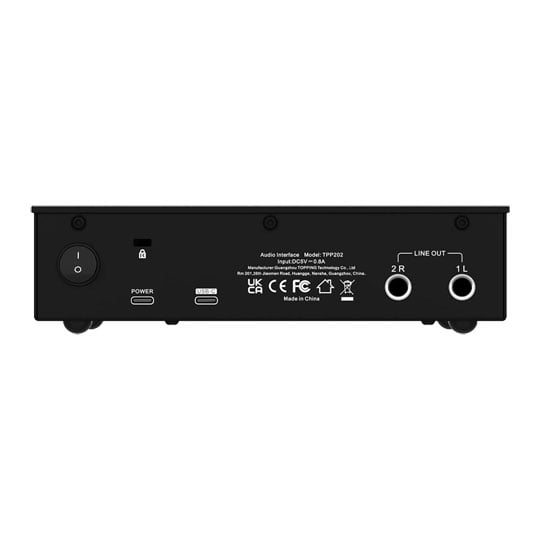
Samples rates of up to 192kHz 24 Bit / are supported on Mac & PC, but there is also iOS and Android compatibility when using a standard external USB power supply. The additional power supply also means that any particularly challenging, power hungry condenser mics would be no issue on any platform.
Control Centre
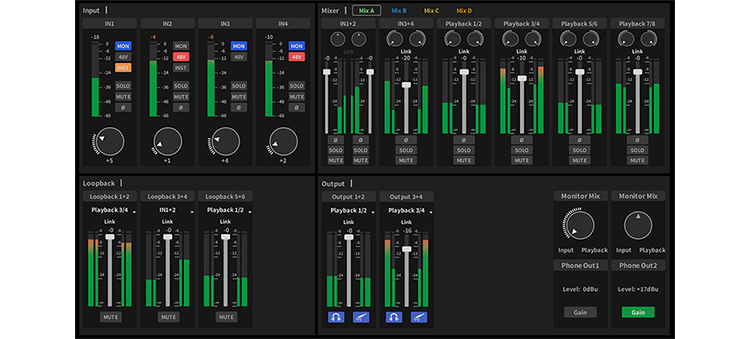
The control centre has three 8-channel input mixes (2 Physical Inputs & 3 Stereo DAW Channels), the E2x2 allows you to easily control levels in mixes for monitoring and loopback.
There are 2 Stereo loopback channels that will appear as inputs and can be assigned their own mixer , so you can record the audio of desktop applications into your DAW and capture audio from DAW applications for live streaming or to feed into Zoom or Teams type calls combined with your mic input.
Why Is A Powerful Amp Essential For Headphone Mixing?

1. Headroom for Peaks & Transients
Headroom is very important in headphone mixing, you want to be able to hear when distortion kicks in in the music you are working on, not when your headphone amp clips on volume peaks.
This is extra power available in the amplifier above the average level you are listening at, before it starts clipping and distorting, to cope with dynamic changes in the music.
These changes could be short, loud transients of drums or percussion , or slower changes in volume in different parts of the the music.
This is especially important when you are mixing records as opposed to listening to a finished piece of music, as you will have much greater dynamic changes on your master output as opposed to a mastered record.
2. Headphone EQ Correction
Headphones have very differing frequency responses, even with ‘studio reference’ type models and can be made more accurate with EQ based correction.
This can be done in a plugin or your mix bus, or the end of your master bus if you don’t have one . This can be done manually, or using a plugin that has profiles for different headphone models, such as Sonarworks Sound ID Reference, Toneboosters Morphit, D-soniq Realphones, Acustica Sienna or Waves NX.
Whenever any of these plugins makes a boost to correct the dip in the headphones frequency response , it uses up headroom, it is not uncommon to see corrections of 10dB in some profiles, especially boosting the sub region of open back headphones where the bass rolls early.
A 10dB boost is a perceived doubling of the loudness, but takes 10 times the amplifier power.
3 . Equal Loudness Curves
Human ears perceive the balance of sound at differently dependent on the voume of the sound.
This is why Hifi systems often have ‘Loudness’ buttons on them to compensate for lower bass and treble at low volumes.
When making your final mix decisions, you want to monitor at somewhere between 75-83dB(c) , for the tonal balance to be as even as possible to your ear, however, it is very hard without a calibrated dummy head to monitor headphone volume.
You do not have to monitor at these levels all the time, but doing so at least for your final mix will hive the most even balance.
To do this at home, we suggest using an App on your phone that has a ‘C’ Weighted DB meter, adjust the volume of your speakers until you get a 75-83dB average (dependent on the size of your room, big rooms should be louder) and then adjust your headphone volume to be close to your speakers as you take them on and off.
Understanding Output Impedance
You probably are not used to seeing headphone output impedance commonly on specs, but matching it to the impedance of your headphones is very important for linearity of the frequency response.
To get a linear frequency response for your headphones, ideally they want to ideally be more than 8 times (and certainly no less than 5 times) the output impedance, so any headphone with an impedance of more than 8 ohm will have an uncoloured output on a Topping Pro interface, Which is practically every headphone and IEM.
Most other popular interfaces at a similar price have output impedance between 10 Ohm (recommended 50- 80+ Ohm Headphones) & 90 Ohm (recommended 450-720 Ohm Headphones).
Using headphones with impedances below the 8 times rule predominately results in a bass bump, which will be larger the further away you are from the number. An unwanted bass bump in the response means your mixes will probably translate bass light.
As a comparison, The latest generation of a popular 2 in, 2 out, red cased interface has a headphone output impedance of 50 Ohms, so only completely even with headphones above 400 Ohms, however its’ amplifier has less than a quarter of the power of the one in the Topping Pro Interfaces at 400ohms.
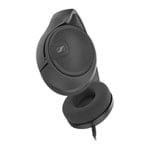
Sennheiser HD 560S Open-Back Audiophile Headphones

Natural & accurate reference soundThe Sennheiser HD 560S delivers the linear performance required by analytical audio enthusiasts at a breakthrough value, allowing the listener to have an honest look inside their music. Featuring E.A.R. (Ergonomic Acoustic Refinement) angled driver alignment, this recreates the optimal triangular listening position you regularly find in hi-fi loudspeaker setups.
Together all these features create a wide, articulate soundstage without the need for room treatment, letting you hear the neutral version of your music unaffected by the artifacts of a confined space. The HD 560S delivers the linear performance required by analytical audio enthusiasts at a breakthrough value, allowing the listener to have an honest look inside their music.
120 ΩImpedance
6Hz - 38kHzFrequency Response
110 dBSPL
Amazing Features
• Natural and accurate reference sound with superb detail retrieval with fast, clear bass response
• All-new transducer with high-strength magnet effortlessly reproduces deep, defined bass and brilliant treble
• Angled transducers recreate the optimal listening position every time, without the need for acoustic room treatment
• Open earcups facilitate the natural expansion of sound waves
Performance & Comfort Combined
Comfort is kingA headphone this neutral is perfectly paired with a distraction-free fit and a “barely there” feel on the listener’s head. Even the velour earpads have been carefully designed to keep all contact points soft to the touch. The open, around-the-ear design provides benefits beyond natural sound, the ventilated cup remains cool without ever needing to touch the wearer’s ears.
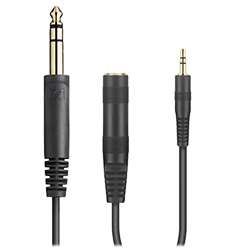
all about connectionThe detachable 1,8 meter cable provides the perfect amount of freedom to access your gear, regardless of how it may be organized within your setup. The 3,5mm plug lets you connect to headphone amplifiers and most hi-fi sources while a 6,3mm screw-on adapter ensures you can extract the most out of your reference material on portable digital audio players and countless other audio devices.
Topping Pro E2x2
The Tech Spec
| Features | Specification | 1. Microphone Inputs | Equivalent Input Noise @A-wt, 150 Ohm | -130.5dBu THD+N @A-wt | -110dB (0.0003%) Dynamic Range @A-wt | 115dB SNR | 115dB Crosstalk @1kHz | -140dB Frequency Response | 20Hz-40kHz (+0.2dB) Maximum Input Level | 8.6dBu Input Impedance | 1.5k Ohms Available Gain | 58dB + 20dB (20dB digital gain) Phantom Power | 48V Connector Type | XLR connector of the combo socket : Pin 2 (Hot), Pin 3 (Cold) & Pin 1 (Shield) |
|---|---|
| 2. Line Inputs | THD+N @A-wt | -107dB(0.00045%) Dynamic Range @A-wt | 115dB SNR @A-wt | 115dB Crosstalk @1kHz | -140dB Frequency Response | 20Hz-40kHz (+0.1dB) Maximum Input Level | 23.9dBu Input Impedance | 6k Ohms Available Gain | 58dB + 20dB (20dB digital gain) Connector Type | TRS connector of the combo socket : Tip (Hot), Ring (Cold) & Sleeve (Shield) |
| 3. Instrument Inputs | THD+N @A-wt | -108dB (0.0004%) Dynamic Range @A-wt | 114dB SNR @A-wt | 114dB Crosstalk @1kHz | -140dB Frequency Response | 20Hz-40kHz (+0.3dB) Maximum Input Level | 14.8dBu Input Impedance | 1M Ohms Available Gain | 58dB + 20dB (20dB digital gain) Connector Type | TS connector of the combo socket |
| 4. Line Outputs | THD+N @A-wt | -100dB (0.001%) Dynamic Range @A-wt | 115dB Analogue Dynamic Range @ A-wt, -40dB attenuation | 127dB SNR @A-wt | 115dB Crosstalk @1kHz | -128dB Frequency Response | 20Hz-40kHz (+0.3dB) Maximum Input Level | 14dBu Noise @A-wt | 1.8uVrms Output Impedance | 100 Ohms Connector Type | 6.35mm TRS balanced jack : Tip (Hot), Ring (Cold) & Sleeve (Shield) |
| 5. Headphone Outputs | 5. Headphone Outputs THD+N @A-wt | -100dB (0.001%) Dynamic Range @A-wt | 115dB Analogue Dynamic Range @A-wt, -40dB attenuation | 132dB SNR @A-wt | 115dB Crosstalk @1kHz | -120dB Frequency Response | 20Hz-40kHz (+0.3dB) Maximum Input Level | OdBu @ Gain=L, 17dBu @ Gain=H Noise @A-wt | 1 uVrms Output Impedance | 1 Ohms |
Sennheiser HD 560S
The Tech Spec
| Features | Specification | Type | Wired |
|---|---|
| Open/Closed | Open |
| Fit Style | Circumaural (Around the Ear) |
| Frequency Response | 6Hz - 38kHz |
| Impedance | 120 ohms |
| Connectivity | 1/4" plug, 1/8" adapter |
| Cable Type | Straight |
| Cable Length | 9.8 ft. |
| Detachable Cable | Yes |
| Colour | Black |


PayPal Credit
| Monthly Payment: | £22.56 |
| Instalment Rate: | 16.9% p.a. (fixed) |
| Cost of purchase: | £249.00 |
| Total inc. interest: | £270.68 |
| Monthly Payment: | £12.16 |
| Instalment Rate: | 16.9% p.a. (fixed) |
| Cost of purchase: | £249.00 |
| Total inc. interest: | £291.78 |
| Example | |
| Minimum Spend: | £99 |
| Instalment Rate: | N/A |
| Cost of purchase: | £99 |
| Total inc. interest: | £99 |
Representative Example:
Purchase Rate: 23.9% p.a. (variable)
Representative: 23.9% APR (variable)
Assumed Credit Limit: £1,200
Subject to status. Terms and Conditions apply.