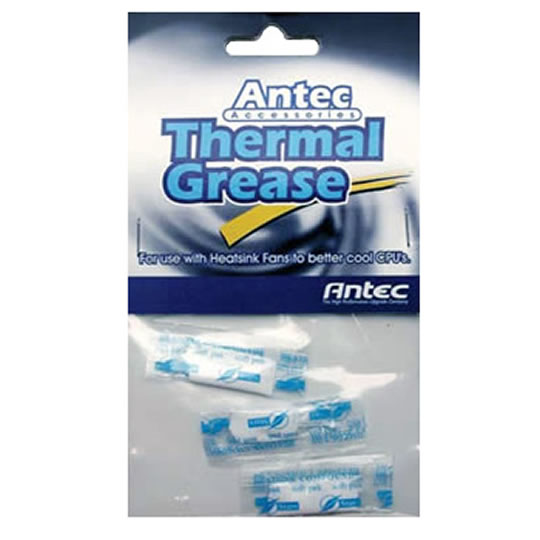
Antec Thermal Grease
End Of Life
Antec Thermal Grease
Scan code: LN28942 Manufacturer code: 0-761345-77064-4
End Of Life

End Of Life

Antec Thermal Grease

Antec Thermal Grease - For use with Heatsink & Fans to bond to CPU's and hot chips -Silicon Compound

Scan code: LN28942 Manufacturer code: 0-761345-77064-4
End of life
This product is no longer available to purchase.

Email me when the availability or price changes

Product Overview For use with Heatsink Fans to better cool CPU's. Features Thermal Resistance: 0.05°C/W
Color: White
Material: Silicone compounds
Weight: 1g / packet
Warranty

Please note your statutory rights are not affected.

For further information regarding Scan's warranty procedure please see our terms and conditions

Details
Duration:
24 months
Type:
Return to base
DOA Period:
14 days
RTB Period:
24 months
Manufacturer Contact Details
Manufacturer:
Antec
Buying Guide
Need help? Read our Air Cooling Buying Guide
Chassis Airflow
Chassis Airflow
Date Issued: 20th Oct 2008

The modern PC is potentially a mass of heat output and heat production hot spots. With CPUs rated at more than 100W of heat output, single graphics boards carrying similar ratings (and people want to run two!), multiple hard drives the norm, lots of memory and mainboards covered in heatpipes to combat toasty core logic and PWM circuits, a PC appreciably warming up a room when it’s working hard is no joke.

Read More

Overclocking
Overclocking
Date Issued: 20th Oct 2008

This TekSpek explains why you’d want to overclock your graphics board, the risks in doing so and how you can go about doing it.

Read More

Watercooling
Watercooling
Date Issued: 19th Jun 2008

Watercooling for the PC has been around for years in some form or another, for at least as long as Scan have been in business, with basic physics defining why you want to use it. That means for air cooling, to cope with increasing temperature in the heatsink you need to move the air across it faster. That is why thermostatically controlled fans in your PC will turn faster the hotter something gets.

Read More