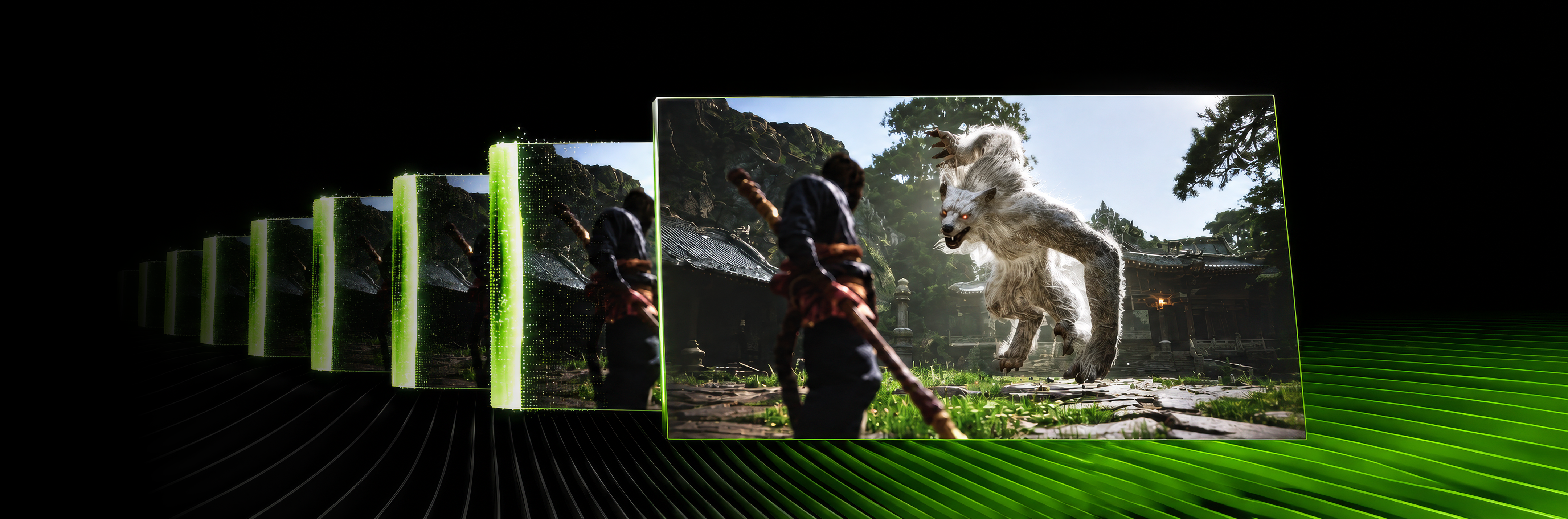
DLSS (Deep Learning Super Sampling) was first launched in 2018, and has since been through several generations. The latest version DLSS 5 launched on the 3rd September and brings a completely different approach to enhancing the gaming experience. Let's explore further.
The Background
DLSS 5 was announced back in March, it received a highly controversial and mixed reception, with many critics expressing skepticism over its aggressive AI-driven visuals. Gamers complained that the neural rendering made character faces and environments look like they had an over-processed Snapchat or Instagram filter applied, and others worried the technology flattened distinct creative art styles into a uniform, generic photorealism. Additionally, the initial preview (an example below) was showcased using a dual RTX 5090 GPU set-up, sparking fears about massive performance penalties and optimisation limits.
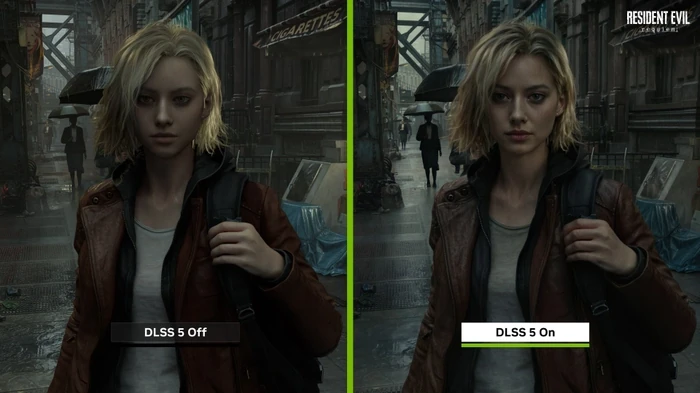
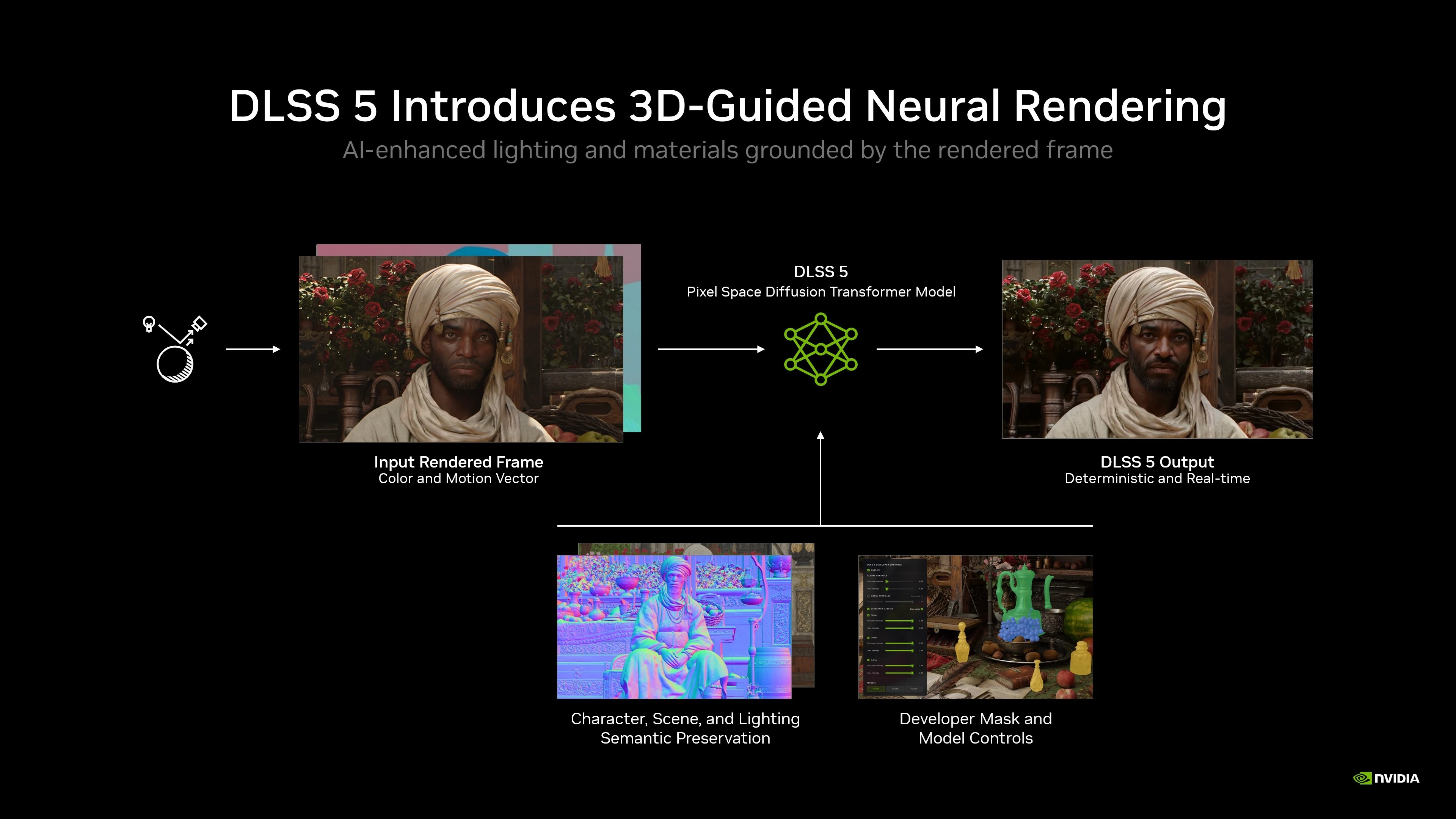
Following the initial GTC pushback, NVIDIA actively stepped in to clarify that DLSS 5 would include deep developer controls for masking and intensity, ensuring artists could maintain creative control. At last week's launch, NVIDIA detailed that rather than simply reconstructing pixels, DLSS 5 analyses scene information to generate visual output. However, unlike the preview version of DLSS 5, which could alter artistic intent or produce an unpredictable result, the launch version of DLSS 5 does remain grounded in the developer's original scene data.
Studios can select different neural rendering models or control where neural rendering affects a scene - adjusting effect intensity, creating masks for specific objects, choosing which characters receive neural enhancements, tuning light responses and applying different settings to gameplay and cutscenes. This approach helps ensure that AI improvements complement a game's artistic direction instead of overriding it, as illustrated below.

The result is that the AI model uses the game's original rendered frame as its foundation and builds upon it rather than replacing it entirely, so it certainly seems that NVIDIA did indeed listen to the feedback after GTC.
How Does DLSS 5 Work?
NVIDIA describes DLSS 5 as a rendering stage that works alongside traditional graphics techniques such as rasterisation, ray tracing, and path tracing. It is fundamentally different from previous versions of DLSS. Earlier generations focused on reconstructing or upscaling images that had already been rendered by the game engine. DLSS 5 introduces what NVIDIA calls 3D-Guided Neural Rendering, a real-time generative AI system that helps create the final appearance of a frame.
It receives data from the rendered frame, motion vectors, depth information, temporal data from previous frames, material and object properties and the developer-defined artistic controls. It then uses a neural model trained on large amounts of real-world visual data to learn how light behaves on different materials.
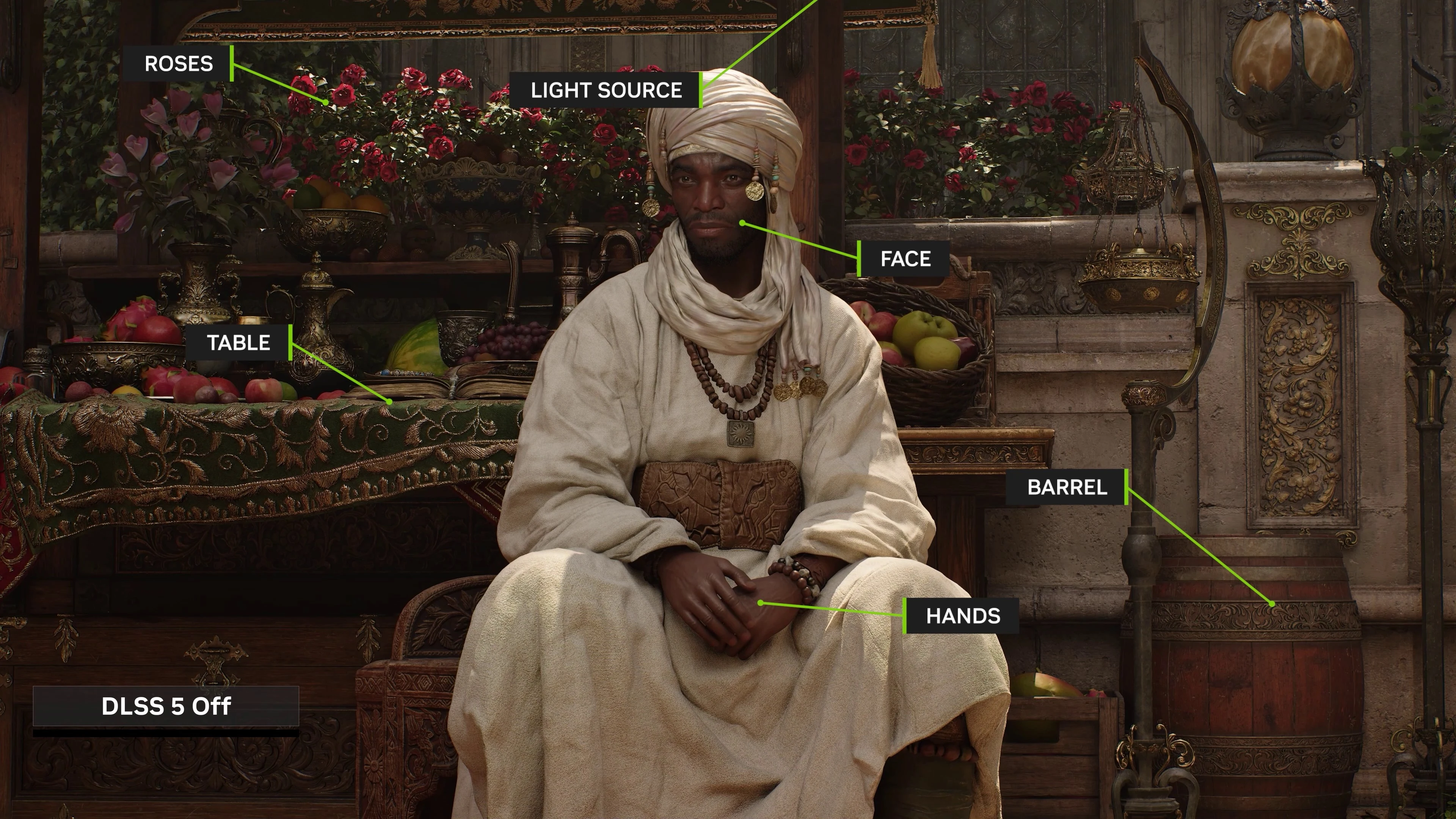
The result is enhanced lighting behaviour, more convincing shadows, improved skin rendering, better reflections, richer material interactions, and more natural environmental effects such as light passing through hair, foliage, and semi-transparent surfaces, as demonstrated below.


Whilst DLSS 4.5 focused on rendering additional frames to increase the framerate, DLSS 5 focuses on how realistic that frame ultimately appears. In fact, DLSS 5 is designed to work alongside the DLSS technologies that came before it, rather than replacing them. NVIDIA's own demonstrations of DLSS 5 in NBA 2K27 combine the new neural rendering technology with existing DLSS 4.5 features such as Super Resolution and Multi Frame Generation. Think of DLSS 5 as an additional layer on top of DLSS frame generation.
Can I Use DLSS 5 Today?
Presently there's only one game available, the aforementioned NBA 2K27, that features full DLSS 5 capabilities. Demonstrations suggest it does deliver noticeably more realistic skin rendering, enhanced arena lighting, and improved environmental detail, as shown below.


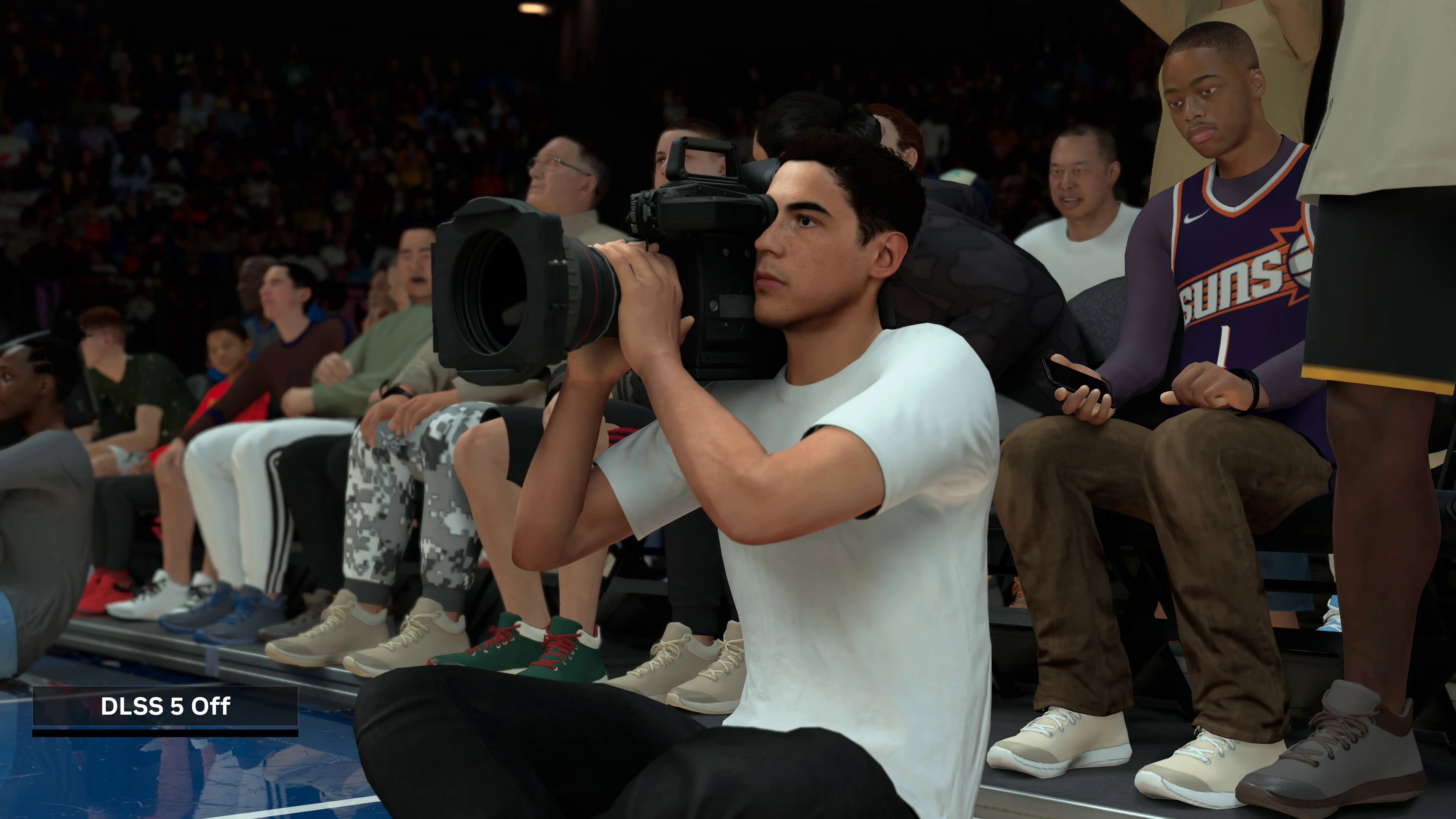
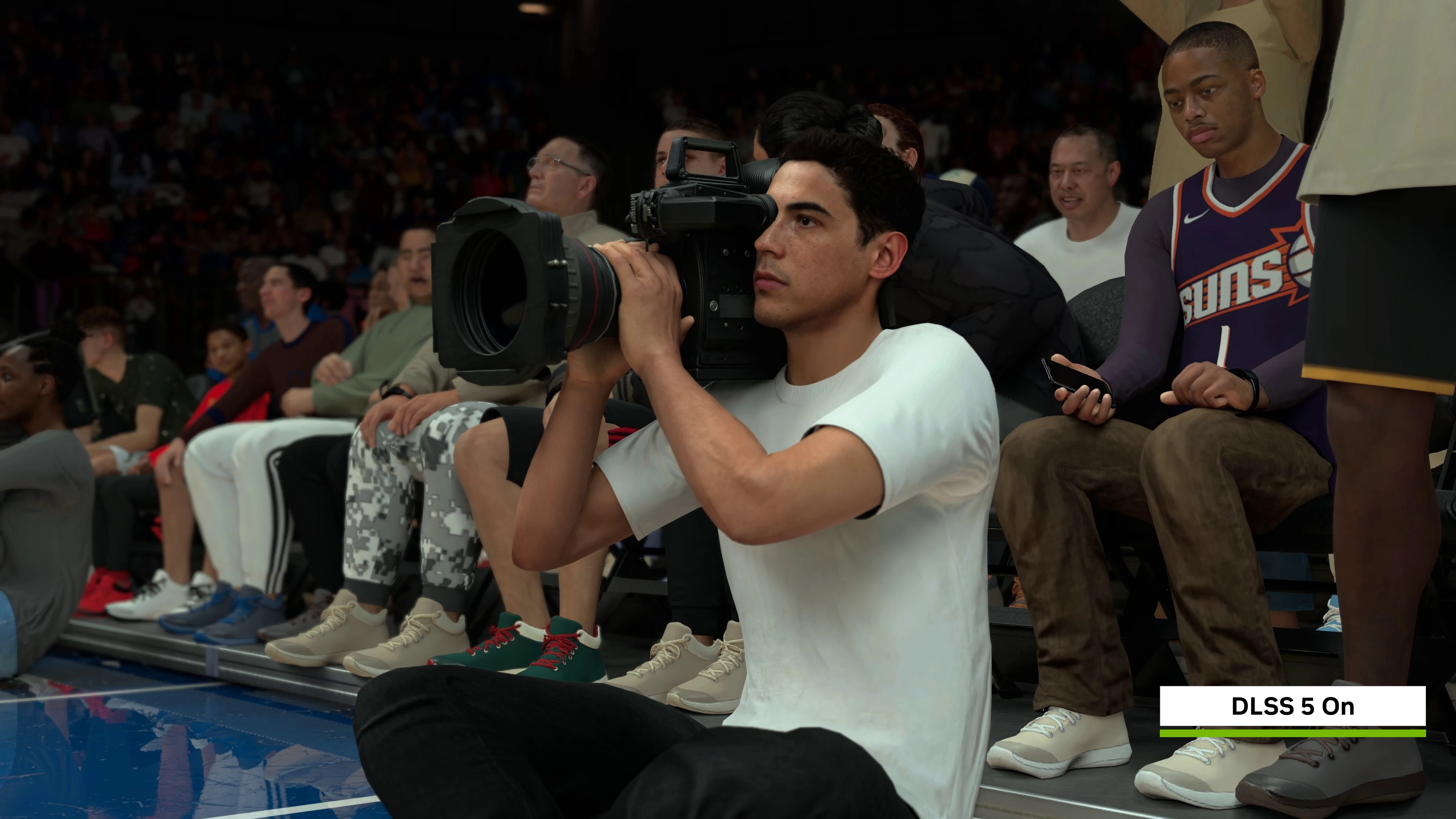
Although this may not seem the most obvious title to launch the technology with, it does play directly into showcasing the visual improvements without fundamentally altering character geometry, which is particularly important in a sports title where player scans need to remain accurate. Another demonstration shows 3D-Guided Neural Rendering improving image quality enhancing natural skin subsurface scattering, refining facial hair lighting, and delivering deeper contact shadows across a character's jersey and a basketball.
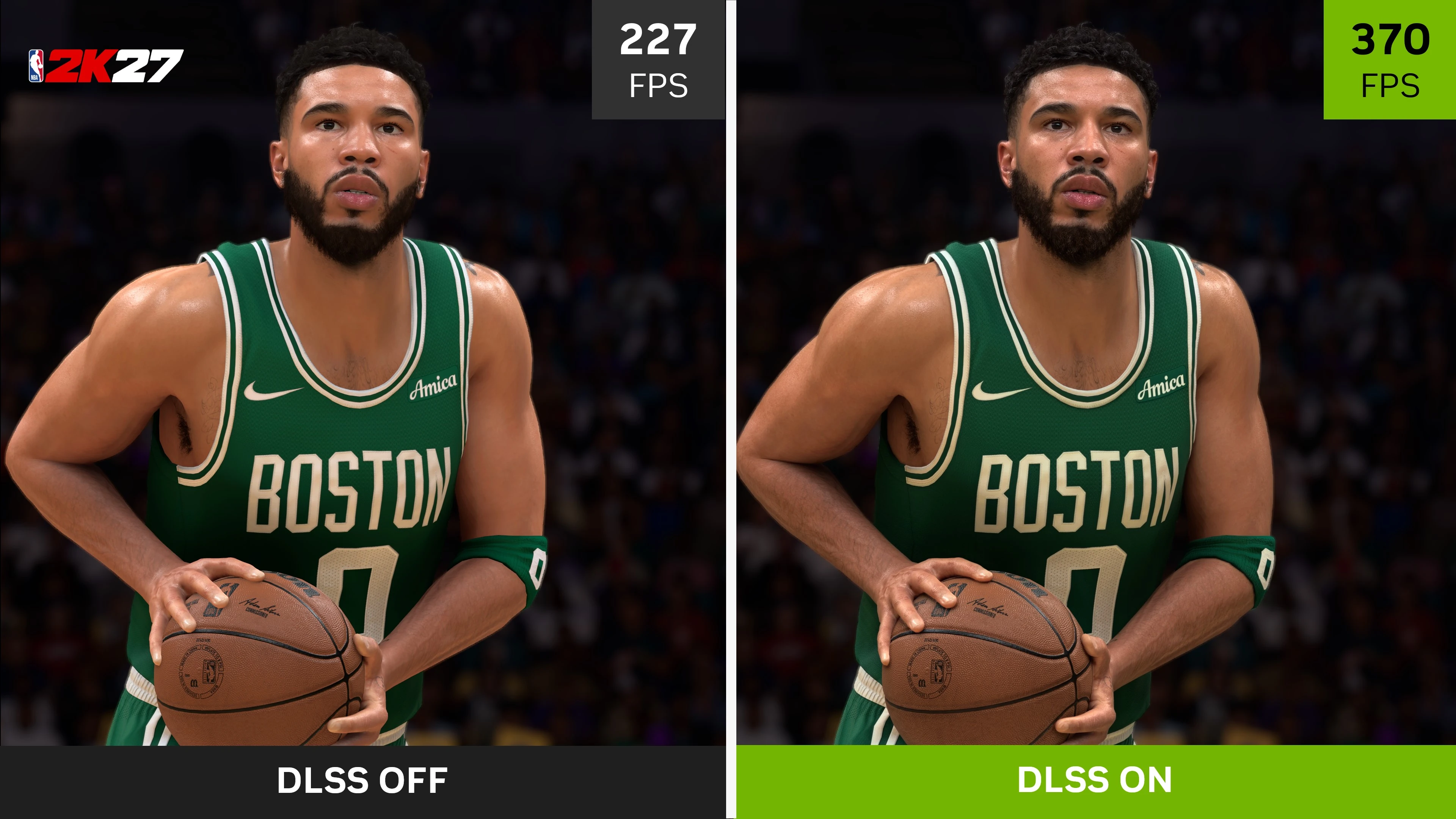
Additionally, when combined with the Super Resolution, and Multi Frame Generation effects of the wider DLSS ecosystem, frame rates are also boosted further enhancing gameplay.
Hardware Requirements
DLSS 5 is available only on GeForce RTX 50-series desktop and laptop GPUs, as NVIDIA has developed the technology specifically around the Tensor cores, AI capabilities and performance characteristics of its latest RTX architecture. The combined DLSS platform delivers frame rates ranging from 370fps (on a GeForce RTX 5090 GPU at 4K with Ultra Settings and ray tracing), down to 258fps (on a GeForce RTX 5060 GPU at 1080p and the same settings).
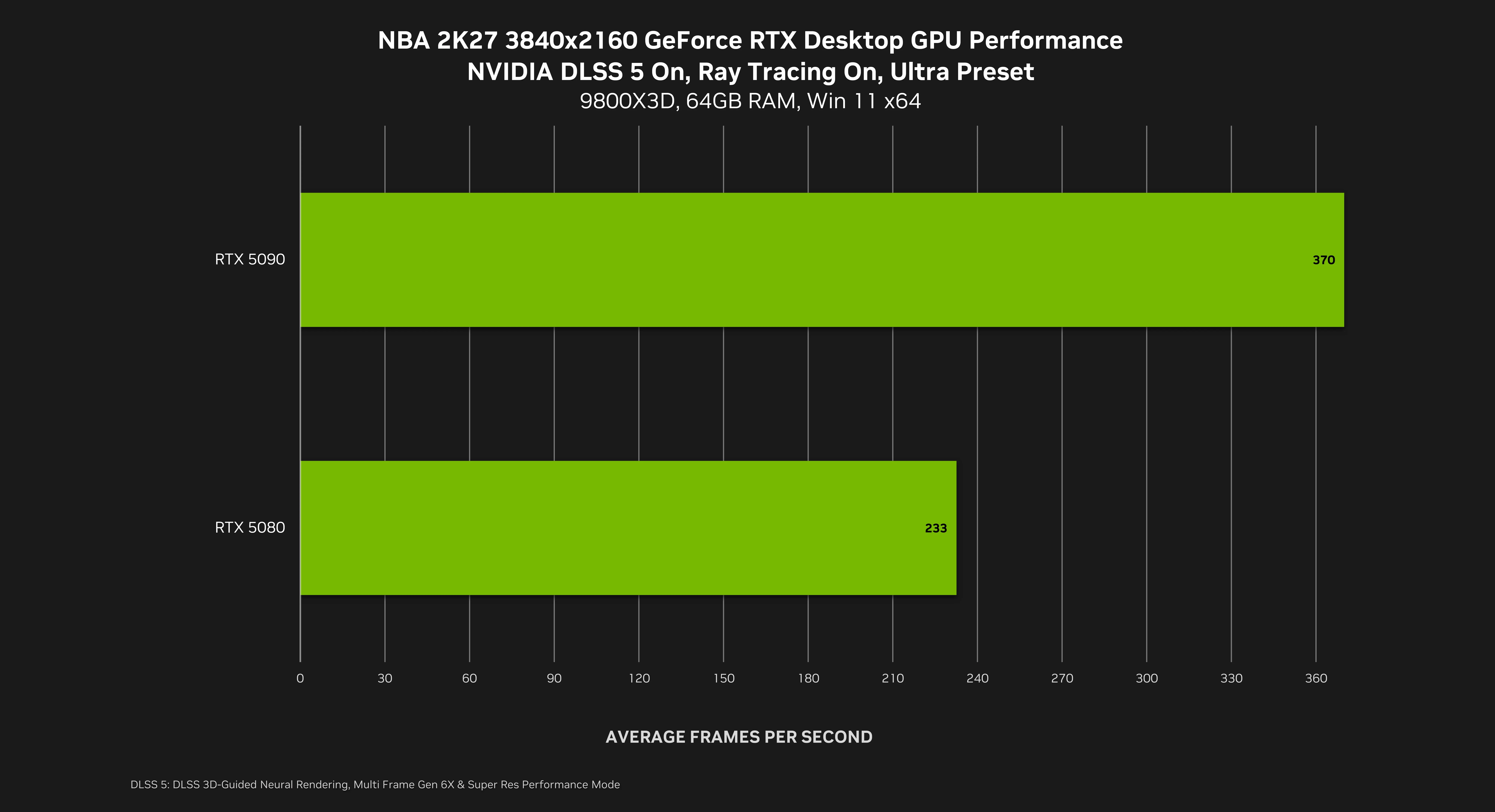
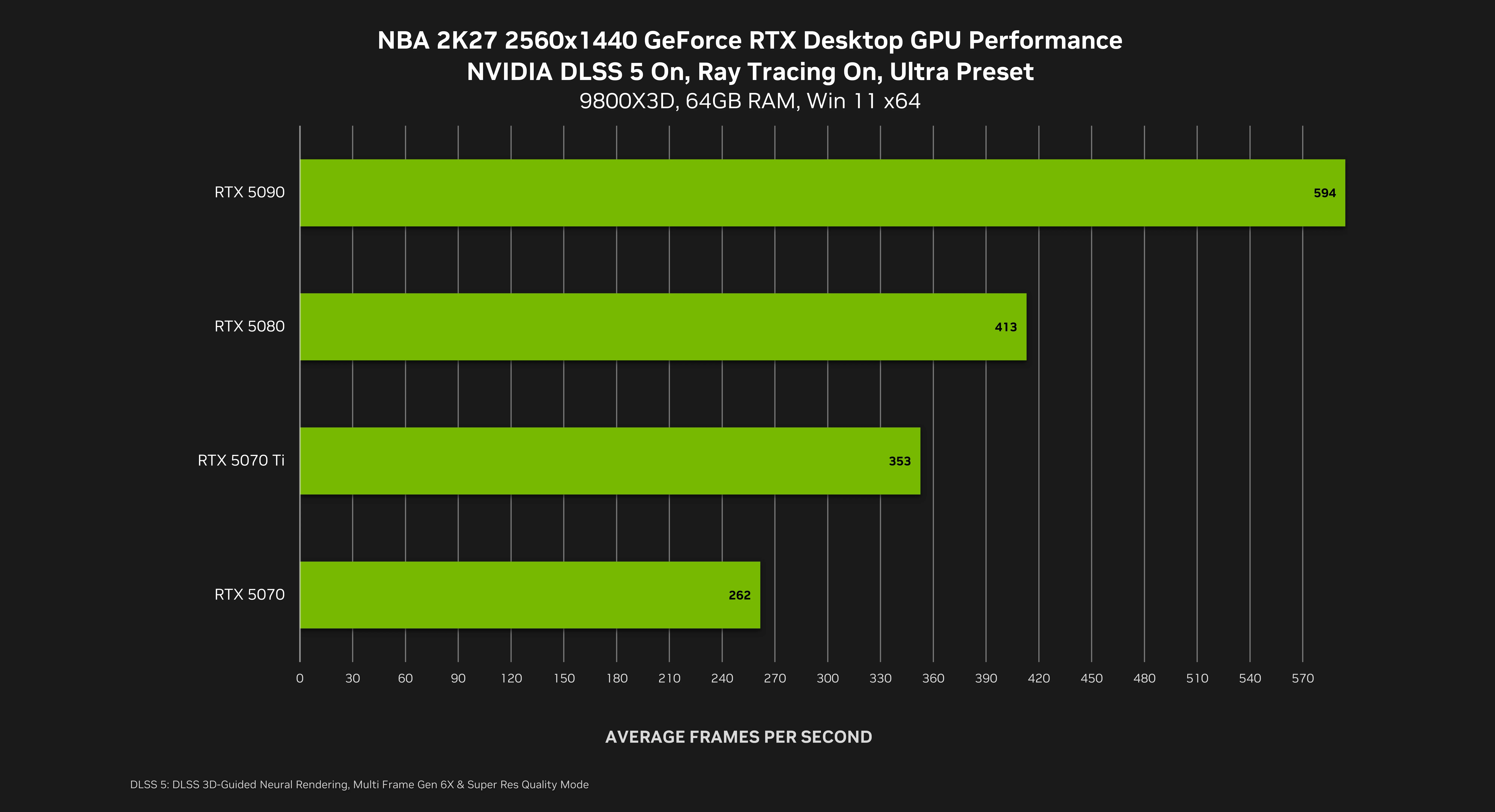
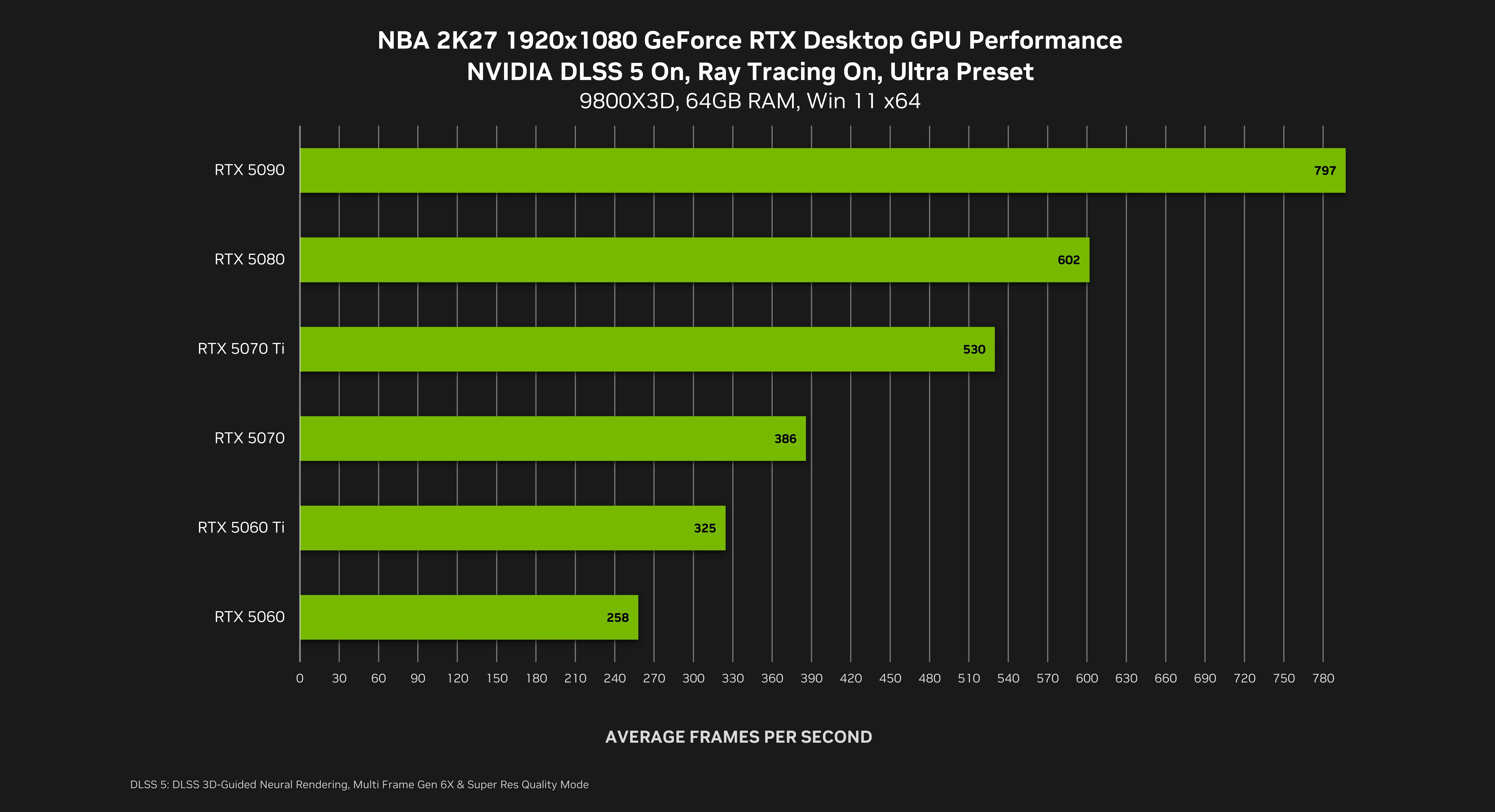
So, it seems if you want the full DLSS stack, you're going to have to upgrade to a 50-series GPU. Although it also looks like if you do so, you'll be in for future performance gains too, as there has been significant progress moving from the dual RTX 5090 set-up needed in March to the full range of 50-series cards today. We'd expect NVIDIA to keep fine-tuning DLSS 5 as more supported games enter the market – Star Wars Zero Company, Aliens: Fireteam Elite 2, The Blood of Dawnwalker and Onimusha: Way of the Sword are all confirmed for release soon.
Our Verdict
DLSS 5 appears to be a great addition to the GeForce software stack, building on the existing attributes where Super Resolution is employed to reduce rendering workload, Multi Frame Generation helps boost frame rate and the new 3D-Guided Neural Rendering reinvests some of the resulting performance headroom into improving visual fidelity.
While not everyone will be convinced that neural rendering is the future of gaming graphics, NVIDIA has gone a long way to ensure artistic control is not compromised by the launch version of DLSS 5. Rather than replacing artists intent, NVIDIA is keen that the technology is seen as a new tool that helps studios achieve visual detail that would otherwise require significantly more computational power. Perhaps GTC was too early to announce it, as had this extra context been available then, there may not have been quite the backlash.