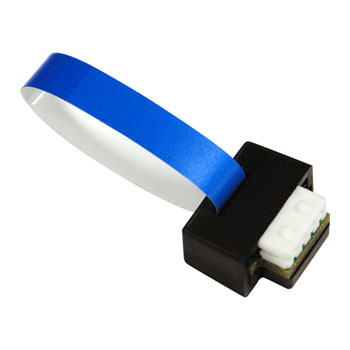
Intel Virtual RAID on CPU Standard Hardware Key
Scan code: LN85567
Manufacturer code: VROCSTANMOD
£129.98Item currently awaiting an ETA
Pre order

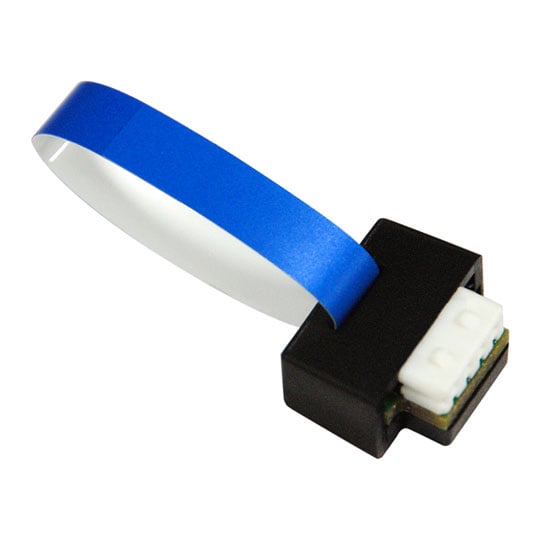

Intel Virtual RAID on CPU Standard Hardware Key
Intel VROC Standard Hardware Key Supporting Raid 0, 1, 10 upto 24 Devices
Scan code:
LN85567
Manufacturer code:
VROCSTANMOD
£5.48 Next day delivery
Item currently awaiting an ETA
Email me when the availability or price changes
Finance this product
- From £11.78 / month (APR 16.9%) for 12 months or 0% for 4 months
- Spend over £280.00 and Buy Now, Pay Later or spread the cost of your finance over 24-48 months with a 10% deposit.
- SCANPROTECT Protect against installation damage for 28 days.
Product Overview
Scalable RAID Designed for CPU Attached NVMe SSDs
Today's data hungry business processes need access to data quicker than ever. Quicker access to data means faster decision making, better productivity, and quicker ROI on IT infrastructure. Therefore, Enterprise data storage solutions are migrating to higher bandwidth and lower latency NVMe-based SSDs to address the performance bottlenecks of legacy SATA/SAS interfaces. With this transition, enterprises also require RAID data protection for NVMe SSDs.
Inter Virtual RAID On CPU (Intel VROC) is a new enterprise RAID solution specifically designed for NVMe SSDs that provides expected reliability, while unleashing the performance of NVMe SSDs. This is made possible by a new feature in next- generation Inter Xeon Scalable processors called Intel Volume Management Device (Inter VMD), an integrated controller inside the CPU PCIe root complex. Because the NVMe SSDs are directly connected to the CPU, the full performance potential of reduced latency and increased bandwidth can be realized. Intel VROC enables this benefit without the complexity, cost and power consumption of traditional hardware RAID HBA cards placed between the drives and the CPU.
Scalable RAID for Growth on Demand
A single Intel Xeon Scalable processor using Intel VROC is capable of supporting up to 12 NVMe SSDs directly attached to the CPU, and up to 6 RAID arrays. By adding PCIe switches or dual-socket system configurations, that amount doubles. In addition, Intel VROC supports both boot volumes and data volumes, enabling the flexibility to use one array for both system and data volumes, or separating the arrays respectively. Although a boot RAID array needs to be within a VMD controller, data RAID arrays can span across multiple Intel VMD controllers, or even span across different processors on the same system. With a multitude of supported configurations, Intel VROC allows NVMe RAID solutions to start small, then scale simply and cost effectively.
Rich Management Tools for Easy Maintenance
Intel VROC management tools support today's modernized data centre infrastructure. Intel VROC allows data centre administrators to create and delete RAID volumes in both pre-OS and OS environments. RAID settings can be configured using either a user interface or command line, plus the arrays can be managed locally or remotely through a web-based RESTful agent. NVMe-based SSD management has never been easier. There is no need to reboot the server to replace a failed drive any longer because surprise hot-plug is supported. Using the status indicator LED, administrators can visually identify the RAID status (i.e. normal, initialization, degraded, or fail), as well as locate a particular drive in hundreds of SSDs. Email notification will alert administrator, should any alarming events occur.
Reliable RAID for Data Protection
For enterprise, it's critical to protect data when power loss occurs unexpectedly. Intel VROC takes that a step further. The data will even be safe when RAID 5 is in degraded state and power loss occurs at same time. Most RAID solutions avoid this problem by requiring a backup power unit, which adds additional cost. Intel VROC solves this double fault challenge using a patent-pending journaling process without the need of backup power unit.
Note: Intel VROC RAID 5 double fault protection feature depends on state-of-the-art data centre NVMe SSDs with power loss protection.
Unleash the Power of NVMe SSDs Today
Quicker access to data means a more efficient business and upgrading to NVMe SSDs is the first step to a faster storage solution. Unleash the full power of these NVMe SSDs with Intel Virtual RAID on CPU, a complete RAID solution that enables the unprecedented speed of NVMe SSDs, while knowing that your data is protected for enterprise applications. Features • Supports platforms with Intel Xeon Scalable family.
• Supports all Intel Data Centre and Professional NVMe SSDs.
• Up to 24 SSDs per Intel VMD controller, per RAID array and per syatem.
• Up to 12 arrays per system.
• Up to 2 RAID volumes per system.
• Up to 2 levels of switches.
• Data volume can span across Intel VMD controllers, boot volume can NOT.
• Support for RAID 0/1/10 with 3rd party SSD support.
Supported 3rd party SSDs:
• Samsung: SM951, SM961, PM953, PM961 & PM963.
• Toshiba: XG3 & PX04PMB
• Micron: 9100 Series.
• Lenovo: Atsani.
• Huawei: ES3600P
Today's data hungry business processes need access to data quicker than ever. Quicker access to data means faster decision making, better productivity, and quicker ROI on IT infrastructure. Therefore, Enterprise data storage solutions are migrating to higher bandwidth and lower latency NVMe-based SSDs to address the performance bottlenecks of legacy SATA/SAS interfaces. With this transition, enterprises also require RAID data protection for NVMe SSDs.
Inter Virtual RAID On CPU (Intel VROC) is a new enterprise RAID solution specifically designed for NVMe SSDs that provides expected reliability, while unleashing the performance of NVMe SSDs. This is made possible by a new feature in next- generation Inter Xeon Scalable processors called Intel Volume Management Device (Inter VMD), an integrated controller inside the CPU PCIe root complex. Because the NVMe SSDs are directly connected to the CPU, the full performance potential of reduced latency and increased bandwidth can be realized. Intel VROC enables this benefit without the complexity, cost and power consumption of traditional hardware RAID HBA cards placed between the drives and the CPU.
Scalable RAID for Growth on Demand
A single Intel Xeon Scalable processor using Intel VROC is capable of supporting up to 12 NVMe SSDs directly attached to the CPU, and up to 6 RAID arrays. By adding PCIe switches or dual-socket system configurations, that amount doubles. In addition, Intel VROC supports both boot volumes and data volumes, enabling the flexibility to use one array for both system and data volumes, or separating the arrays respectively. Although a boot RAID array needs to be within a VMD controller, data RAID arrays can span across multiple Intel VMD controllers, or even span across different processors on the same system. With a multitude of supported configurations, Intel VROC allows NVMe RAID solutions to start small, then scale simply and cost effectively.
Rich Management Tools for Easy Maintenance
Intel VROC management tools support today's modernized data centre infrastructure. Intel VROC allows data centre administrators to create and delete RAID volumes in both pre-OS and OS environments. RAID settings can be configured using either a user interface or command line, plus the arrays can be managed locally or remotely through a web-based RESTful agent. NVMe-based SSD management has never been easier. There is no need to reboot the server to replace a failed drive any longer because surprise hot-plug is supported. Using the status indicator LED, administrators can visually identify the RAID status (i.e. normal, initialization, degraded, or fail), as well as locate a particular drive in hundreds of SSDs. Email notification will alert administrator, should any alarming events occur.
Reliable RAID for Data Protection
For enterprise, it's critical to protect data when power loss occurs unexpectedly. Intel VROC takes that a step further. The data will even be safe when RAID 5 is in degraded state and power loss occurs at same time. Most RAID solutions avoid this problem by requiring a backup power unit, which adds additional cost. Intel VROC solves this double fault challenge using a patent-pending journaling process without the need of backup power unit.
Note: Intel VROC RAID 5 double fault protection feature depends on state-of-the-art data centre NVMe SSDs with power loss protection.
Unleash the Power of NVMe SSDs Today
Quicker access to data means a more efficient business and upgrading to NVMe SSDs is the first step to a faster storage solution. Unleash the full power of these NVMe SSDs with Intel Virtual RAID on CPU, a complete RAID solution that enables the unprecedented speed of NVMe SSDs, while knowing that your data is protected for enterprise applications. Features • Supports platforms with Intel Xeon Scalable family.
• Supports all Intel Data Centre and Professional NVMe SSDs.
• Up to 24 SSDs per Intel VMD controller, per RAID array and per syatem.
• Up to 12 arrays per system.
• Up to 2 RAID volumes per system.
• Up to 2 levels of switches.
• Data volume can span across Intel VMD controllers, boot volume can NOT.
• Support for RAID 0/1/10 with 3rd party SSD support.
Supported 3rd party SSDs:
• Samsung: SM951, SM961, PM953, PM961 & PM963.
• Toshiba: XG3 & PX04PMB
• Micron: 9100 Series.
• Lenovo: Atsani.
• Huawei: ES3600P

Intel Virtual RAID on CPU Standard Hardware Key
![Intel Virtual RAID on CPU Standard Hardware Key]()
PayPal Credit
| Monthly Payment: | £11.78 |
| Instalment Rate: | 16.9% p.a. (fixed) |
| Cost of purchase: | £129.98 |
| Total inc. interest: | £141.29 |
| Example | |
| Minimum Spend: | £99 |
| Instalment Rate: | N/A |
| Cost of purchase: | £99 |
| Total inc. interest: | £99 |
If you are approved for a credit limit with PayPal Credit and use it for future purchases, the APR for those purchases won't be more than 23.9% and may be even lower.
Representative Example:
Purchase Rate: 23.9% p.a. (variable)
Representative: 23.9% APR (variable)
Assumed Credit Limit: £1,200
Subject to status. Terms and Conditions apply.