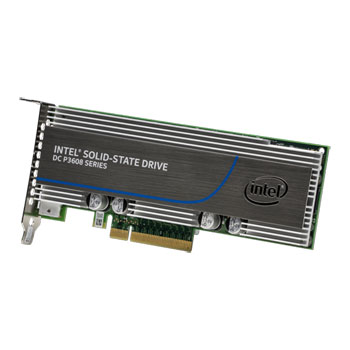
Intel Data Center P3608 4TB NVMe PCIe SSD/Solid State Drive
Scan code: LN67999
Manufacturer code: SSDPECME040T401
End Of Life

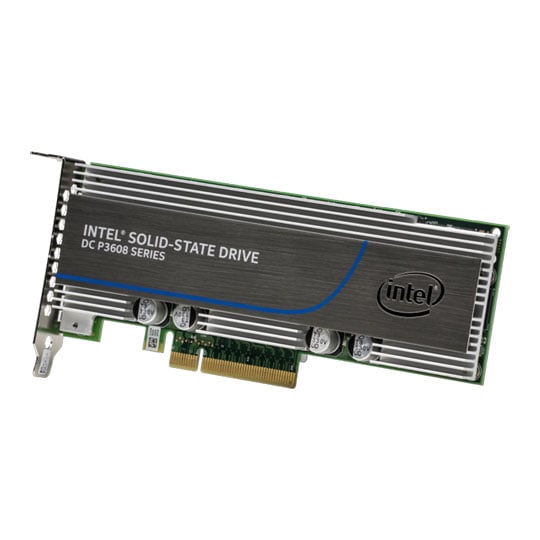

Intel Data Center P3608 4TB NVMe PCIe SSD/Solid State Drive
4TB Intel DC P3608 AIC SSD, HHHL PCIe 3.0 (x8), NVMe, 20nm MLC HET NAND, 5000MB/s Read, 3000MB/s Write, 850k/50k IOPS
Scan code:
LN67999
Manufacturer code:
SSDPECME040T401
This product is no longer available to purchase.
- 48HR REPLACEMENT If you need to return this item, your replacement will be dispatched within 2 working days of your product arriving back at Scan.
- 3XS Approved Custom picked by our award winning 3XS Systems team.
Product Overview
Extreme Performance. Extraordinary Capacity.
Extreme Performance: Moving Data Closer to the CPU
The Intel SSD DC P3608 Series taps into the power of the NVMe interface to deliver new levels of PCIe performance and ultra-low latency. When paired with multi-core Intel Xeon processors, the SSD's unique NVMe dual controller architecture enables highly efficient scalability, evenly distributing I/O across the PCIe 3.0 x8 link to obtain real-world transfers of over 5GB/s bandwidth and up to 850,000 random read IOPS.
Extraordinary Capacity: Doubling the Max Capacity
Enabling capacities of 1.6, 3.2, and 4TB in a single PCIe 3.0 x8 low profile add-in card, the Intel SSD DC P3608 series can provide twice the capacity in the same physical volume versus the Inte12 SSD DC P3600 series.
Exceptionally Easy: Upgrade Existing Systems Today
The Intel SSD DC P3608 Series are ready to be deployed right out of the box. They come in a common, industry-standard form factor: PCIe 3.0 x8, half-height, half-length, low-profile add-in card. And they're designed to work with industry-standard NVMe software and drivers.
The Need for High-Performance Storage in the Data Center
The digital service economy is driving the move to cloud computing, benefiting a wide range of users. Developers can launch innovative new services in minutes. IT can reduce operational and capital expenditures, while increasing resource utilization. And consumers and business users can instantly access new, rich, high-value services from anywhere.
Cloud services are also driving increased demand for real-time analytics and High-performance Computing (HPC) capabilities. These compute- and data-intensive workloads help businesses solve their most complex challenges. By 2018, 60% of businesses are forecast to require HPC solutions, and 40% of HPC will be available on demand in the cloud - workloads that require new levels of storage performance and capacity.
Raising High-Performance Computing Even Higher
The Intel SSD DC P3608 series delivers the extreme performance and extra-ordinary capacity today's real-time analytics and HPC workloads need.
The PCIe 3.0 x8 interface doubles available bandwidth to reduce I/O bottlenecks, while NVMe fuels the CPU with data much faster than SAS or SATA. In one HPC burst buffer use case, a single node achieved a total write bandwidth of up to 6GB/sec using two Intel SSD DC P3608 series.
Coupling high-performance Intel SSD DC P3608 Series storage with the world's largest supercomputers can help solve some of HPC's biggest scalability challenges, including cost, performance, resiliency, and energy efficiency. Features Enhanced Power Loss Management
Protection from unplanned power loss called PLI (Power Loss Imminent) is obtained using a propriety combination of hardware, firmware algorithms, built in self-test, and the robust validation at a multitude of corner cases.
20nm HET MLC NAND (High-Endurance Technology)
Up to 3 DWPD (Drive Writes Per Day) over 5 years. The endurance is based on the JEDEC enterprise workload, and real world endurance is application based and may exceed the rated value. The Intel SSD DC P3608 Series 4TB can write up to 21.9PB over the life of the drive before wearing out.
End-to-End Data Protection
End-to-end data protection and ECC (Error Correction Code) on all internal and external memories in the data path for protection at every layer.
Dual NVMe Controller
The NVMe protocol is more efficient than SATA or SAS, providing more IOPS at a lower CPU utilization. The dual controller architecture allows the SSD to simultaneously transfer data with this improved efficiency, and can be aggregated through the Intel RSTe software.
NVMe SMART monitoring and sideband health monitoring
Monitor the health of the SSD for attributes like temperature, endurance, power cycles, power on hours, and NVMe critical warnings. Sideband or out-of-band health monitoring enables OS agnostic monitoring through the standard NVM Express Management Interface Specification.
NVMe brings high performance and low latency PCIe SSDs into the mainstream with a streamlined protocol that is efficient and scalable, with the ease of deployment through industry standard software and drivers. Joining the family is the Intel SSD DC P3608 Series - expanding the maximum capacity to 4TB, doubling the interface bandwidth to obtain real world transfers of over 5GB/s, with a unique NVMe dual-controller architecture to achieve maximum storage efficiency.
Extreme Performance: Moving Data Closer to the CPU
The Intel SSD DC P3608 Series taps into the power of the NVMe interface to deliver new levels of PCIe performance and ultra-low latency. When paired with multi-core Intel Xeon processors, the SSD's unique NVMe dual controller architecture enables highly efficient scalability, evenly distributing I/O across the PCIe 3.0 x8 link to obtain real-world transfers of over 5GB/s bandwidth and up to 850,000 random read IOPS.
Extraordinary Capacity: Doubling the Max Capacity
Enabling capacities of 1.6, 3.2, and 4TB in a single PCIe 3.0 x8 low profile add-in card, the Intel SSD DC P3608 series can provide twice the capacity in the same physical volume versus the Inte12 SSD DC P3600 series.
Exceptionally Easy: Upgrade Existing Systems Today
The Intel SSD DC P3608 Series are ready to be deployed right out of the box. They come in a common, industry-standard form factor: PCIe 3.0 x8, half-height, half-length, low-profile add-in card. And they're designed to work with industry-standard NVMe software and drivers.
The Need for High-Performance Storage in the Data Center
The digital service economy is driving the move to cloud computing, benefiting a wide range of users. Developers can launch innovative new services in minutes. IT can reduce operational and capital expenditures, while increasing resource utilization. And consumers and business users can instantly access new, rich, high-value services from anywhere.
Cloud services are also driving increased demand for real-time analytics and High-performance Computing (HPC) capabilities. These compute- and data-intensive workloads help businesses solve their most complex challenges. By 2018, 60% of businesses are forecast to require HPC solutions, and 40% of HPC will be available on demand in the cloud - workloads that require new levels of storage performance and capacity.
Raising High-Performance Computing Even Higher
The Intel SSD DC P3608 series delivers the extreme performance and extra-ordinary capacity today's real-time analytics and HPC workloads need.
The PCIe 3.0 x8 interface doubles available bandwidth to reduce I/O bottlenecks, while NVMe fuels the CPU with data much faster than SAS or SATA. In one HPC burst buffer use case, a single node achieved a total write bandwidth of up to 6GB/sec using two Intel SSD DC P3608 series.
Coupling high-performance Intel SSD DC P3608 Series storage with the world's largest supercomputers can help solve some of HPC's biggest scalability challenges, including cost, performance, resiliency, and energy efficiency. Features Enhanced Power Loss Management
Protection from unplanned power loss called PLI (Power Loss Imminent) is obtained using a propriety combination of hardware, firmware algorithms, built in self-test, and the robust validation at a multitude of corner cases.
20nm HET MLC NAND (High-Endurance Technology)
Up to 3 DWPD (Drive Writes Per Day) over 5 years. The endurance is based on the JEDEC enterprise workload, and real world endurance is application based and may exceed the rated value. The Intel SSD DC P3608 Series 4TB can write up to 21.9PB over the life of the drive before wearing out.
End-to-End Data Protection
End-to-end data protection and ECC (Error Correction Code) on all internal and external memories in the data path for protection at every layer.
Dual NVMe Controller
The NVMe protocol is more efficient than SATA or SAS, providing more IOPS at a lower CPU utilization. The dual controller architecture allows the SSD to simultaneously transfer data with this improved efficiency, and can be aggregated through the Intel RSTe software.
NVMe SMART monitoring and sideband health monitoring
Monitor the health of the SSD for attributes like temperature, endurance, power cycles, power on hours, and NVMe critical warnings. Sideband or out-of-band health monitoring enables OS agnostic monitoring through the standard NVM Express Management Interface Specification.
NVMe brings high performance and low latency PCIe SSDs into the mainstream with a streamlined protocol that is efficient and scalable, with the ease of deployment through industry standard software and drivers. Joining the family is the Intel SSD DC P3608 Series - expanding the maximum capacity to 4TB, doubling the interface bandwidth to obtain real world transfers of over 5GB/s, with a unique NVMe dual-controller architecture to achieve maximum storage efficiency.


Intel Data Center P3608 4TB NVMe PCIe SSD/Solid State Drive
![Intel Data Center P3608 4TB NVMe PCIe SSD/Solid State Drive]()