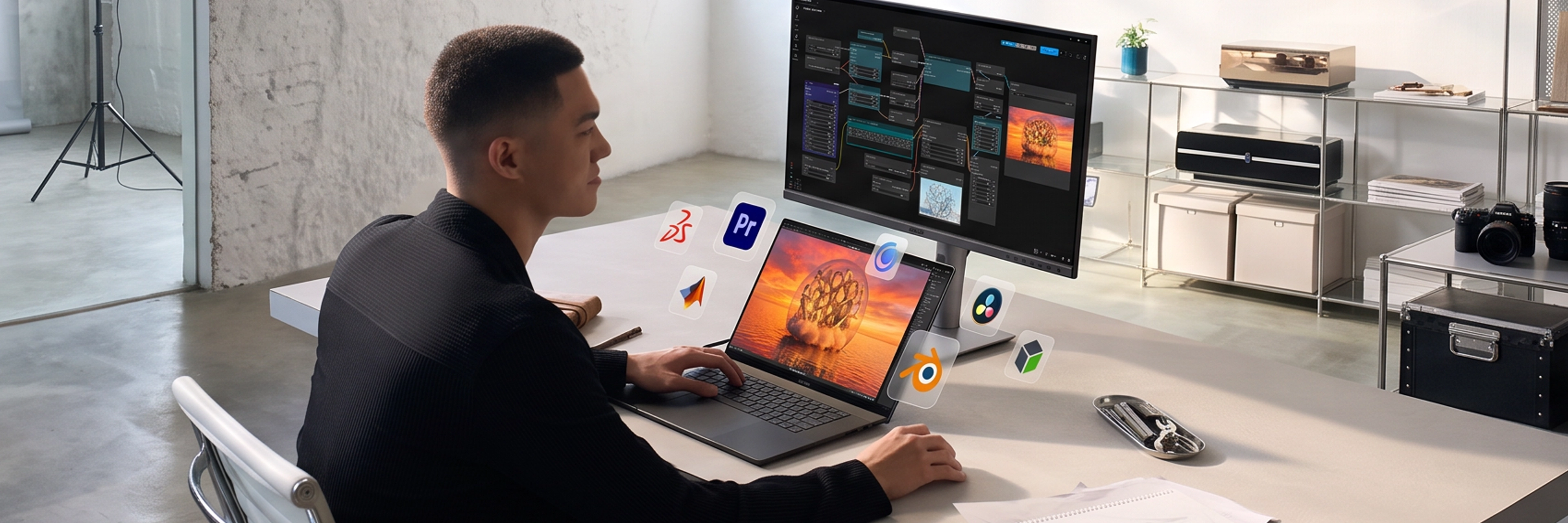
This blog was originally published 13/07/2026. It has since been updated with additional information in the run up to launch of NVIDIA RTX Spark laptops.
A lot has already been written about the recently announced NVIDIA RTX Spark laptop and desktop platform. However, this has been mostly focused on its suitability for AI-centric workflows, thanks to its headline feature of 1 petaFLOP of FP4 performance. We're going to be taking a different angle in this blog and instead looking at how suitable the RTX Spark may be for creatives. "May" being an important word, as we’re still yet to see comparative performance benchmarks.
Scan has a long track record of building bespoke workstations, servers and filming equipment for the creative industries. So, before we dive into the RTX Spark in detail, it's worth defining that by creatives we mean professionals doing visualisation-centric workflows such as AEC & BIM, CAD & CAE, and Media & Entertainment - TV & film production, game development and live events.
SoC Architecture = Portability
With that established, what do we know about the RTX Spark when it comes to laptops? Well, we know that multiple laptop brands such as Asus, Dell, Microsoft and MSI are working with NVIDIA to develop laptops, and we also know a fair bit about its architecture.
Existing laptops are powered by an x86 CPU (AMD or Intel) plus a discrete GPU (AMD or NVIDIA); meaning two chips and two separate pools of memory, each of which guzzles electricity and needs lots of cooling. This means comparatively hefty laptops, with limited battery life. For instance, the popular 16in Dell Pro Max Plus which has an Intel Core Ultra 7 CPU and NVIDIA RTX PRO 3000 GPU weighs in at 2.55kg and is 17.3mm thick.
In contrast, the RTX Spark is powered by an SoC (system on chip), combining CPU and GPU together in a single chip, with a shared large memory pool. This not only takes up less physical space than the old discrete CPU and GPU paradigm, but should be much more power efficient too. For instance, the 16in Asus ProArt P16 weighs in at 1.77kg and is 12.9mm thick, much less than the aforementioned Dell.
So RTX Spark laptops should beat traditional laptops hands-down when it comes to portability and battery life, making them much more viable for working on the move.
| Laptop | Traditional x86 CPU + discrete GPU | RTX Spark |
|---|---|---|
| Typical weight | ~ 2.5kg | ~ 1.8kg |
| Typical thickness | ~ 17mm | ~ 13mm |
SoC Architecture = Performance
Thinner and lighter laptops are undoubtedly welcome, but what about performance? There will be multiple RTX Spark configurations, with the range-topping variant being equipped with 20 Grace CPU cores, 6,144 Blackwell GPU cores and 128GB of shared memory. Other options include a model with 18 Grace CPU cores and 5,120 Blackwell GPU cores and 128GB of shared memory. Both models will also be available with different memory capacities of either 24, 32, 48, 64 or as already mentioned 128GB.
Grace is based on the Arm rather than x86 architecture, so it's important not to compare the number of cores directly with any AMD or Intel CPUs. However, when we look at another Arm-based laptop SoC already on the market, the Qualcomm Snapdragon X Elite, which has up to 18 cores, it's likely that Grace will perform very favourably in tasks such as 3D rendering, although it may lag behind when it comes to video encoding (more on this later).
When it comes to the GPU half of the RTX Spark SoC things look even more promising. It's based on the same Blackwell architecture as the latest RTX PRO and GeForce RTX discrete GPUs, with the 6,144 cores being 4% more than the RTX PRO 3000 Blackwell or GeForce RTX 5070 Ti. NVIDIA hasn't revealed the number of Tensor cores (critical for AI) and RT cores (crucial for ray tracing) yet, but we're confident it will have 192 of the former and 48 of the latter. This should give the RTX Spark more than enough oomph for CAD, AEC and BIM applications, plus some pretty complex 3D animation and rendering too. Just don't expect to be running complex CAE applications - you'll still need a really high-end laptop, or better still a desktop workstation for that.
Despite the Arm architecture's well-established weakness when it comes to video encoding (see earlier comments), the RTX Spark should actually be well suited to video production workflows. This is because the GPU has dedicated video encoders and decoders built in which support multiple standards including 4:2:2 chroma-sampled video, 4:4:4 and 4:2:0.
| Laptop | Traditional x86 CPU + discrete GPU | RTX Spark |
|---|---|---|
| AEC & BIM | ✔ | ✔ |
| CAD | ✔ | ✔ |
| CAE & CFD | ✔* | ✖ |
| Media & Entertainment | ✔ | ✔ |
| Rendering | ✔ | ✔ |
| Video production | ✔ | ✔ |
* = Requires an extremely high-spec model
Software Support

The latest greatest hardware can be undermined by lack of software, but this really shouldn't be an issue with RTX Spark laptops. For starters, they run the Arm-version of Windows 11, so from a user experience and software library point of view they should be the same as traditional laptops. RTX Spark laptops will also be part of the NVIDIA Studio program, which includes hundreds of NVIDIA-optimised DCC applications from the likes of Adobe, Autodesk and Blackmagic.
Screens for Creatives
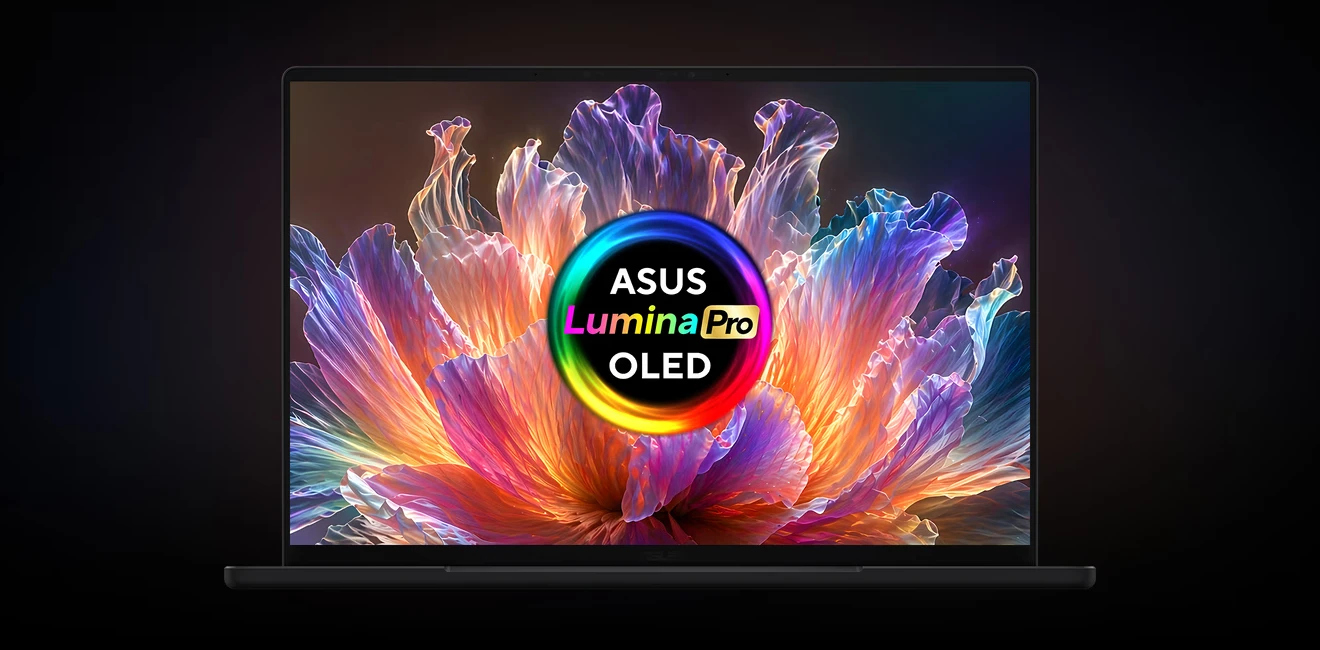
Laptop manufacturers are also making sure that their designs are suitable for creatives too. For instance, the aforementioned Asus ProArt P16 has a professional-grade 4K screen with 1,600 nits brightness, 100% DCI-P3 colour gamut and PANTONE validation. These sorts of specs are overkill for gamers, but crucial for graphics professionals, ensuring high colour accuracy and consistency.
Final Thoughts
While we eagerly await the chance to benchmark some RTX Spark laptops in creative applications, it already seems clear to us that it could be a very attractive option for these types of workflows. Recognising that it's not seeking to be the most powerful platform around, it should be the most power efficient, leading to thinner, lighter laptops with a battery life measured in hours rather than minutes.
NVIDIA has been designing professional GPUs for more than 20 years, and so there's a wealth of experience and technology behind the innovative RTX Spark SoC; most notably for today's workflows, the purpose-built RT cores that make real-time raytracing possible and the dedicated video encoders and decoders.
With experienced workstation laptop manufacturers such as Asus and Dell onboard, each with a variety of SKUs including different screen sizes and performance levels, it looks like RTX Spark could be a great platform for creatives who don't want to be tied to a desktop workstation or bulky laptop.