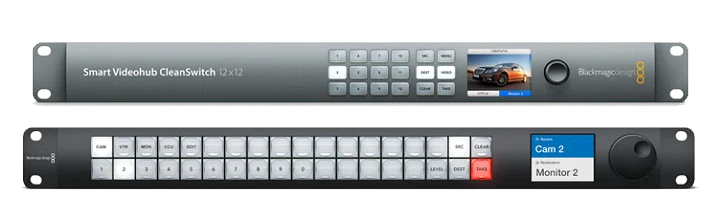
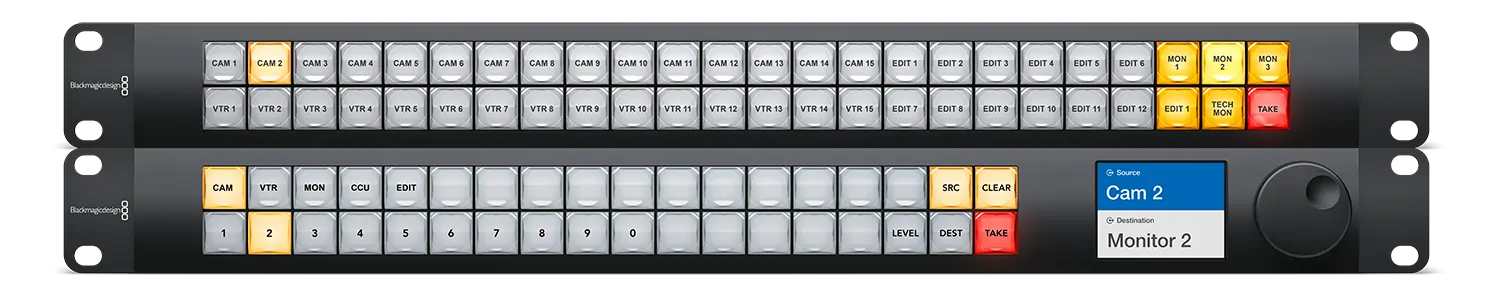
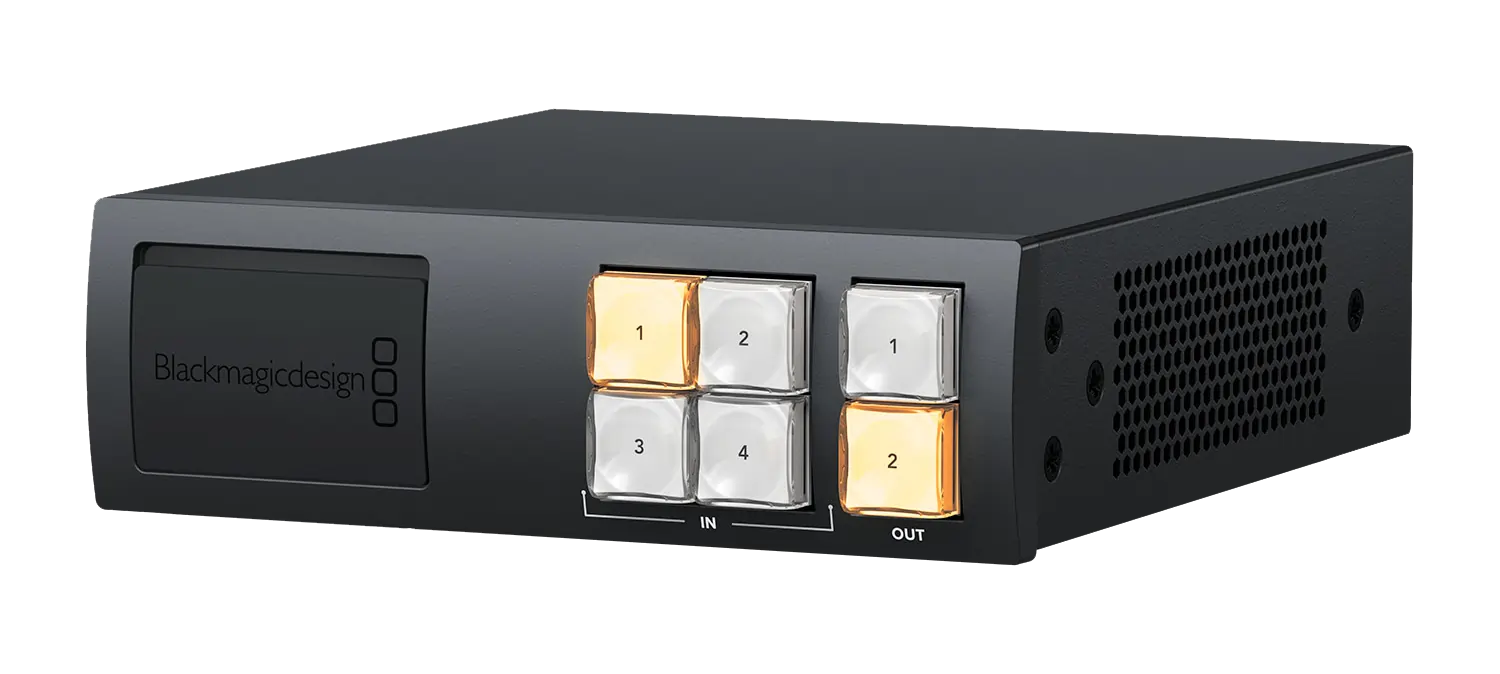
What is a Video Router?

A video router (or matrix switcher) allows multiple video sources such as; cameras, playout systems, graphics engines, to be routed to multiple destinations, such as switchers, monitors, multiviewers, recorders, or streaming encoders. Instead of hardwiring signals between each source and all destinations, any input can be sent to any output at the push of a button or click in software. Routers may support SDI, HDMI, IP (NDI/SMPTE 2110), or mixed formats within the same chassis.
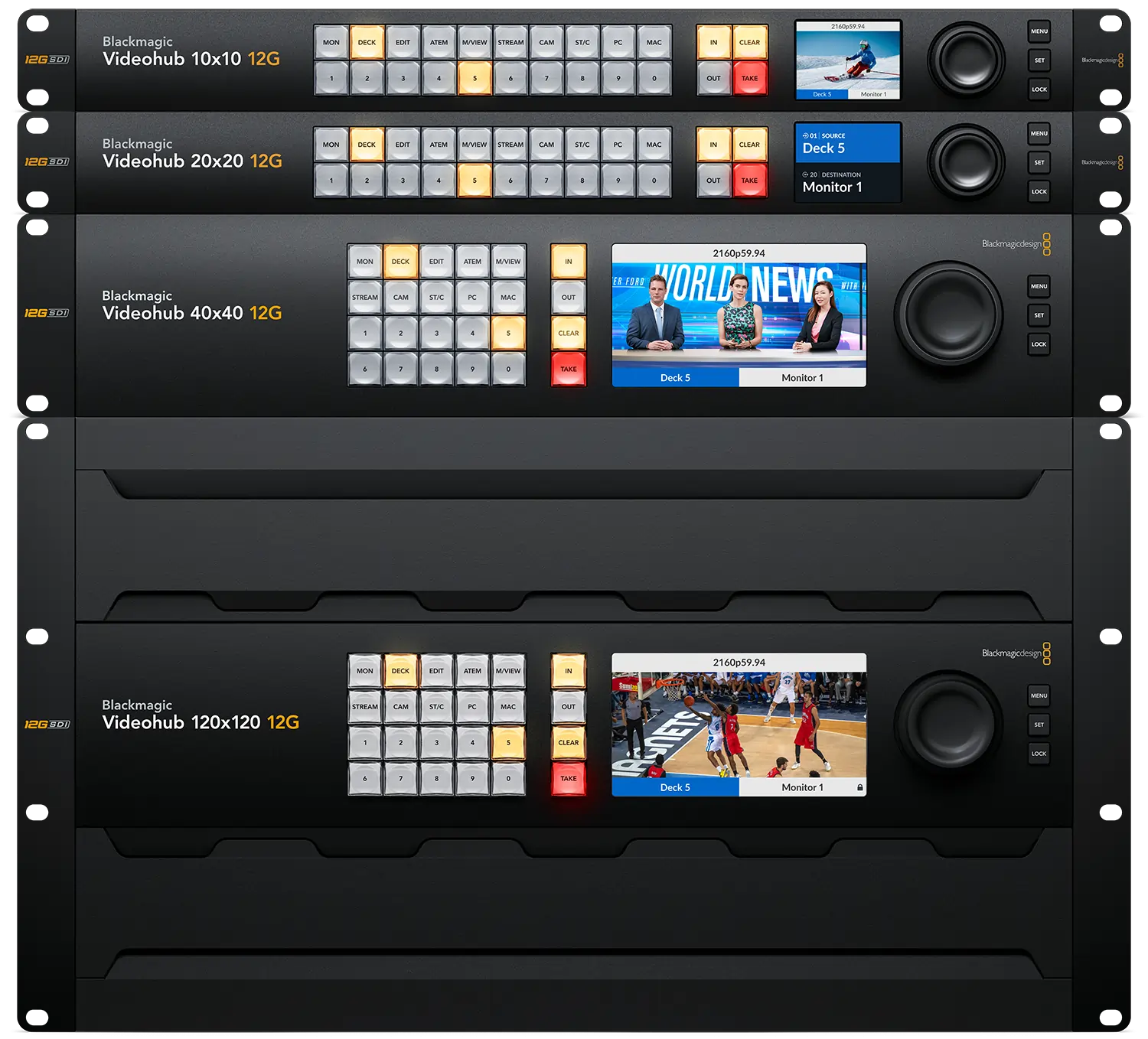
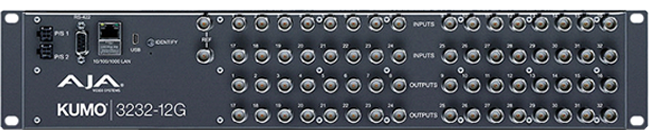
Video Router Image

Key Features to Consider

  • Input/Output Capacity: Available in configurations from compact 8×8 up to massive 72×72 or 576×1152 crosspoint sizes—choose a size that supports your source/destination growth.
  • Signal Format Support: Ensure compatibility with SDI (3G, 6G, 12G), HDMI, or IP-based standards for both legacy and emerging workflows.
  • Redundancy & Reliability: Hot-swappable power supplies, redundant control paths, and robust crosspoints guard against signal failure in mission-critical applications.
  • Panel & Remote Control: Choose between physical control panels, software (PC/browser), or integration with tally, automation, or production control systems for convenient, centralised operation.
  • Labelling & Presets: LCD or illuminated labelling, user-defined source/destination names, and quick-recall presets ensure error-free operation under pressure.
  • Multi-Level Routing: Many routers can simultaneously manage multiple signal types—e.g., video, audio, timecode, and ethernet.

Workflow Integration

  • Live Production: Instantly send cameras to switchers, program feeds to multiviewers, or recorders to transmission—all from the router’s matrix.
  • Broadcast Studios: Feed signals to multiple control rooms, transmission lines, and QC stations without physical repatching.
  • Flexible Infrastructure: Changes in studio setups, event requirements, or hybrid IP/SDI environments are handled through simple router commands, reducing downtime.
Workflow Integration Image

Specialised Router Types

  • SDI Routers: Standard for professional broadcast; support for 6G/12G SDI is crucial for 4K/UHD.
  • HDMI Routers: Used for AV, presentation spaces, and smaller production setups.
  • IP Video Routers: Facilitate scalable, network-based workflows using NDI or SMPTE ST 2110—ideal for remote or hybrid production.
  • Audio Routing (Integrated or Separate): Some routers support embedded and de-embedded audio for full AV routing in a single unit.
Specialised Router Types Image

Control & Automation

  • Physical Panels: Tactile interfaces provide instant access to crosspoints and routing presets—vital for fast-paced live environments.
  • Web/App Interfaces: Browser and app-based controls offer remote management, labelling, and monitoring for distributed teams or OB trucks.
  • Third-Party Integration: Modern routers interface with automation, scheduling, and workflow management systems for seamless broadcast operations.
Control & Automation Image

Summary Overview

Selecting the right video router transforms your facility’s flexibility and speed. Enabling dynamic routing, minimising repatching, and future-proofing your workflow. Factor in the number of sources/destinations, supported formats, control/interface needs, and resiliency features. With the correct video router integrated, any input can be delivered to any output instantly powering the next generation of live, studio, and hybrid productions.

Ready to Buy?

Browse our selection of Professional Video Routers to find the perfect fit for your setup.

ready to purchase image

Frequently Asked Questions FAQ

Here are some common questions and answers to help you find the information you need.

A professional video router for live broadcast is a device that electronically connects and manages video signals from multiple sources to various destinations, allowing flexible, real-time routing of SD, HD, and Ultra HD video in studio or event environments without unplugging cables.

For large studios, consider routers with matrix sizes from 40x40 up to 120x120 inputs and outputs, which provide the versatility to manage several cameras, recorders, monitors, and auxiliary feeds within complex live events.

Seek features such as zero latency switching, 12G-SDI multi-rate input/output, SDI re-clocking for signal integrity, support for simultaneous SD, HD, and UHD standards, built-in LCD for live video previews, and external Ethernet control for remote operation.

Yes, advanced models like Blackmagic Videohub and similar routers support routing any combination of SD, HD, and Ultra HD video simultaneously, making them suitable for hybrid workflows in modern studios and multicam broadcasts.