Types of Video Converters
- Analogue to Digital Converters: Convert legacy composite or component video signals into digital formats like SDI or HDMI, freeing older devices for modern workflows.
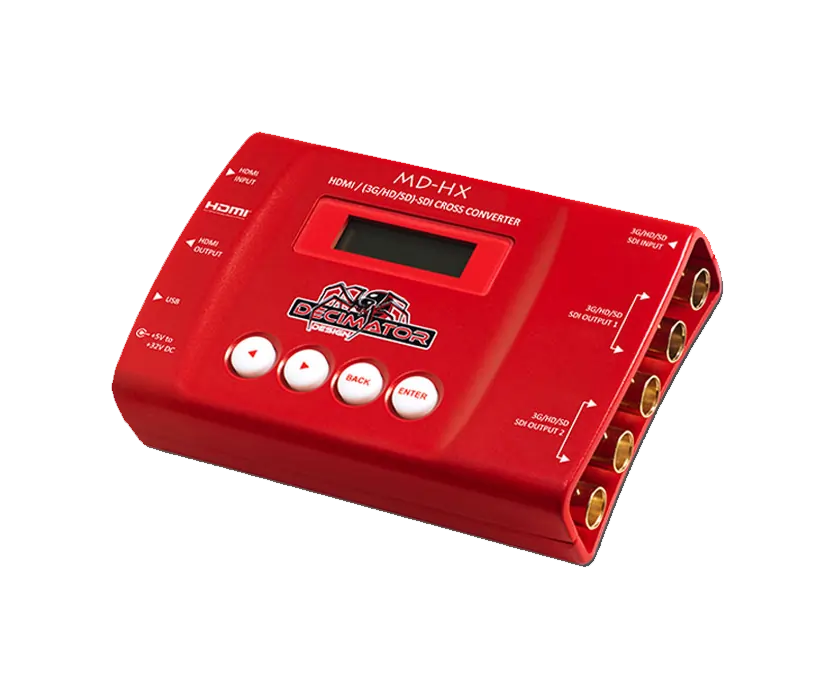
- Format Converters: Allow smooth conversion between HD, 3G, 6G, and 12G-SDI, enabling compatibility across various broadcast and production environments.
- Signal Format and Frame Rate Converters: Manage differences between NTSC, PAL, 50/60Hz sources for global productions, including standards conversion and up/down/cross conversion.
- Audio Embedding and De-embedding Converters: Add or extract audio from video feeds, enabling flexible routing of embedded or separate audio streams in production chains.
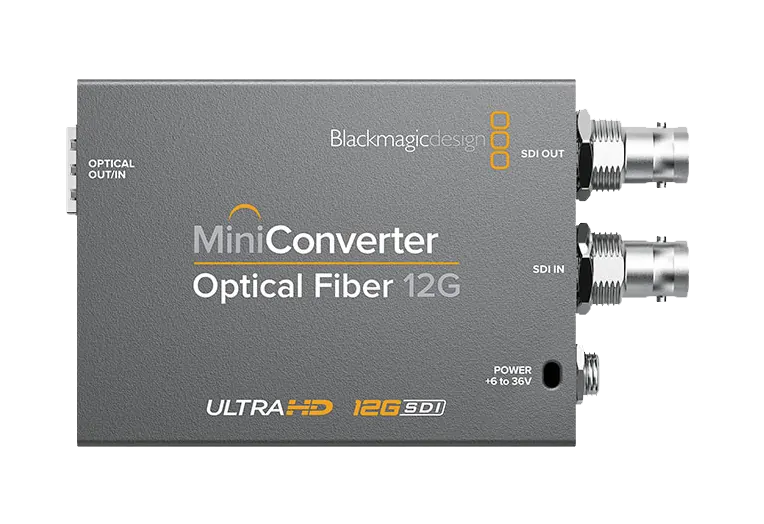
- Optical/IP Video Converters: Bridge optical fibre links and traditional copper SDI or HDMI cables for long-distance, interference-free transmission.
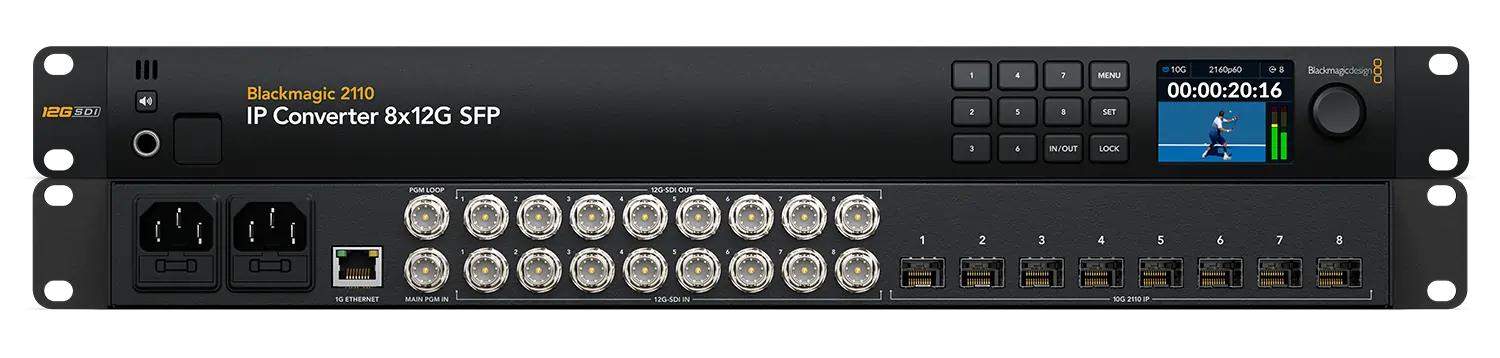
Connections
This is the most obvious are to be aware of as you want to be able to connect your source device to your converter! Whether you need to convert from SDI to HDMI or from analogue to digital, knowing what connection you need is critical.

SDI
SDI or Serial Digital Interface is the most common format in professional video. A locking BNC connector used to transmit a digital signal.

HDMI
HDMI is more common in consumer and prosumer products as it does not feature a locking connector. HDMI can however transmit a large amount of data and can even send power for certain devices.

ANALOGUE
Whilst we often think of the older RCA connections as used on older video equipment, professional equipment tends to use the same BNC connector as SDI transmission. As such it’s very important to know whether your device is outputting an analogue or digital signal from its BNCs!

FIBRE
Fibre connections can use a variety of different connectors. Often you can purchase your own SFP (Small Form-factor pluggable transceiver) which will come with a choice of connector. The important part of fibre transmission is not the connector necessarily but ensuring that the device supports the wavelength of fibre signal you are transmitting. The most common wavelength in professional video is 1310nm (nanometers).
Essential Features to Look For
- Support for Latest Standards: Ensure compatibility with emerging formats such as 12G-SDI and 8K video where necessary.
- Low Latency and High-Quality Processing: Essential for live production and real-time monitoring, converters should introduce minimal delay and preserve original signal fidelity.
- Flexible Connectivity: Multiple input/output options, including SDI, HDMI, fibre optics, and audio connectors, maximise versatility across complex systems.
- Power Options and Compact Design: PoE (Power over Ethernet) and small form factors enable easy installation and deployment in space-constrained setups.
- Advanced Functionality: Features like test pattern generation, frame synchronisation, and embedded metadata handling can enhance system diagnostics and streamline workflows.
Why Video Converters Matter
Converters allow you to mix and match equipment from different eras and manufacturers without compromising signal quality or workflow efficiency. This flexibility is critical in modern productions involving multi-format sources, remote contribution feeds, and hybrid broadcast setups. Whether connecting cameras to switchers, routers to monitors, or integrating long-haul fibre links, the right converter ensures your signals stay robust and synchronised.
Summary Overview
Investing in professional-grade video converters is essential for any production pipeline aiming for maximum compatibility, reliability, and future-proofing. Focus on converters offering broad format support, low latency, and versatile I/O options to meet today’s demanding broadcast and streaming standards. Equipped with the right converters, your system can seamlessly handle diverse formats and connectivity needs, empowering creativity without technical compromise.
Ready to Buy?
Browse our selection of Video Converters to find the perfect fit for your setup.
Frequently Asked Questions FAQ
Here are some common questions and answers to help you find the information you need.
A professional video converter is essential for connecting multiple devices across different video standards like HDMI, SDI, or optical. It ensures signal compatibility between cameras, monitors, routers, and switchers, helping production teams maintain image quality across mixed hardware ecosystems.
Analogue to digital converters convert legacy composite or component feeds into digital HDMI or SDI formats, perfect for upgrading old broadcast gear. Format converters, however, handle changes between HD, 3G, 6G, and 12G SDI signal levels, making them ideal for modern 4K and 8K production pipelines.
Choose a converter supporting the latest 12G SDI standard, HDR colour pipelines, and HDMI 2.0+. These ensure future proof compatibility and pristine video quality for filmmaking, broadcast graphics, and high resolution streaming workflows.
Optical and IP converters allow long distance, interference free transmission between cameras, switchers, and broadcast control rooms. They’re particularly effective for studios, outside broadcast (OB) trucks, and hybrid IP SDI environments leveraging fibre connectivity.
Modern converters support HDR10, HLG, and Dolby Vision metadata, ensuring precise tone mapping between HDR displays and SDR systems for colour‑accurate delivery.