Build Your Perfect Streaming Setup
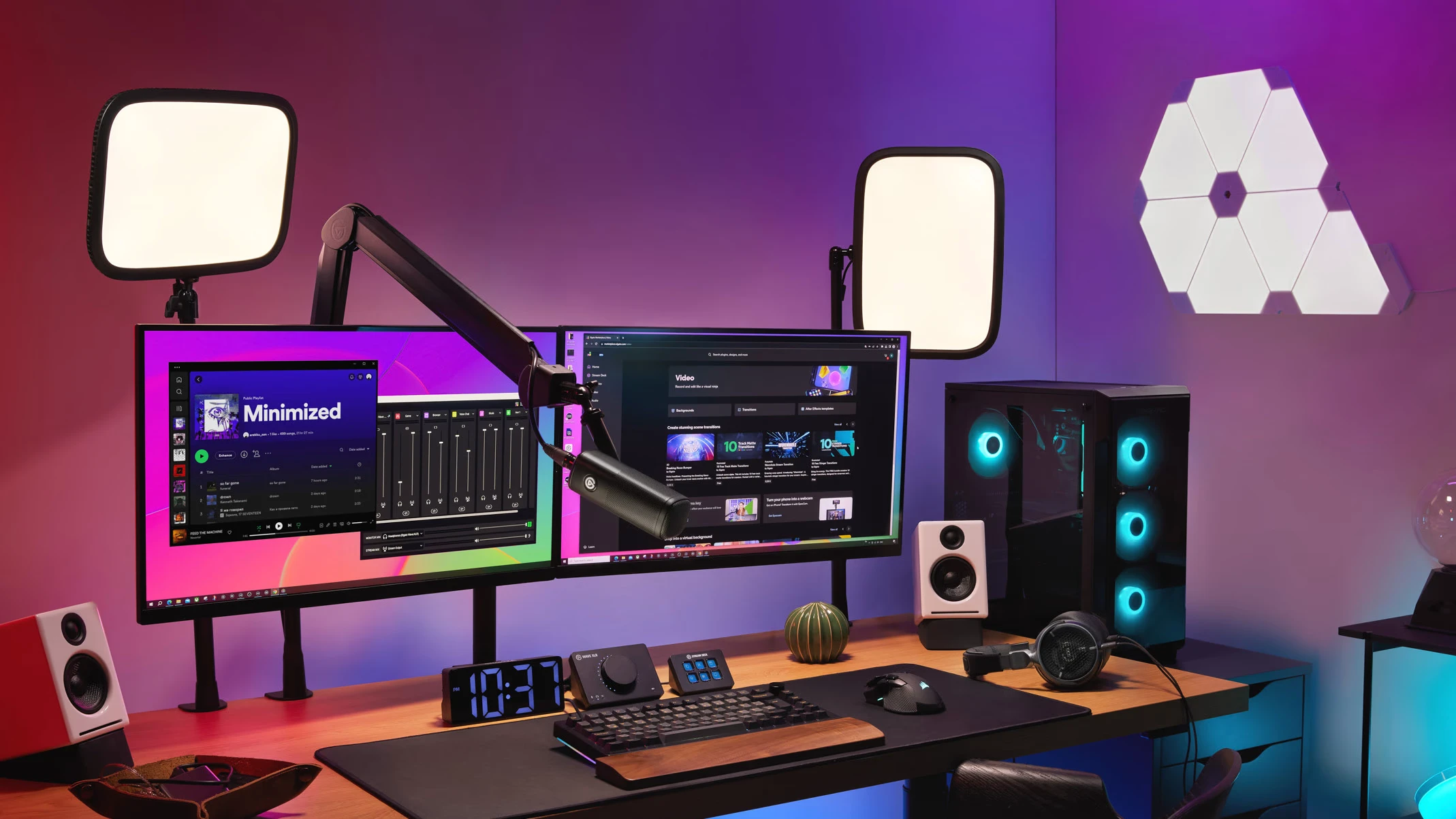
There are seven main elements of a steaming set-up - a gaming PC, streaming software, stream deck, capture card, microphone, camera and lighting, plus various accessories.
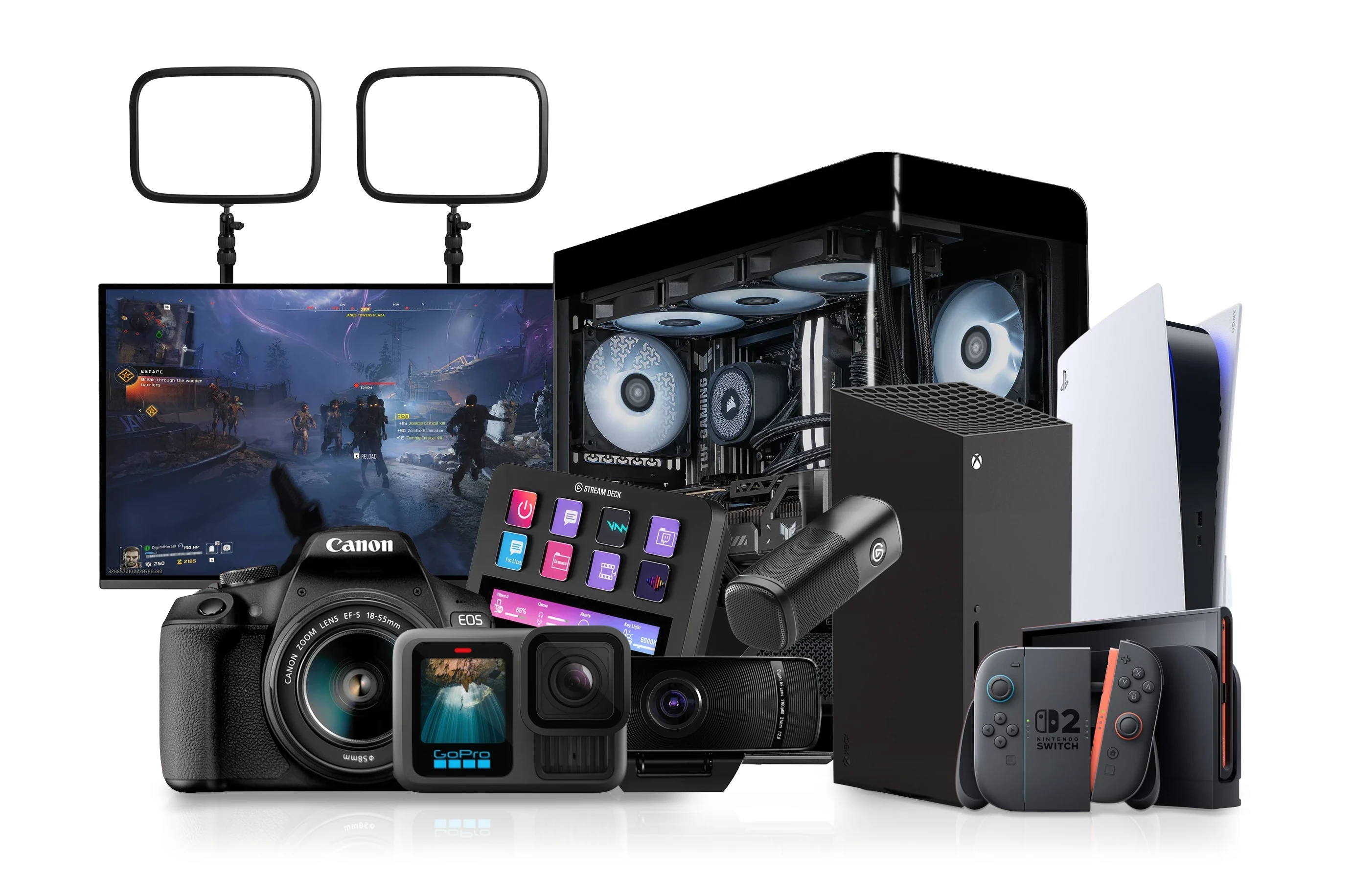
There are seven main elements of a steaming set-up - a gaming PC, streaming software, stream deck, capture card, microphone, camera and lighting, plus various accessories.
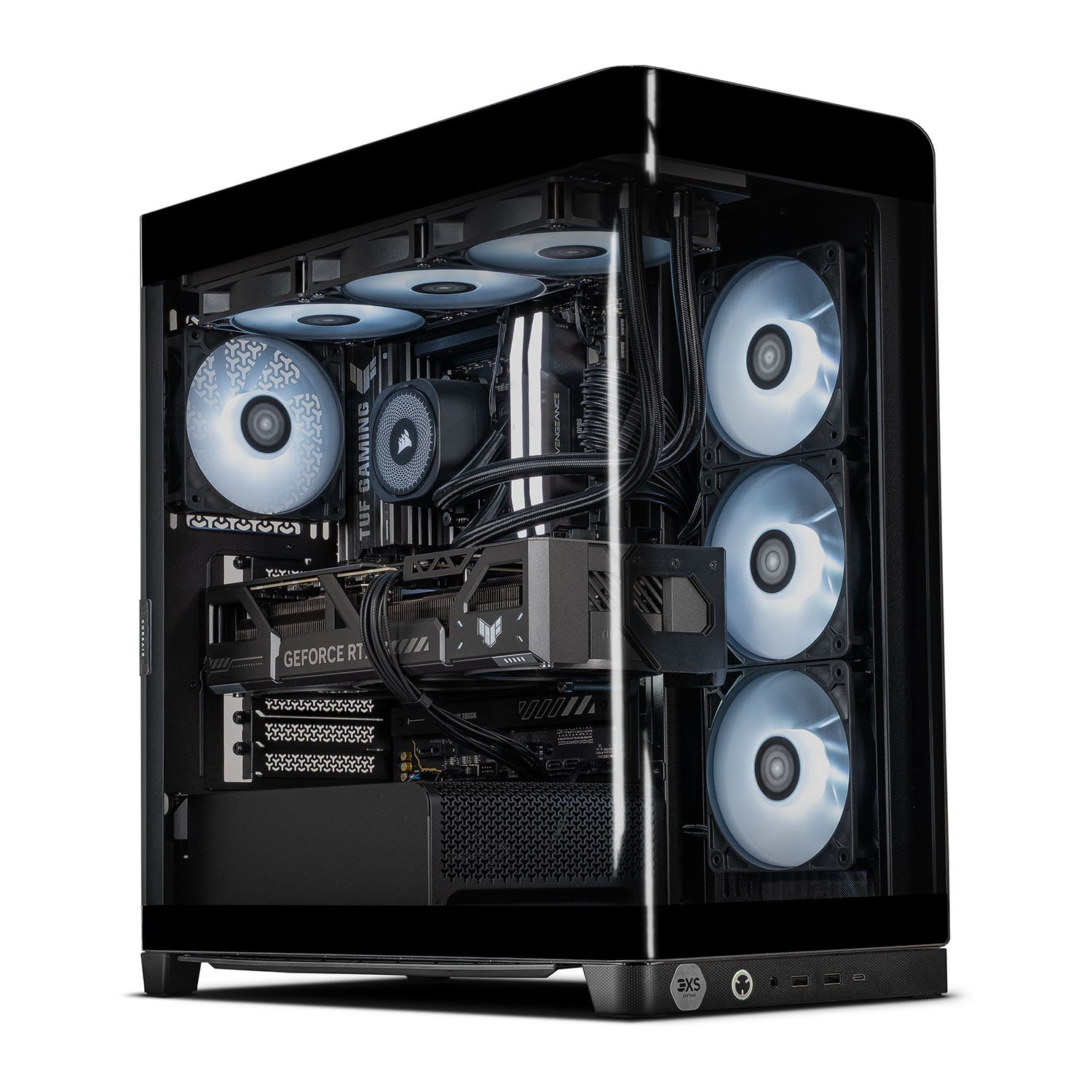
The first decision you need to make is which brand do you trust to build your gaming PC. Our in-house team of experts, 3XS Systems, has been building gaming PCs for more than 20 years. We know which components are the fastest and most reliable, and how to fine-tune and combine them for the ultimate gaming experience. Here’s what you need to know.

Scan is an NVIDIA Elite Partner, awarded for our GPU-accelerated systems expertise.

3XS gaming PCs are rated 4.8 on Trustpilot with hundreds of reviews every year

3XS Systems include a three-year warranty offering complete peace of mind.
Our experienced technical support engineers are available seven days a week.
Our gaming PCs are used by a host of leading game developers and esports teams.
Streaming PCs have to fulfil two roles, first they have to be a brilliant gaming PC so your stream isn't full of frame drops and secondly, they have to be good for editing your stream in your favourite video editing application. The most important component for streaming games is the GPU (Graphics Processing Unit) or graphics card, determining how quickly the PC can play games and simultaneously broadcast the content. Although many PCs will be able to stream, we'd only recommend an NVIDIA RTX 5070 GPU or higher; or an AMD Radeon RX 9070 or higher. You can learn more about PC components and their relative performance by reading our Gaming PC Buyers Guide.
Streaming software uses video encoding technology to convert your video feed into a suitable digital format for live streaming. These digital signals are transmitted to the viewers' devices, and a decoder converts them back to video for viewing. There are a number of streaming applications available — the most popular ones being Open Broadcaster Software, often abbreviated to OBS and Streamlabs.
Streamlabs software is easier to use than OBS, but OBS uses fewer compute processing resources. Additionally, while the entire OBS feature set is free to use, Streamlabs has some of its best features only available by subscribing to its paid plan.


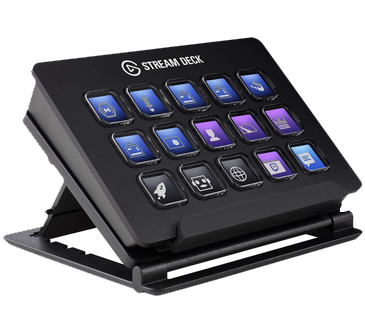
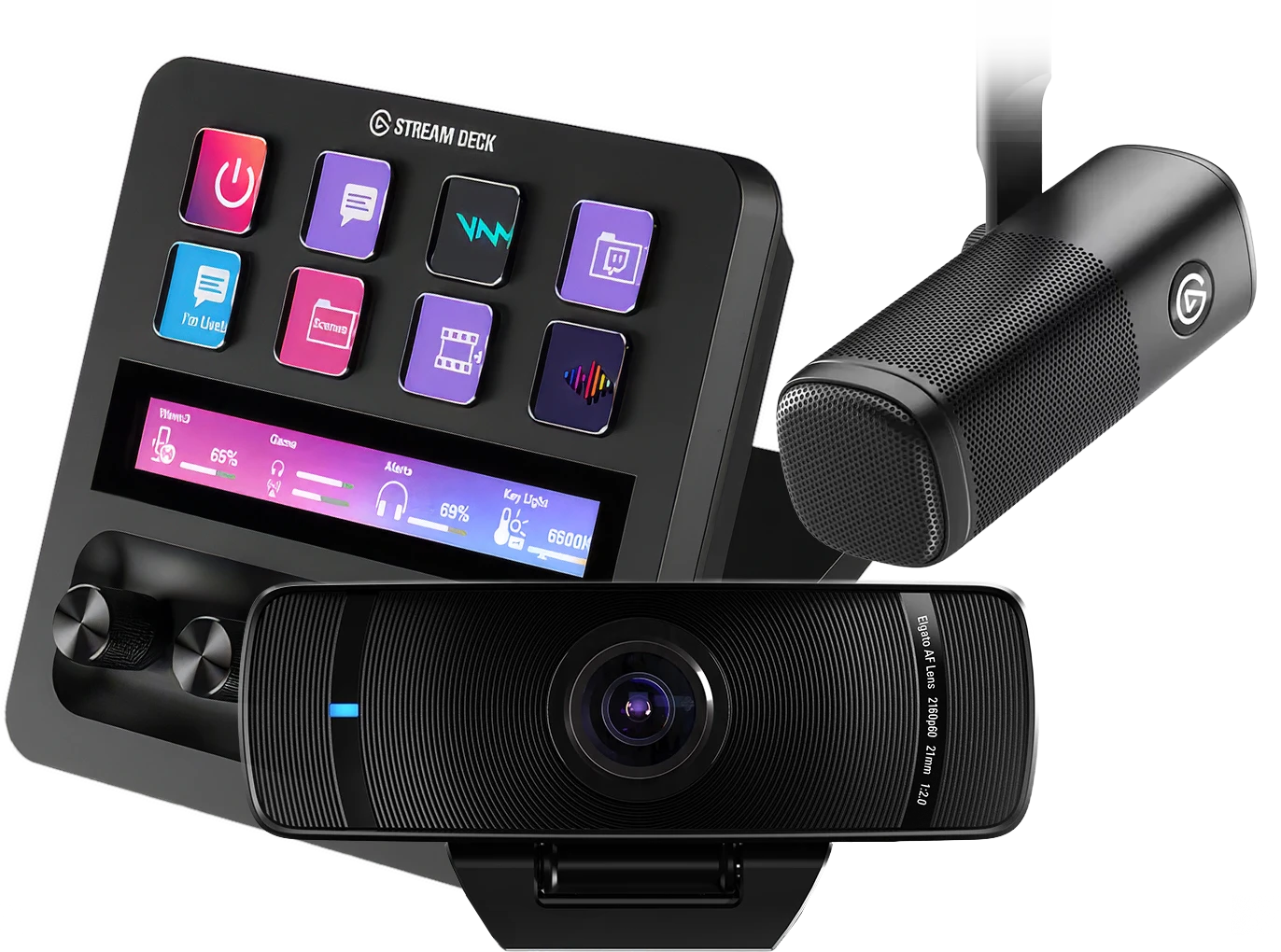
Controlling your stream overlays can be quite complicated when they're just a mix of keyboard hotkeys. You might often forget which one is your going live scene and which one is your camera scene. This is where a stream deck comes in handy. These programmable control pads allow you to macro directly onto the device with LCD keys showing you exactly what's what.
Stream decks not only allow you to control software without use of the keyboard or mouse, they also allow you to set lighting levels and effects as required and integrate with RGB lighting solutions such as Corsair iCUE.
Browse our range of Stream Decks.
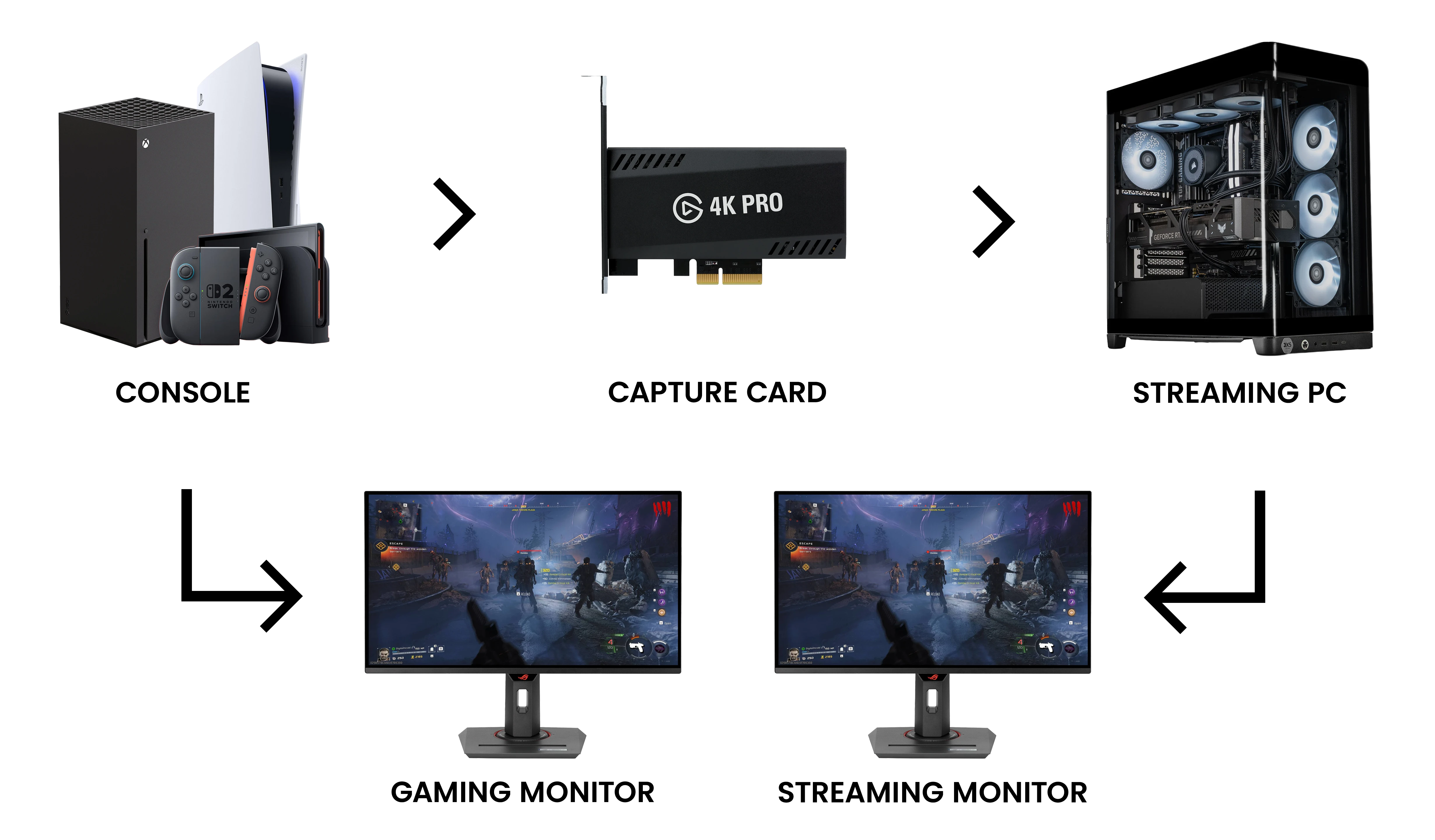
A capture card is a hardware device that allows you to record and stream the video signals from your PC. Leading capture card brands include Elgato, Asus and Razer, offering both internal PCIe cards and external USB devices.
If you’re only intending on streaming PC games and your PC is powerful enough to both play and process the stream, then a capture card isn’t strictly necessary. However, we would advise installing one for the best experience as the card offloads streaming from the CPU and GPU, improving stream quality. Some professional streamers go a stage further and use a two PC set-up - one PC to play the game, and a second PC, armed with a streaming card, to capture the signal over HDMI. The diagram opposite shows how a dual PC setup would operate.
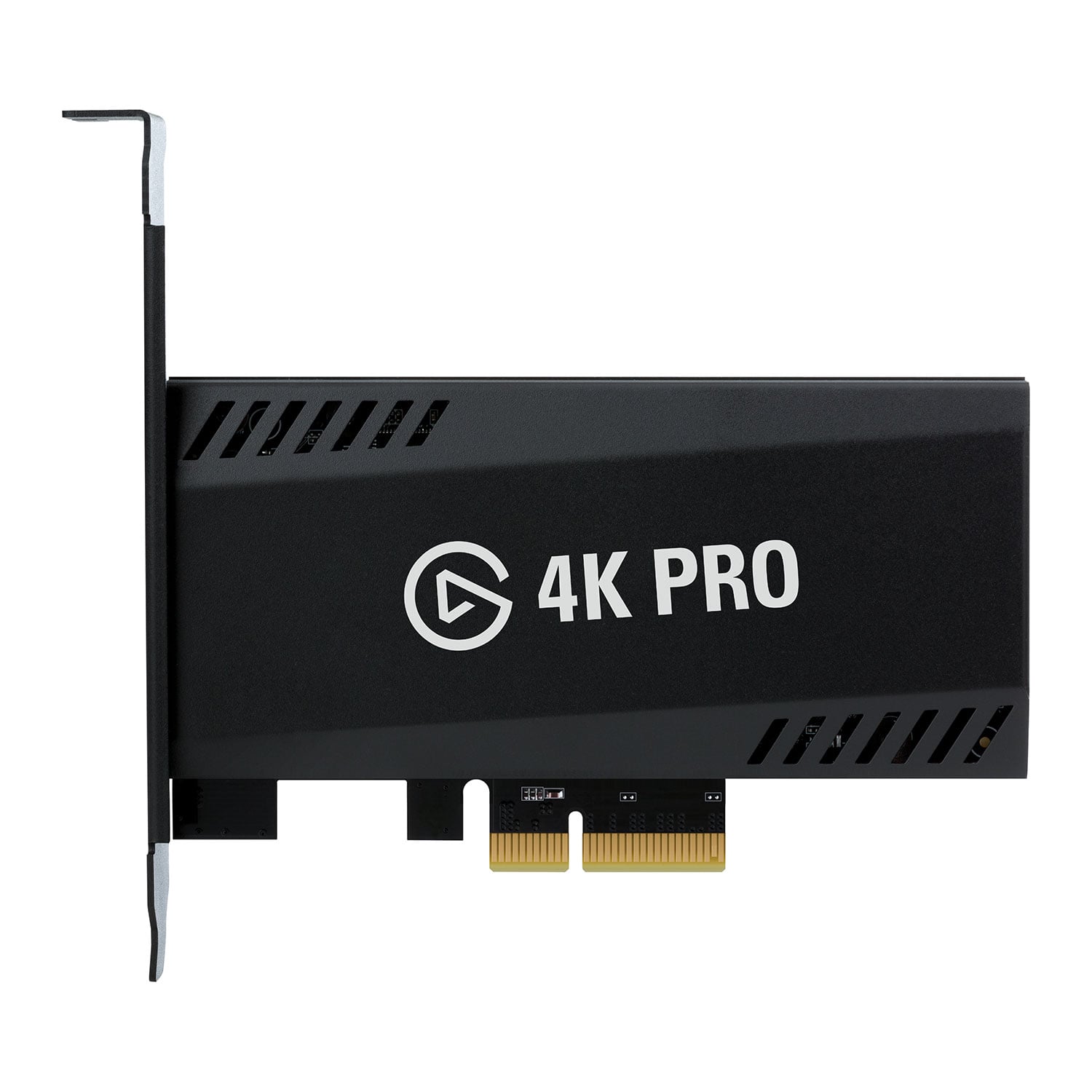
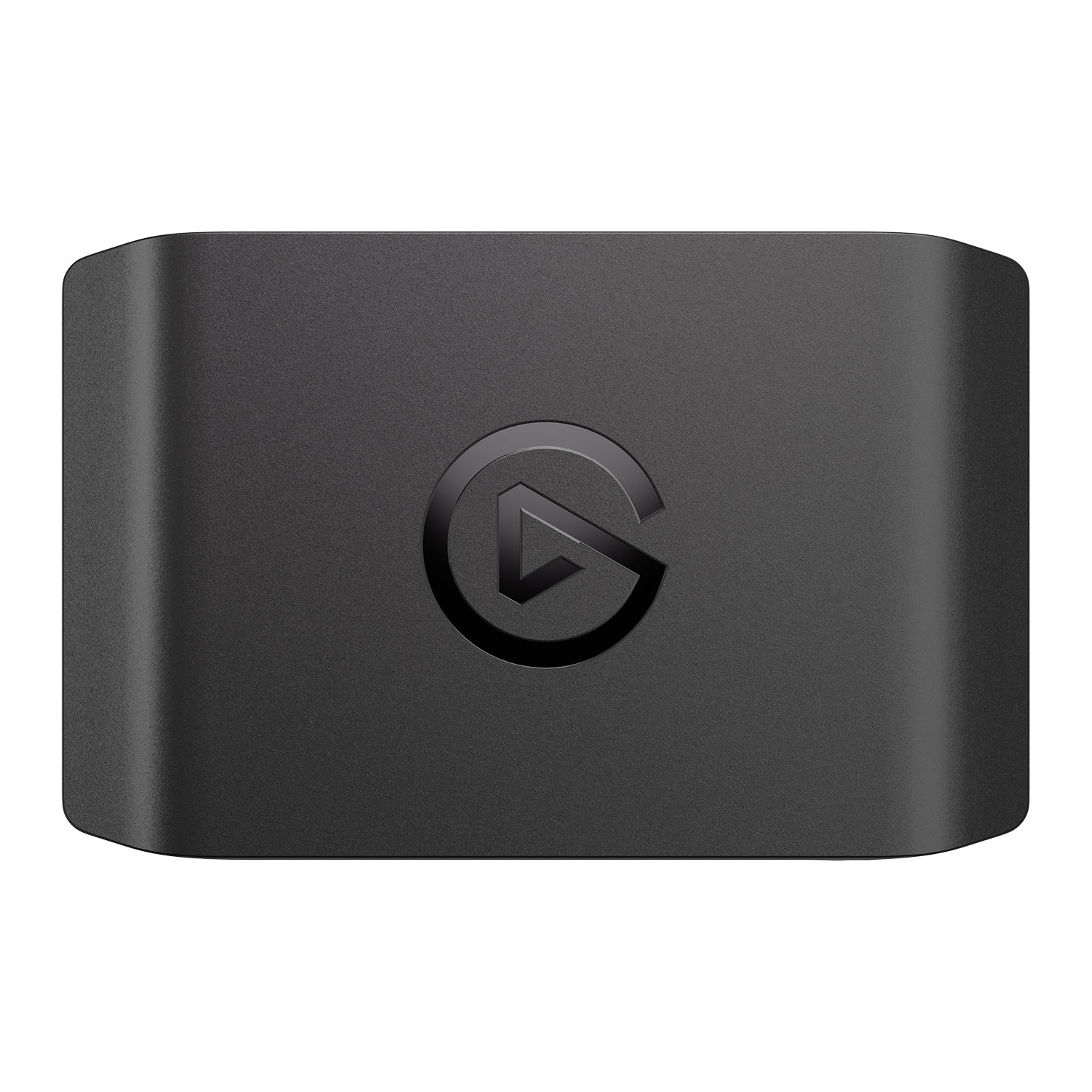
Browse our range of Internal Capture Cards and External Capture Devices.
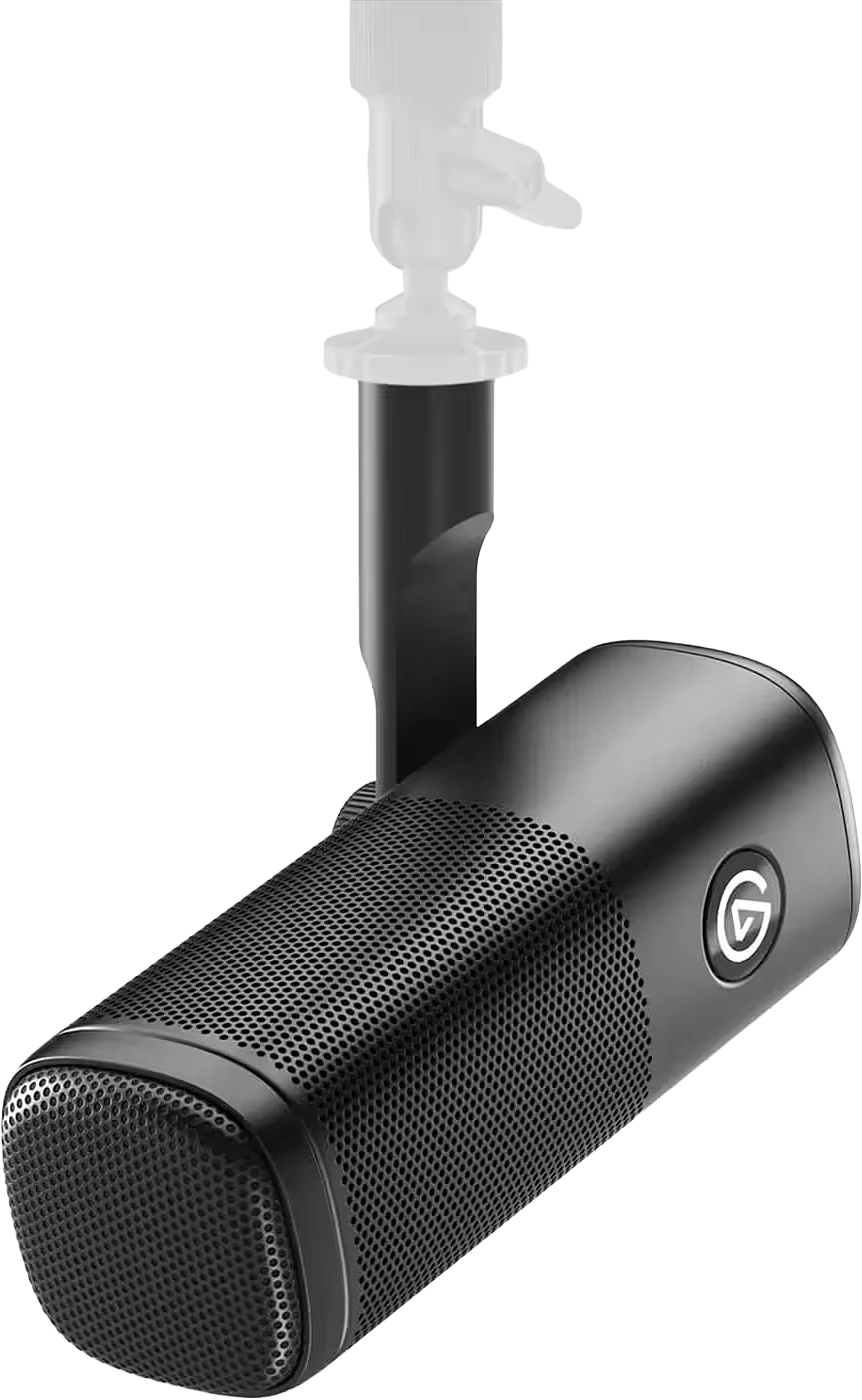
A dedicated microphone will ensure you can be clearly heard on your stream. Microphones range enormously in price, from around £50 to over £200. Budget microphones connect via USB whereas higher-end versions will use an XLR (eXternal Line Return) connection. XLR uses an analogue cable to an audio interface that then converts the signal to digital — this is usually seen in professional audio set-ups but offers much better sound quality.
If you can't afford to buy a dedicated microphone you should use the microphone built into your gaming headset. This has the advantage of being positioned close to your mouth, so shouldn't pick up too much background noise.
Browse our range of USB Microphones and Large Diaphragm Condenser Microphones and Free Standing Microphones.
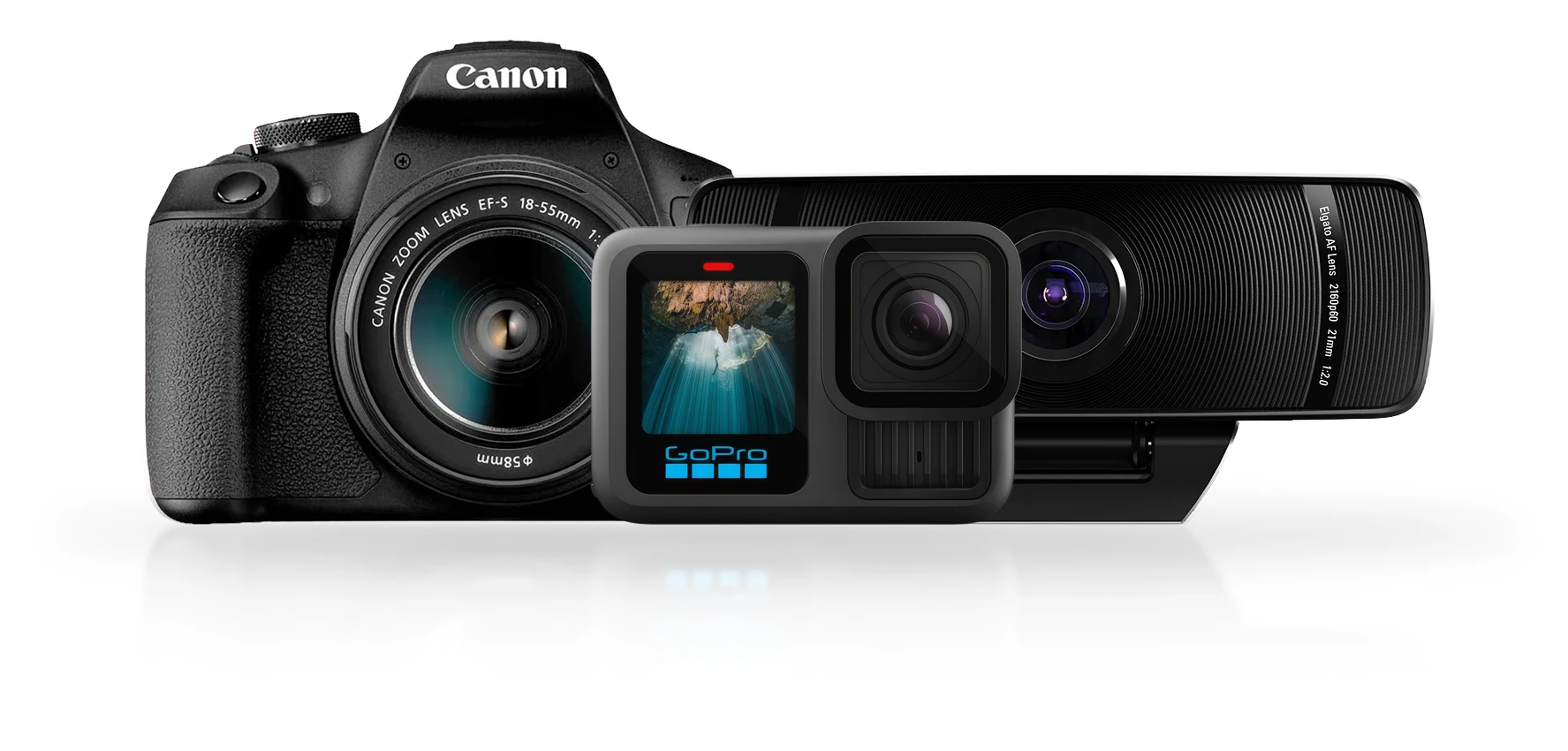
Not all streamers appear on-screen, some just provide an audio commentary, but if you want to appear in the stream then a good quality camera and lighting are crucial. Again, there's a huge choice from standard webcams to action cameras through to digital SLR cameras like a professional photographer would use.
Perhaps unsurprisingly, the more expensive options offer better image quality, with DSLRs offering mirrorless image capture which is better suited to adjustability for different lighting conditions. While webcams connect via USB, action cams and DSLRs benefit from connection via a product such as the Elgato Cam Link, with a PC recording the action rather than the camera's internal storage.
Browse our range of Webcams, Action Cameras and DSLR Cameras.
Last but not least, if you are going to be visible in your stream then you also need to invest in some lighting. The simple rule for lighting is that you need at least two lights; a primary light source commonly referred to as the key light and a second light source known as a fill light. Both lights are normally positioned behind the camera at different angles, helping to even out and remove the uneven patches of light and shadow created by one another.
Depending on the shape of your room and the amount of ambient light you'll need to play around with ideal positioning of the key light and fill light.
Browse our range of Lighting Equipment.
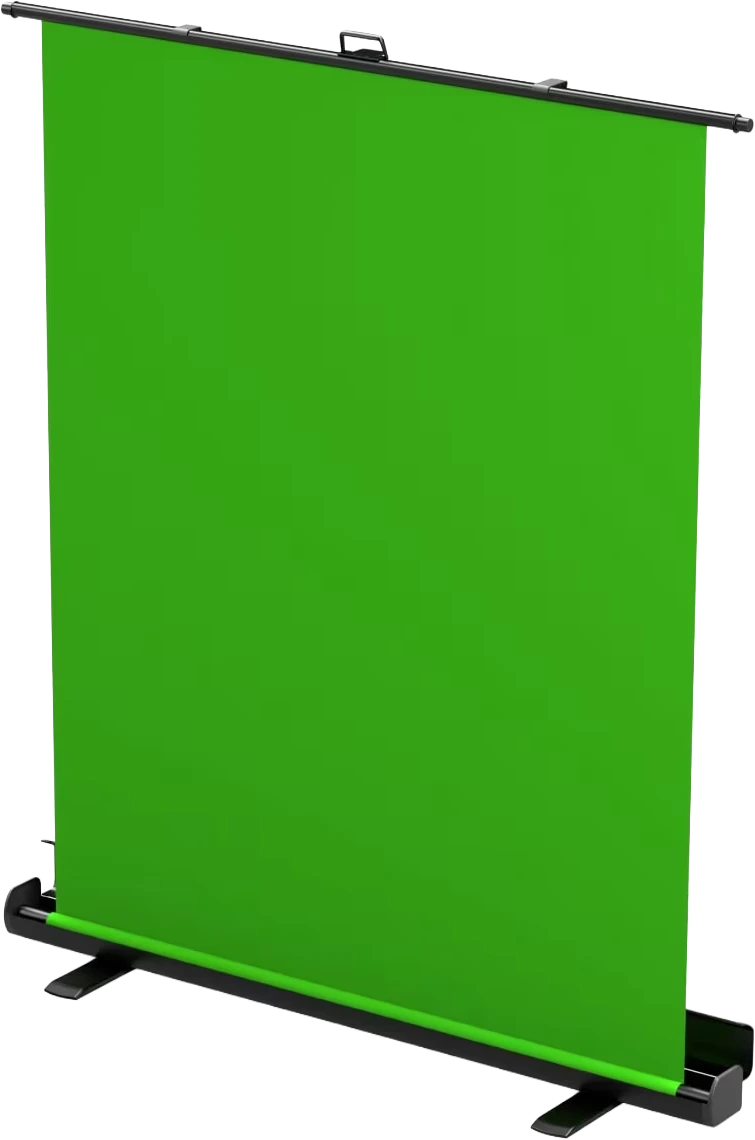
Green screens are used to help remove the background behind you, enabling you to show something entirely different. They work by combining two video streams together, in this case the first video stream from the game and the second from your camera. Using a process known as 'chroma key compositing' or 'Chroma keying', your streaming or recording software will make anything green transparent (including clothes).
So, if you have a green screen behind you, and you configure your Chroma key in your streaming software, you'll have no background behind you and you can overlay your webcam stream on top of your game.
Browse our range of Green Screens.
Browse our streaming hardware and start building your perfect setup.
Here are some common questions and answers about streaming setups.
Game streaming is the process of capturing video and audio from a game so that you can share it on the Internet via platforms such as Twitch and YouTube. Streaming can be live, or you can record and edit your streams to upload and share them later. Many streamers also add their own commentary, either purely audio, or while filming themselves to add extra character to their streams.
There are seven main elements of a steaming set-up - a gaming PC, streaming software, stream deck, capture card, microphone, camera and lighting, plus various accessories. This guide covers each of these elements in further detail, so you can pick the right combination for your budget.
A stream is created when you use streaming software such as OBS and Streamlabs to capture the video and audio from a game so that you can share it on the Internet via platforms such as Twitch and YouTube.
To stream effectively you'll need the following seven main elements - a gaming PC, streaming software, stream deck, capture card, microphone, camera and lighting, plus various accessories. This guide covers each of these elements in further detail, so you can pick the right combination for your budget.
If you're only intending on streaming PC games and your PC is powerful enough to both play and process the stream, then a capture card isn't strictly necessary. However, we would advise installing one for the best experience as the card offloads streaming from the CPU and GPU, improving stream quality.
Capture cards offload streaming from the CPU and GPU, improving stream quality on less powerful PCs. Some professional streamers go a stage further and use a two PC set-up - one PC to play the game, and a second PC, armed with a streaming card, to capture the signal over HDMI.
Providing you have a PC with a powerful CPU and GPU you can just stream with a single PC. However, you'll get better stream quality using a second PC, equipped with a streaming card, to capture the signal over HDMI.
You need a powerful gaming PC to stream as your PC not only has to be able to play games smoothly, but also capture and process the video and audio from games. We recommended a gaming with a minimum of an NVIDIA RTX 5070 or an AMD Radeon RX 9070 graphics card, plus a minimum of a Core Ultra 7 or Ryzen 7 processor, and a minimum of 32GB of RAM.
You need a powerful gaming PC to stream, plus streaming software such OBS and Streamlabs.
Your PC not only has to be able to play games smoothly, but also capture and process the video and audio from games, so we recommended a minimum of an NVIDIA RTX 5070 or an AMD Radeon RX 9070 graphics card, plus a minimum of a Core Ultra 7 or Ryzen 7 processor and a minimum of 32GB of RAM.
You'll also need lots of storage capacity, ideally fast SSDs, to save the captured video and audio from games. For instance, if you were to record ProRes footage at 4K at 60fps this would need around 200GB for every 10 minutes of footage.
Your PC not only has to be able to play games smoothly, but also capture and process the video and audio from games, so we recommended a minimum of an NVIDIA RTX 5070 or an AMD Radeon RX 9070 graphics card, plus a minimum of a Core Ultra 7 or Ryzen 7 processor and a minimum of 32GB of RAM.
A streaming capture card is also highly recommended too.
You'll also need lots of storage capacity, ideally fast SSDs, to save the captured video and audio from games. For instance, if you were to record ProRes footage at 4K at 60fps this would need around 200GB for every 10 minutes of footage.
We recommend 32GB of RAM for a streaming PC.
The best PC for streaming is a powerful gaming PC, with the addition of a streaming capture card.
This is because your PC not only has to be able to play games smoothly, but also capture and process the video and audio from games. We recommended a minimum of an NVIDIA RTX 5070 or an AMD Radeon RX 9070 graphics card, plus a minimum of a Core Ultra 7 or Ryzen 7 processor and a minimum of 32GB of RAM.
A streaming capture card is also highly recommended too.
You'll also need lots of storage capacity, ideally fast SSDs, to save the captured video and audio from games. For instance, if you were to record ProRes footage at 4K at 60fps this would need around 190GB for every 10 minutes of footage.
The two most popular streaming software for PC are Open Broadcaster Software, often abbreviated to OBS and Streamlabs. Streamlabs software is easier to use than OBS, but OBS uses fewer compute processing resources. Additionally, while the entire OBS feature set is free to use, Streamlabs has some of its best features only available by subscribing to its paid plan.
A streaming PC is essentially a gaming PC, but with the addition of a streaming capture card and extra storage capacity, ideally fast SSDs, to save the captured video and audio from games.