Gaming Keyboard Buyers Guide

Picking the right or wrong keyboard has a massive impact on your gaming experience. For example, some keyboards are great for first person shooters (FPS) whereas others are good for touch typing or massively multiplayer online games (MMOs). In this guide we'll highlight the important differences you need to know and explain how to pick the perfect gaming keyboard.

This guide starts with the physical aspects of gaming keyboards, size and connectivity, and then covers the intricacies of switches as these have a massive impact on the suitability of a keyboard for different games and tasks. The guide is rounded off by software-attributes, such as RGB lighting, macros and more.

Gaming Keyboard Buyers Guide

Keyboard Size

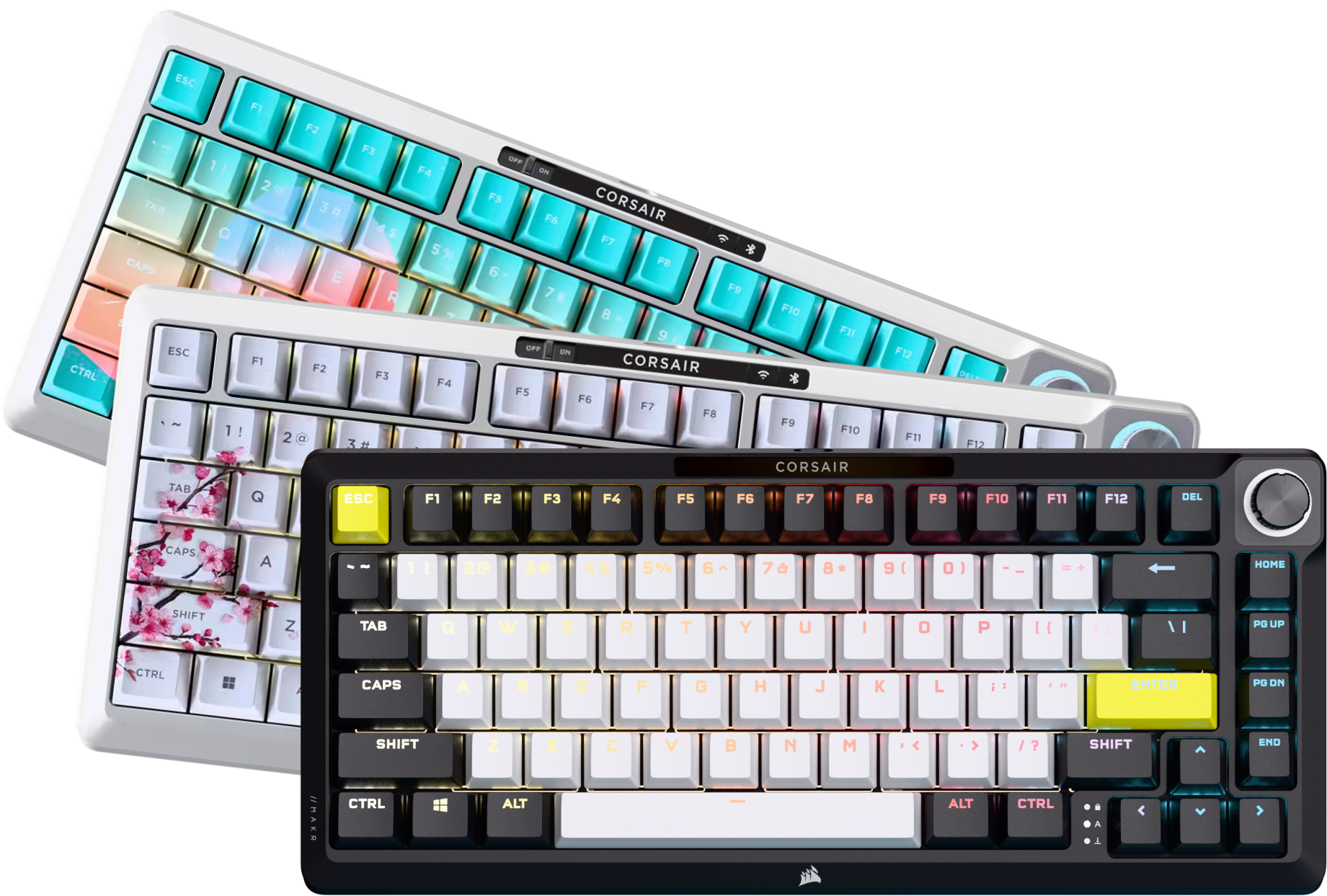
Until recently there weren't any meaningfully different keyboard sizes. However, these days there are multiple sizes to choose from, of which we've highlighted the most popular below.

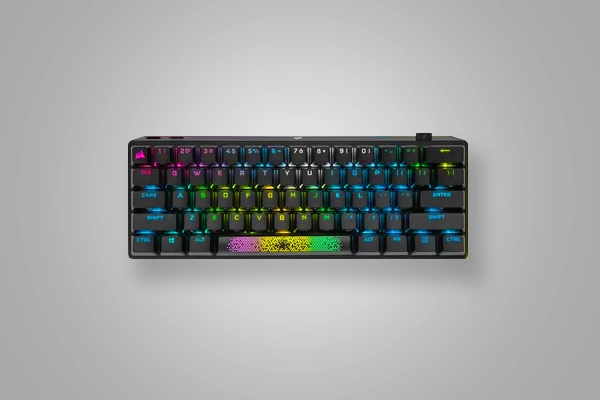
60 percent keyboard

60% Keyboard

The most compact size does away with the number pad on the right edge, the Function keys along the top, the arrow keys, and navigation keys such as PageUp and PageDown.

They typically have around 75 keys and can be great for FPS players, freeing up desk space for a larger mouse mat. However, the lack of keys can make complex games or work difficult, if not impossible.

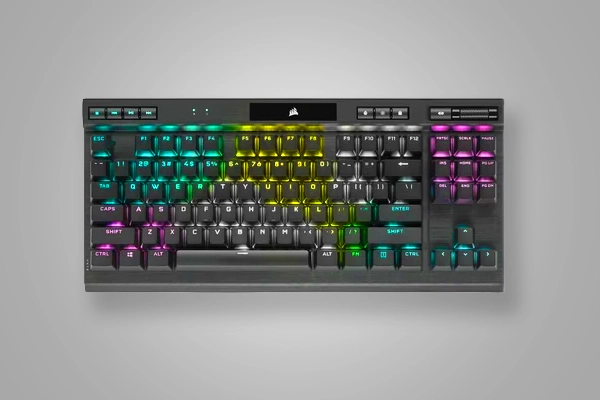
80 75 TKL keyboard

80% / 75% / TKL Keyboard

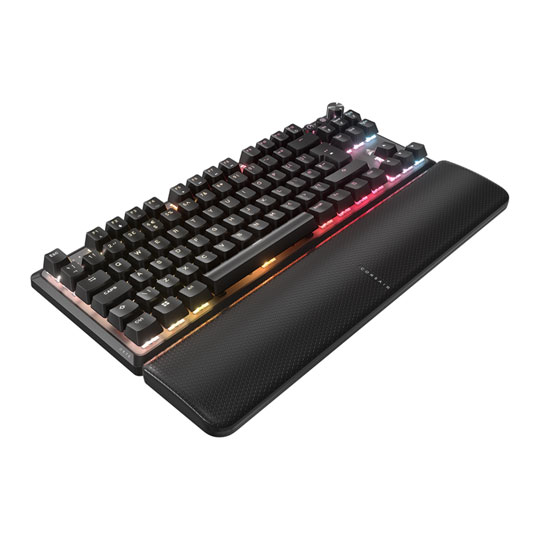
Sometimes also referred to as TKL (Tenkeyless), these keyboards drop the number pad cluster on the right edge.

They typically have around 88 keys and provide a better balance between size and the variety of keys. 75% models have the same functionality as 80%/TKL keyboards, but a more compact layout.

Full size keyboard

Full Size Keyboard

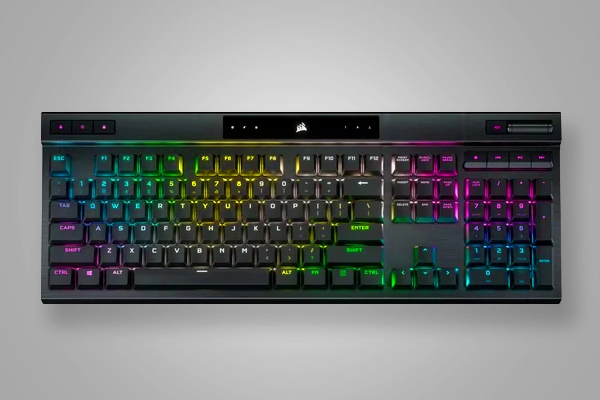
Full-size keyboards have remained largely unchanged since the introduction of the Windows key in 1994.

They typically have around 105 keys.

Wired vs Wireless Keyboards

Gaming keyboards connect to your PC in one of two main ways, wired or wireless. When first introduced, wireless keyboards had higher latency than wired keyboards, but this really isn't the case anymore. High-end wireless keyboards are nearly as good as wired keyboards, though we'd recommend a wired keyboard for competitive games. The decision on which type of keyboard to buy is explained below.

Wired gaming keyboards

Wired Keyboards

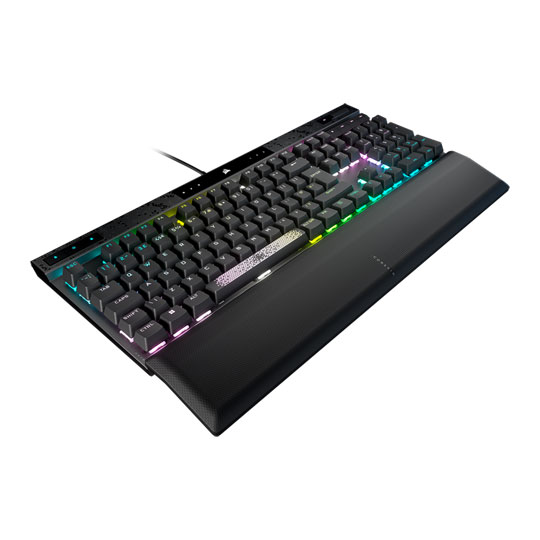
Wired gaming keyboards are the most common type, using a long cable to plug into a USB Type A port.

Wired gaming keyboards are cheap, simple and available in a huge range of styles, but some people find the cable clutter unsightly and annoying.

Wireless gaming keyboards

Wireless Keyboards

Wireless gaming keyboards connect to your PC via a dongle that plugs into a USB Type A port.

This reduces cable clutter, although you'll need to recharge the battery inside the keyboard every few days via a USB cable.

Wireless keyboards are more expensive than wired keyboards.

Wired Wireless
Pros Cheaper Cable free during everyday use
Cons Cable clutter More expensive
Need charging from time to time

Switch Types

The most important component of a keyboard is the array of switches which detect when you press and release keys. These may be hidden out of sight inside the keyboard, but have a massive impact on how the keyboard feels and sounds. Over the years various types of switches have been developed, each of which has its own pros and cons. Explore the most common types of switches below.

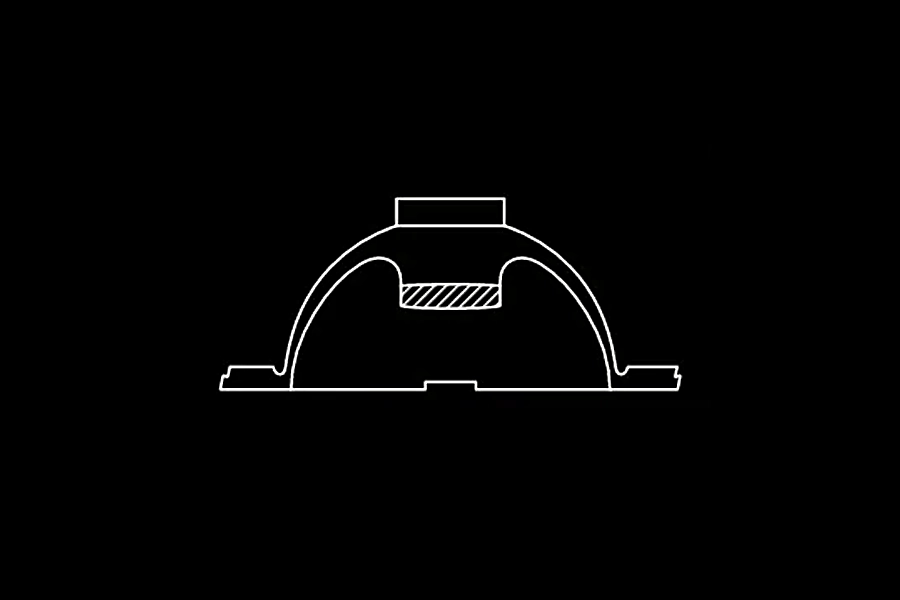
How Rubber Dome Switches Work

These keyboards feature a membrane layer which is covered by rubber domes under each key. As you press down on a key the dome flexes downwards causing the inner surface, which is coated with graphite, to close a circuit to send an electrical signal to your PC. When you release the key, it is pushed back into its normal resting position by tension in the rubber.

Due to their low manufacturing cost, rubber dome switches are the most common type of keyboard available, with a huge variety to choose from.

How rubber dome switches work

How Mechanical Switches Work

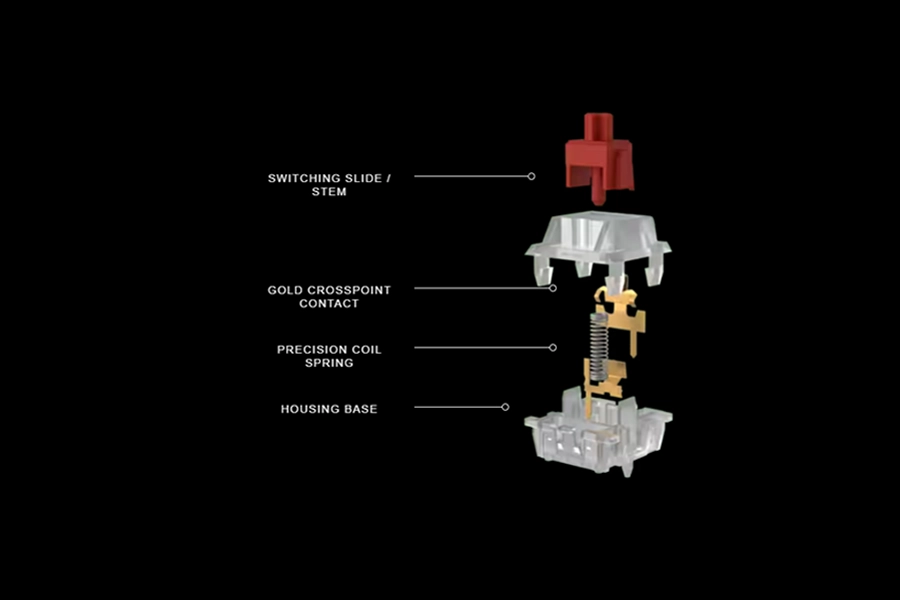
These keyboards feature a complex spring-loaded mechanical switch under each key. As you press down on a key this causes a spring to compress and cause two metal contacts to close a circuit sending an electrical signal to your PC. When you release the key, it is pushed back into its normal resting position by the tension in the spring.

Mechanical switches are more expensive to produce than rubber dome switches and are available in a variety of types, each of which has its own characteristics (more on this later).

How mechanical switches work

How Optical Mechanical Switches Work


These keyboards feature an even more advanced type of switch. Just like with a standard mechanical switch as you press down on a key this causes a spring to compress; however, rather than two metal contacts closing to form a circuit, actuation is detected by a light sensor. Being an optical sensor, this detects movement far quicker than two moving contacts and means the switch resets as soon as you release the key above the reset point, making optical mechanical switches far quicker than mechanical switches and a great choice for fast paced competitive games.

Optical mechanical switches are more expensive to produce than standard mechanical switches and are available in a variety of types, each of which has its own characteristics (more on this later).

How optical switches work

How Magnetic Switches Work

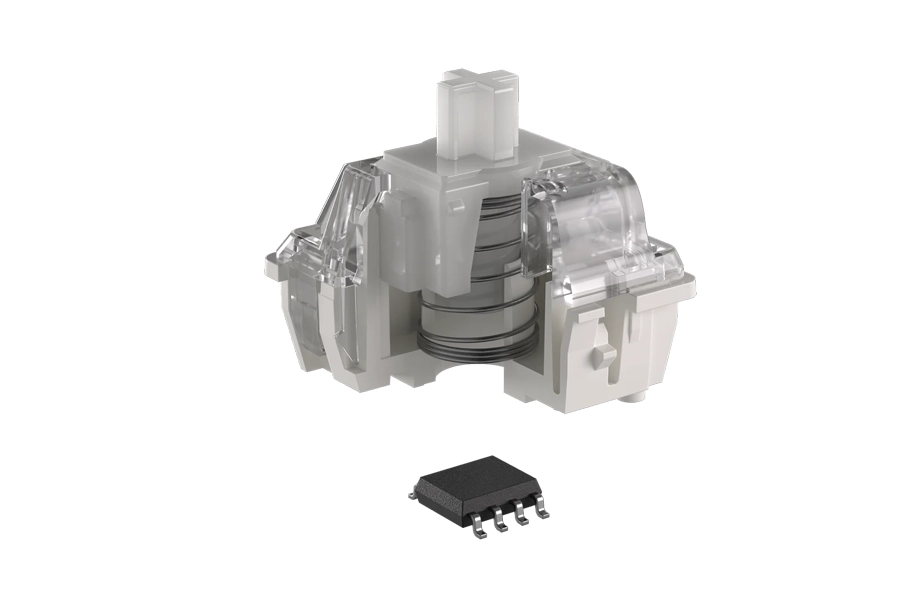
These keyboards feature an even more advanced type of switch. Just like with a standard mechanical switch as you press down on a key this causes a spring to compress; but actuation in this case is detected by a magnetic sensor. This detects movement faster than mechanical switches, making magnetic mechanical switches potentially the fastest type of switch and a great choice for fast paced competitive games. Magnetic switches use either the Hall Effect which detects a voltage change, or TMR (Tunnel Magneoresitance) which detects a resistance change, the latter being faster, more accurate and durable.

Magnetic switch keyboard

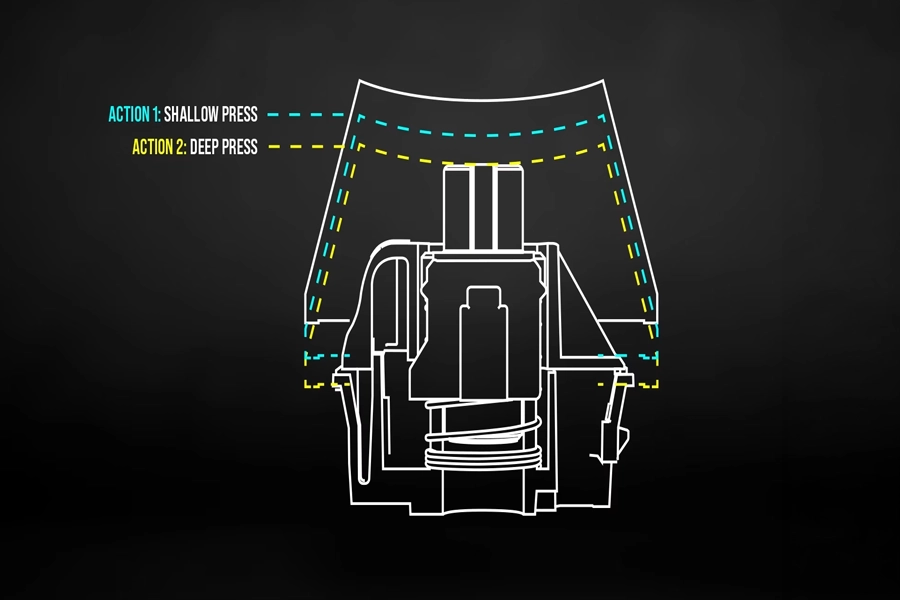
Magnetic switches have a unique ability: dual actuation. Using the software bundled with the keyboard, you can set two actuation points, each with their own amount of pre-travel and actuation force, enabling each switch to serve two functions.

Dual actuation example

For instance, in an FPS you could use the first actuation point of the W key to walk and the second actuation point to run, instead of having to press two separate keys at once (typically Shift and W).

Magnetic switches are more expensive to produce than standard mechanical or optical switches and are available in a variety of types, each of which has its own characteristics (more on this later).

Now you understand how the different types of switch work, here's how they impact cost and user experience when gaming.

Rubber Dome Switches Mechanical Switches Optical Switches Magnetic Switches
Cost

← LOWER

HIGHER →

Pros
  • Low noise
  • Consistent response gives a precise gaming experience
  • Greater longevity
  • Faster responsiveness
  • Same great longevity
  • Faster responsiveness
  • Pressure sensitive keys can produce two responses
  • Customisable actuation points for each key
  • Same great longevity
Cons
  • Inconsistent response can lead to undesired inputs in games
  • Keys get less responsive over time
  • Higher noise
  • Same noise as mechanical switches
  • Same noise as mechanical and optical mechanical switches

Switch Specifications

While there's not any significant variety of rubber dome switches, there are multiple types of mechanical, and optical and magnetic switch - each with their own specifications. Some keyboards even allow you to replace the switches under the keycaps with a different model from the same brand rather than buying an entirely new keyboard. Which switch is right for you depends on your personal preferences, here is what to look out for.

Feedback

Feedback is the degree of physical resistance you feel when pressing down onto a switch. Linear switches only provide feedback during actuation so are fast and responsive and popular among gamers. Tactile switches provide a small amount of resistance up to the point of actuation and are popular with typists. Clicky switches are similar to tactile switches, but also provide an audible click sound when actuating.

Pre-Travel*

Pre-travel is the distance in millimetres the keycap has to be depressed before the switch actuates. The further the pre-travel, the slower the response. Gaming keyboards, especially those optimised for competitive games have a small pre-travel compared to a general-purpose keyboard. Typists may prefer a keyboard with a longer pre-travel so that you don't actuate keys by accident creating typos in your work.

Total Travel

Total travel is the distance in millimetres the keycap can travel before it bottoms out. A longer total travel distance doesn't necessarily slow you down when gaming and can feel more satisfying to type on versus laptop keyboards which tend to have a much shorter total travel distance.

Actuation Force*

Actuation force, sometimes also referred as operating force, is the amount of energy in either centinewton [cN] or gram-force (gf) required to make a switch actuate. Gamers tend to prefer keyboards with relatively low actuation force for rapid keystrokes, while typists often favour a bit more actuation force to avoid typos in their work.

Sound

The amount and type of sound a keyboard makes when typing is largely** determined by the type of switch, with linear switches being the quietest, tactile switches being slightly more audible, and clicky switches being distinctly audible. They are popular with typists, but can be too noisy in a shared environment. If this is an issue, look out for a keyboard described as thocky, these make a less irritating lower frequency sound when typing.

Lifespan

Lifespan is the number (in millions) of times a switch can actuate before it wears out. Most gamers will probably upgrade before wearing out a keyboard, but it's worth keeping an eye out for switches with a longer lifespan if you use your PC for many hours every day.

* Magnetic switches and some optical switches support dual actuation, so you'll normally see two pre-travel distances and two actuation force numbers quoted, one for each actuation. See the section on magnetic switches for more information.
** Sound is also partially determined by build quality and material selection of the rest of the keyboard.

Below, you'll find a table of the most common switches, most notably Cherry, a specialist German brand, that uses colours rather than model numbers to differentiate its various models of switch, plus the biggest keyboard brands at Scan: Corsair, Asus and Razer. As some keyboard manufacturers have their own naming schemes, this list isn't meant to be exhaustive, but it's fair to say that as Cherry switches are so popular, a Red switch from one brand will have comparable specifications to a Red switch from another brand.

Brand Asus Cherry Corsair Razer
Switch NX Blue NX Brown NX Red NX Snow NX Storm RX Blue RX Red ROG HFX MX Brown MX Low Profile Speed MX Red MX Silent Red MX Speed Silver MX Ultra Low Profile MGX HyperDrive MLX Fusion MLX Plasma MLX Pulse MLX Quantum MLX Red V2 OPX Green Yellow Orange Purple Red Purple Low Profile Red Low Profile Analog Optical Gen-2
Type Mechanical Mechanical Mechanical Mechanical Mechanical Optical Mechanical Optical Mechanical Magnetic Mechanical Mechanical Mechanical Mechanical Mechanical Mechanical Magnetic Mechanical Mechanical Mechanical Mechanical Mechanical Optical Mechanical Mechanical Mechanical Mechanical Optical Mechanical Optical Mechanical Optical Mechanical Optical Mechanical Optical Mechanical
Feedback Tactile Tactile Linear Linear Tactile Tactile Linear Linear Tactile Linear Linear Linear Linear Tactile Linear Tactile Linear Tactile Linear Linear Linear Tactile Linear Tactile Clicky Linear Clicky Linear Linear
Pre-Travel (mm*) 2.3 2 1.8 1.8 1.8 2.3 2 0.1 – 4 2 1 2 1.9 1.2 0.8 0.1 – 4 2 2 2 1.2 2 1 1.9 1.2 2 1.5 1.2 1.5 1.2 0.1 – 4
Total Travel (mm) 4 4 4 3.6 4 4 4 4 4 3.2 4 3.7 3.4 1.8 4 3.4 4 3.6 3.4 4 3.2 4 3.5 3.5 3.5 3.5 2.8 2.8 4
Operating Force (cN*) 55 43 45 45 55 45 45 40 – 55 55 45 45 45 45 65 30 – 55 40 45 45 45 45 45 50 45 50 45 45 50 45 40
Lifespan (M clicks) 70 70 70 70 70 100 100 100 100 100 100 50 100 50 150 80 80 80 80 70 150 100 100 100 100 100 70 70 100

* Magnetic switches and some optical switches support dual actuation, so you'll normally see two pre-travel distances and two actuation force numbers quoted, one for each actuation. See the section on magnetic switches for more information.
Gaming Keyboard Features

Gaming keyboards don't just look and perform differently from boring old home/office keyboards, some also have useful extra features for gamers.

Anti-Ghosting

Ghosting happens when you press too many keys in a short period of time for the keyboard controller to handle and it ends up losing keystrokes. For most office keyboards the limit is normally just two to three keys.

However, a well-designed gaming keyboard will have a much higher limit, often as many as 10 keys, enabling you to type in a complex series of commands without losing keystrokes. This is sometimes also referred to as the number of rollovers the keyboard can queue in sequence.

Anti-ghosting gaming keyboard

Poll Rate

Some keyboard manufacturers also make a big song and dance about the poll rate, sometimes also referred to as the report rate. This is the speed at which the keyboard sends keystrokes to your PC, measured in Hz. While poll rate isn't so important when typing or for general gaming, it can make a big difference in fast-paced competitive games. For instance, as illustrated in the table below, with a poll rate of 500Hz any keystrokes in between every 2ms will be missed and not be sent to your PC, while at an 8,000Hz poll rate every keystroke should be recorded.

Poll Rate Reporting Interval
125Hz 8ms
500Hz 2ms
1,000Hz 1ms
8,000Hz 0.125ms

If you play a lot of competitive games you may be able to feel the difference by increasing the poll rate to at least 1,000Hz; just be aware that this will put more strain on the CPU and could actually decrease performance.

Macro Keys

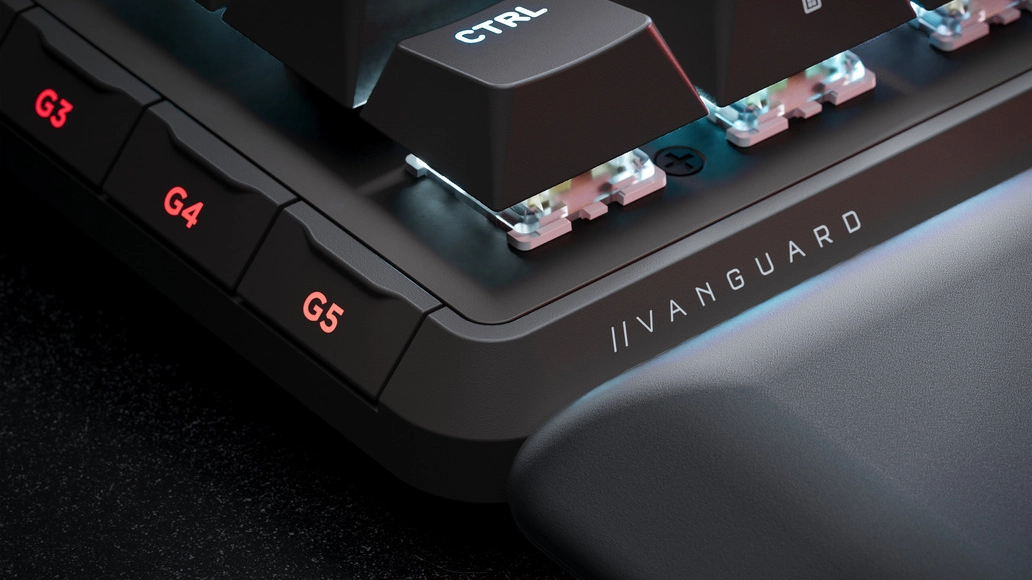
Give yourself an edge by choosing a gaming keyboard with dedicated function keys and Windows software that enable you to create custom macros that playback a sequence of complex keystrokes and mouse clicks with just a single keystroke.

Streamers can also take advantage of this functionality by using the special keys on some Corsair keyboards to map commands such as starting, pausing and stopping recording when integrated with Elgato Stream Deck software.

Gaming keyboard macro keys

SOCD

SOCD (Simultaneous Opposing Cardinal Directions) is the way in which a keyboard responds to two opposing movement keys being pressed at once. For instance, we've probably all been in the situation where during a tense moment in an FPS you press D to pop right out of cover and then press A to dash back left into cover, only to find the game doesn't respond at all and you're left standing out in the open like a lemon.

Some keyboards feature programmable behaviour for these situations, enabling you to choose which keypress has priority: the first, last or neither. For instance, with last key prioritised, you'll pop back safely into cover as soon as you press A even if you haven't quite let go of D, the first key.

However, it's worth noting that as SOCD could give you an edge, it is banned in many game tournaments.

Keycap Material

You'll also find that manufacturers use a variety of materials to build keycaps. The two most common materials are acrylonitrile butadiene styrene (ABS) and polybutylene terephthalate (PBT) and their double shot versions which are made from two separate layers glued together.

Keycap material example
ABS ABS Doubleshot PBT PBT Doubleshot
Cost

← LOWER

HIGHER →

Pros
  • Brighter lighting due to thinner keycaps
  • More durable
  • Keycap surface lasts longer
  • Keycap surface lasts much longer
  • Textured surface provides more haptic feedback
  • Keycap surface lasts the longest
  • Textured surface provides the most haptic feedback
Cons
  • Keycap surface wears away quickly
  • Slippery surface provides little haptic feedback
  • Slippery surface provides little haptic feedback
  • Dimmer lighting due to non-transparent keycap labels
  • Brighter lighting than PBT, but still worse than ABS

Media Controls

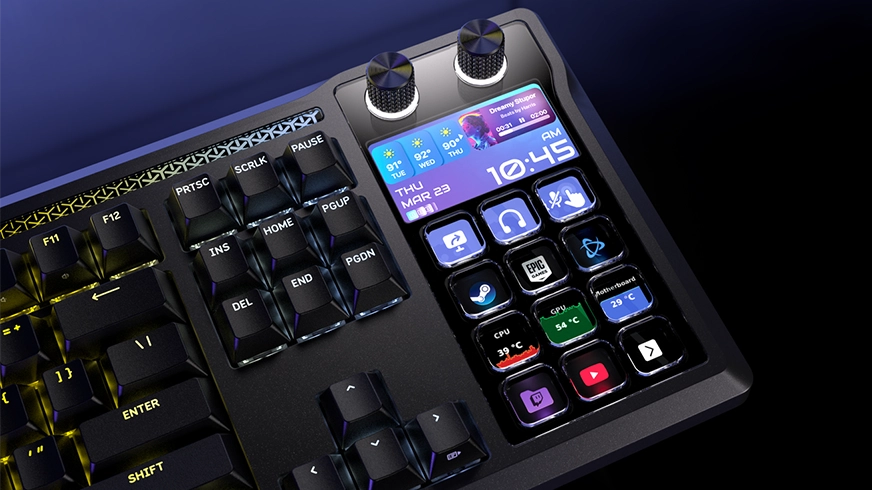
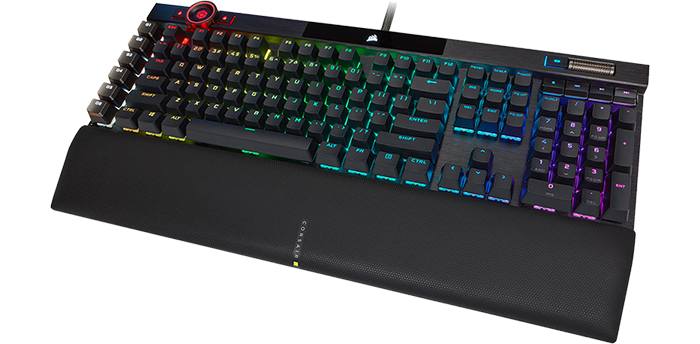
Not every keyboard is created equal, and some have extra buttons and dials that allow you to control your favourite media players and adjust audio volume on the fly.

Dedicated media keys are especially useful if you game, stream and listen to music at the same time, letting you make quick changes without leaving your game.

Gaming keyboard media controls

Hot Swappable / Customisable Keyboards

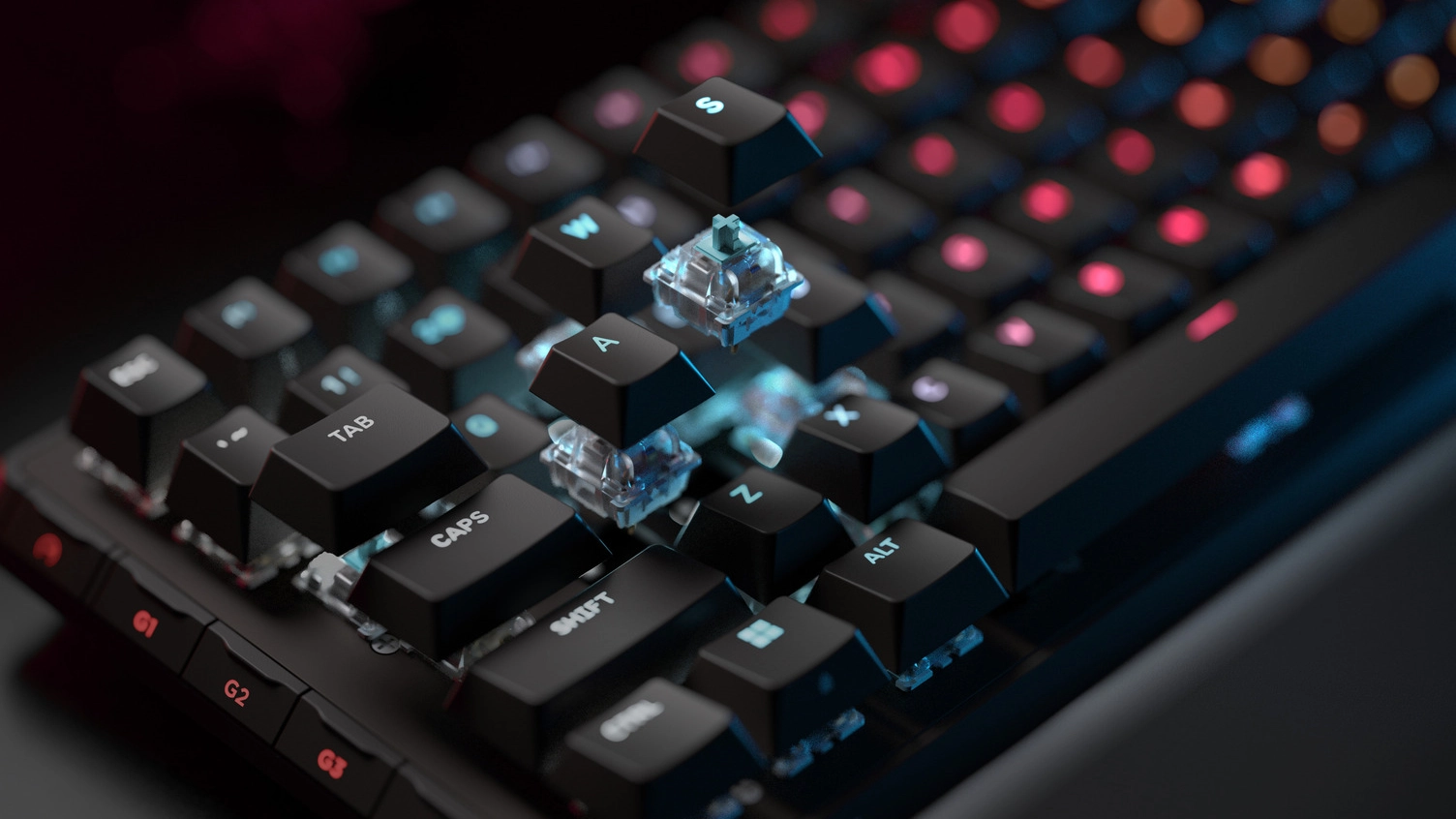
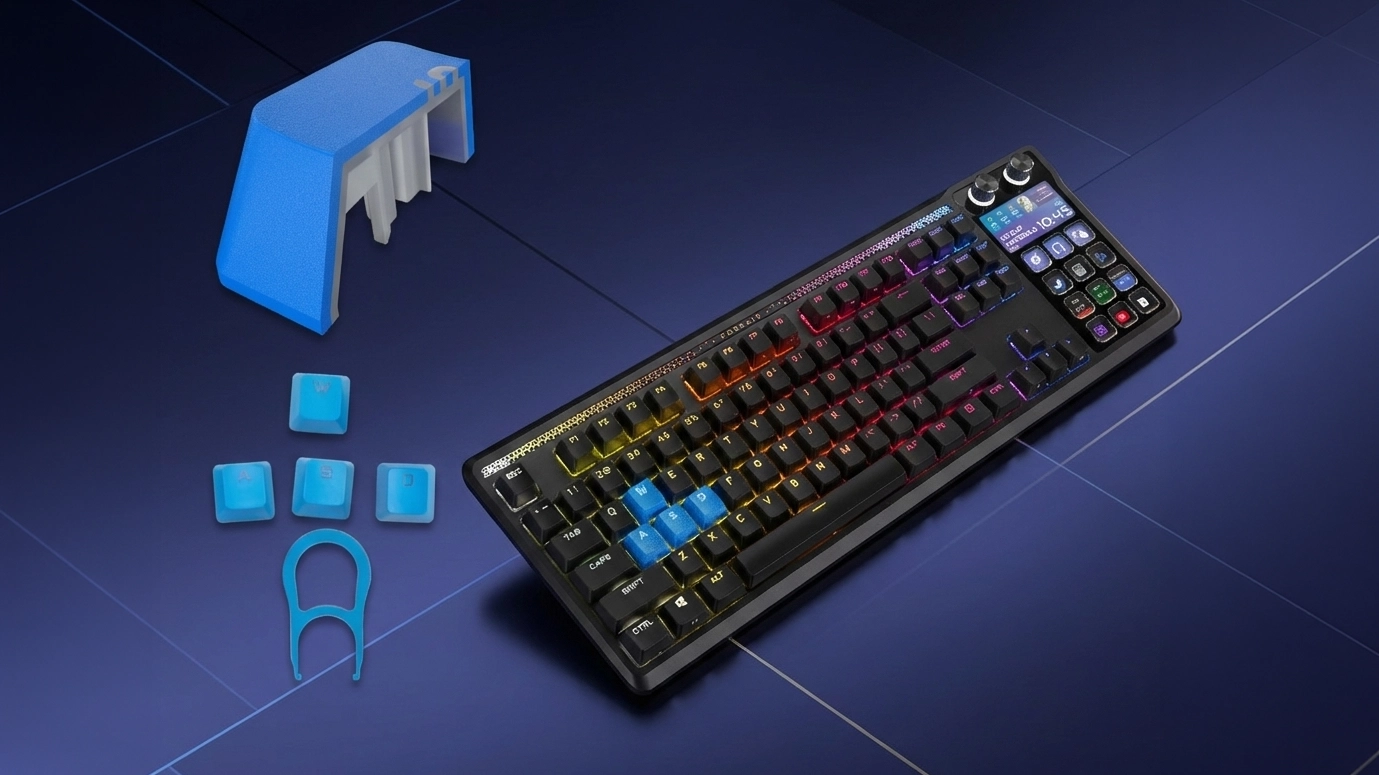
Alongside the trend for modular keyboards that enable you to replace the switches with another type from the same brand, some keyboards enable you to replace the components such as the keycaps, dials and base plate. This could be because the printing on the keycaps has got worn or simply that you fancy a colour or texture change.

Hot swappable custom keyboard components

Lighting

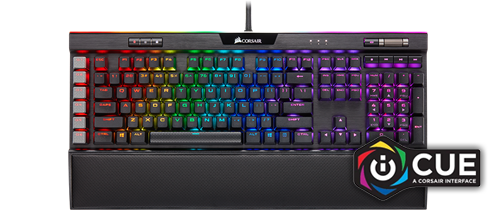
Many gaming keyboards have a simple backlight under the keys, but more advanced models use RGB lighting in each individual key. The best gaming keyboards include Windows software that enables you to create your own lighting patterns.

Corsair iCUE is worth a special mention as it connects all your compatible products together in a single Windows application, giving you complete control of everything from RGB lighting and effects to fan speeds and temperature monitoring.

Gaming keyboard RGB lighting

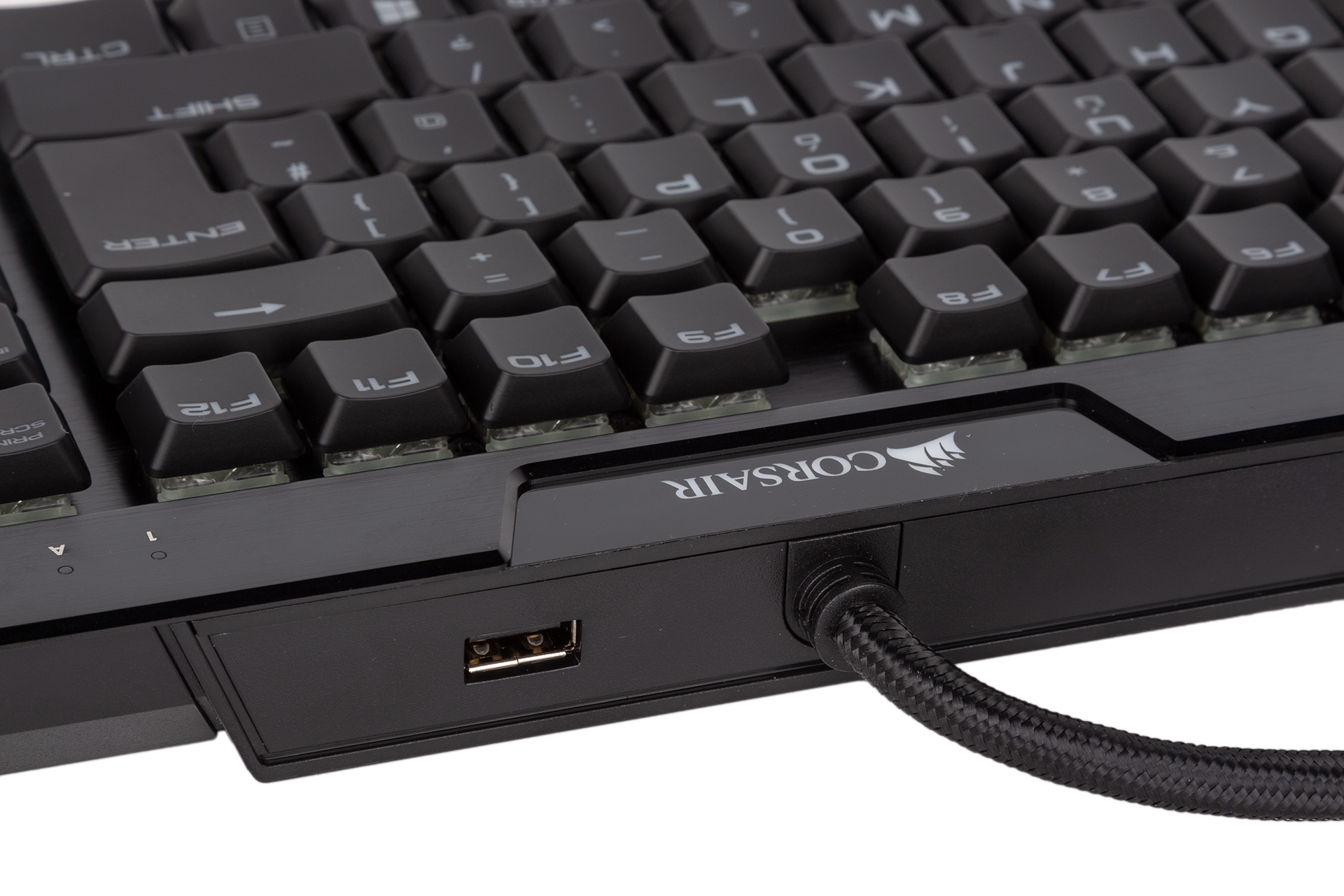
USB Passthrough

Some keyboards feature USB passthrough, effectively acting as an USB hub, providing an easy-to-access USB port on the back of the keyboard. This may be more convenient to access than the USB ports on your PC.

Keyboard USB passthrough port

Ready to Buy?

Browse our range of gaming keyboards. Whether you're looking for all-round models, mechanical switches or magnetic switches, we have something for every need and budget.

Gaming keyboards ready to purchase

Frequently Asked Questions FAQ

Here are some common questions and answers to help you find the information you need.

Gaming keyboards can be used for typing as they include the same set of alphabet keys as home/office keyboards. Most people actually prefer mechanical gaming keyboards for typing as they have a superior feel and responsiveness to rubber dome keyboards. Gaming keyboards with tactile switches are popular with typists as they provide a small amount of resistance up to the point of actuation.

Gaming keyboard switches are small devices that detect when you press down on a keycap. There are four main types of gaming keyboard switch: rubber dome, mechanical, optical and magnetic, in increasing order of quality and cost.

There are four main types of gaming keyboard switches: rubber dome, mechanical, optical and magnetic, in increasing order of quality and cost.

While mechanical keyboards are slightly noisier than rubber dome keyboards, some keyboards are engineered to be quieter. Look out for gaming keyboards with linear rather than tactile or clicky switches or are marketed as ‘Silent’ – they won’t actually be silent, but will be quieter than other keyboards.

Although wireless gaming keyboards have closed a lot of the performance gap with wired keyboards, they do need to be charged every few days and we wouldn’t recommend them for competitive games where every millisecond of lag counts.

Gaming keyboards can be used for work as they include the same set of alphabet keys as home/office keyboards. However, we wouldn’t recommend compact 60% keyboards for work, as they have much fewer keys than full-size keyboards – around 75 versus 105.

TKL stands for Tenkeyless, a phase used to describe keyboards lacking the number pad cluster on the right edge. TKL keyboards typically have 88 keys versus the 105 keys of full-size keyboards.

Some pro gamers favour compact 60% keyboards which lack the number pad cluster on the right edge, the Function keys along the top, the arrow keys, and navigation keys such as PageUp and PageDown. 75% keyboards also lack the number pad cluster on the right edge, but retain all the other keys missing on a 60% keyboard. As they are so small, 60% keyboards are good for competitive FPS games as they free up more space on your desk for a larger mouse mat; but 75% keyboards are better for MMOs and simulators as they have more keys.

There is no one best keyboard as everyone has different preferences when it comes to keyboard size, wired versus wireless and feel when typing. Read our full buyers guide walks to discover which is the best gaming keyboard for you.